

Issue 166: The Thirty-Nine Percent
Tariff trouble: What happens next? Plus, thoughts on meritocracy in watchmaking

Hello and welcome back to The Fourth Wheel, the weekly watch newsletter that’s missing watches. Is that possible? Do you know what I mean? If it’s not tariffs, it’s some other form of semi-existential threat looming on the horizon. The awards system is corrupt! Marketplace platforms are redundant! Price rises are going to kill the market! CPO is going to kill the market! China is going to kill the market - and on, and on, and on. I saw someone coin the phrase “content zombie” on social this week, for influencer-press-creator types who turn up at brand events and just do the bare minimum to justify a repeat invite. (We just used to call them blaggers) and I have a Fourth Wheel in potentia about the seething unrest that’s being expressed more and more often by collectors frustrated that brands would rather court social clout than spend time with the people who buy their watches.
Are you a collector who feels that way? Drop me a line - fourthwheelmedialtd@gmail.com.
I love reporting on this industry and all the above are very real concerns that I’m happy to address, but right now I’m rather wearied by it all and just want to pick up a few watches and enjoy them for their own sake. In not unrelated news, I really must write a review soon. I suspect my malaise is nothing compared to the state of mind in Switzerland right now, where no doubt countless executives are being summoned from their holidays to react to Trump’s surprise tariff bombshell. Of course it’s what I’ve written about this week; to spend a few thousand words on anything else would feel like rearranging the deckchairs on the Titanic, as the saying goes.
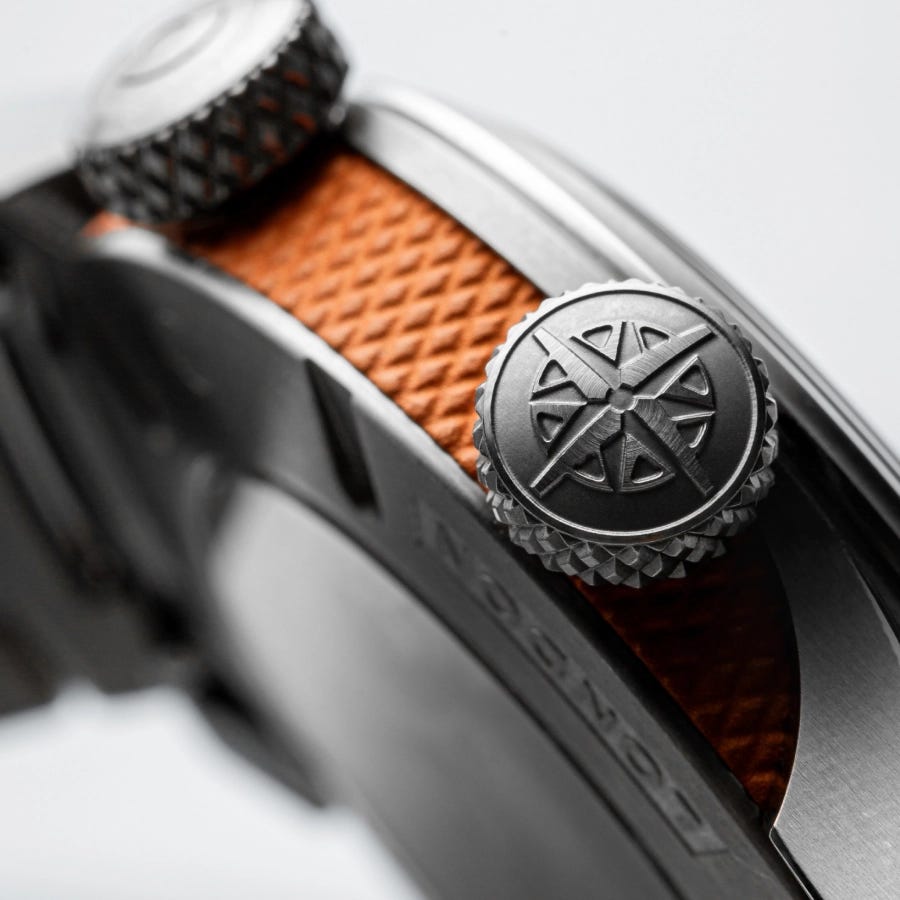
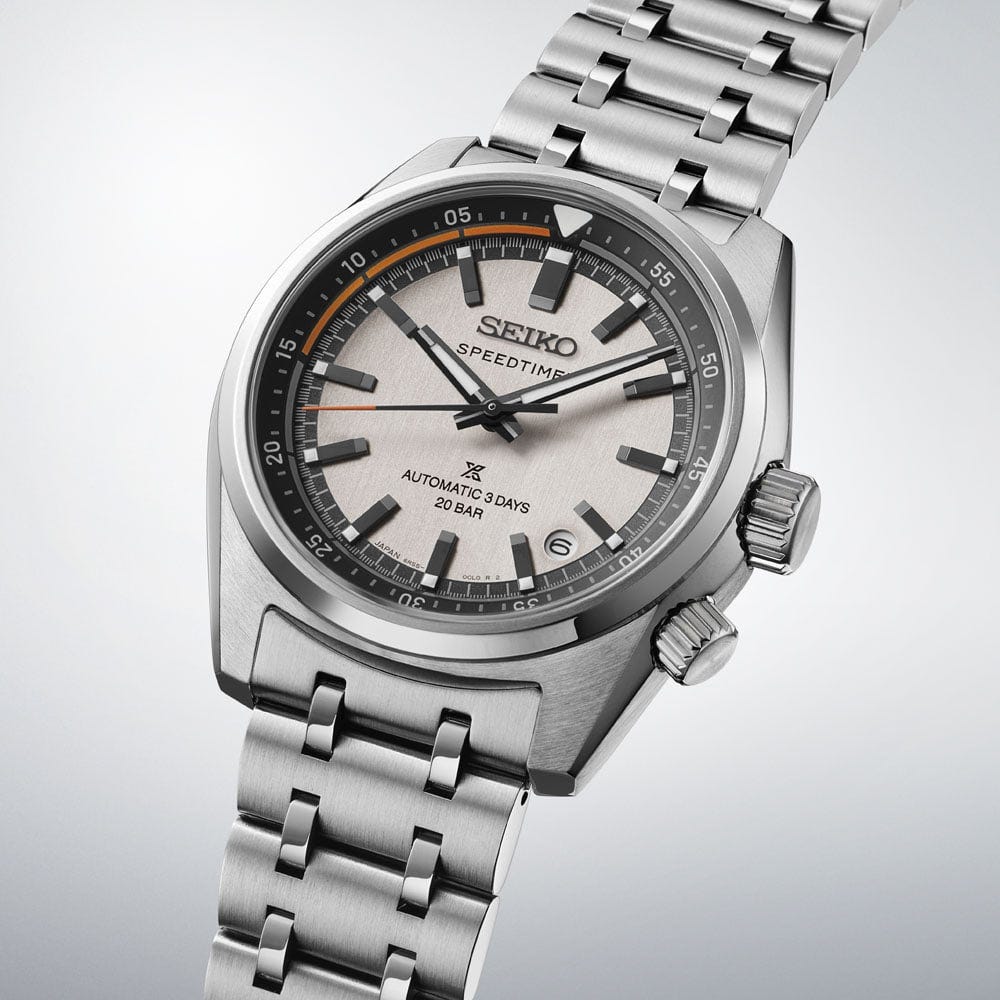
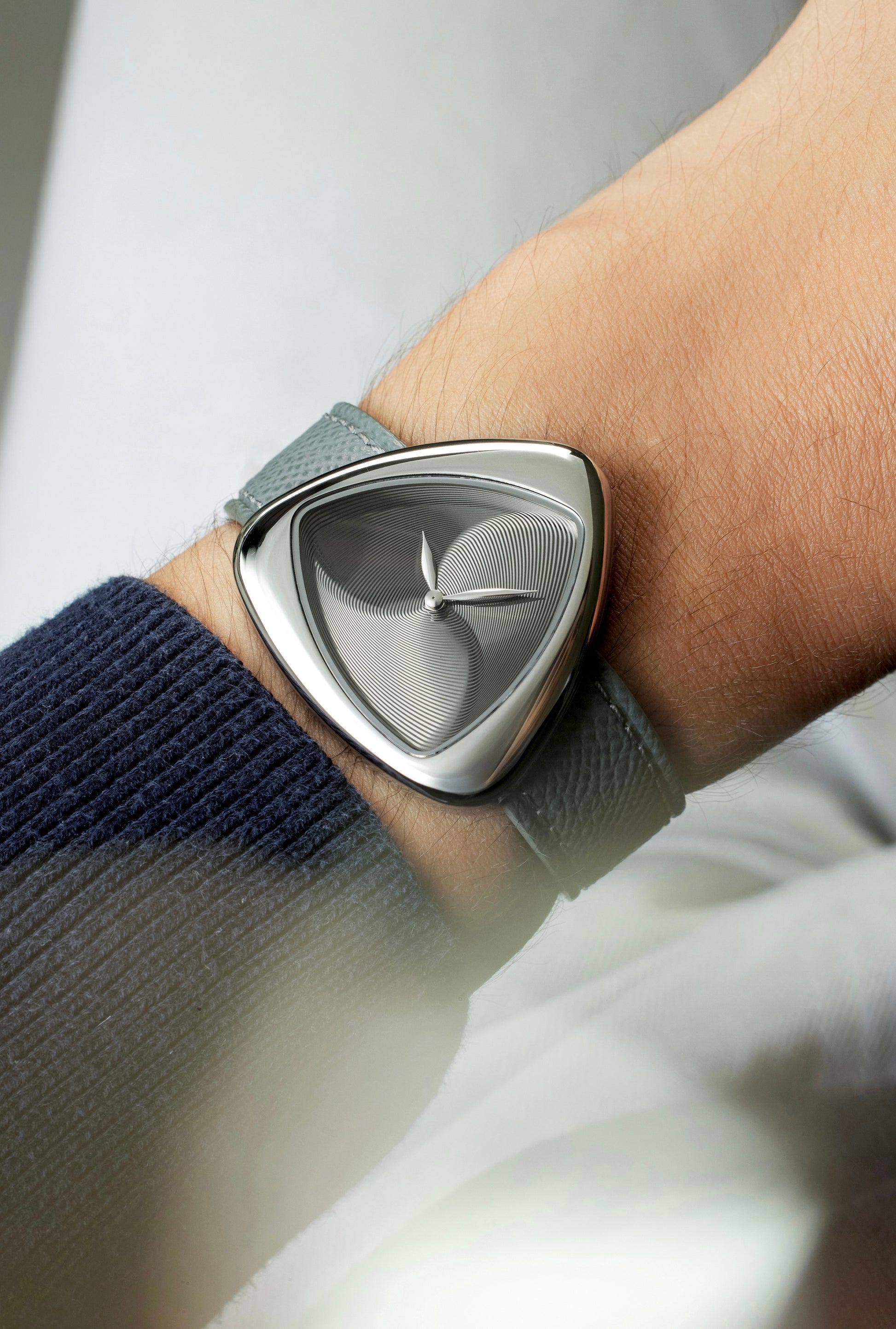
However, should you need some positivity to steel yourselves before we get into it, I’d like to say how much I enjoy these three recent launches:
Bremont Altitude MB Meteor with orange barrel
Seiko SPB513
Anoma A1 Optical
Okay, that’s your uplifting material. From now on, we go face to face with stark realities.
The Fourth Wheel is a reader-supported publication with no advertising, sponsorship or commercial partnerships to influence its content. It is made possible by the generous support of its readers: if you think watch journalism could do with a voice that exists outside of the usual media dynamic, please consider taking out a paid subscription. You can start with a free trial!
Here’s a little taste of what you might have missed recently:


Let’s quickly recap for anyone who hasn’t been glued to the news all week. Since slapping a 31 per cent import tariff on Swiss goods in April - right in the middle of Watches & Wonders no less - which was quickly but temporarily rescinded, Donald Trump had given the Swiss, like many other countries, a four-month window in which to make a deal. It’s like a gigantic geopolitical reality show, which, without digressing too far into armchair psychoanalysis, clearly appeals to Trump. Which world leader will pass the test? Who’ll grovel and compromise and appease and negotiate with unseemly haste in order to win the grand prize of a brand new motorhome the privilege of being hit with only 10 or 15 per cent duties?!
In a turn of events equally befitting of a Netflix narrative, Switzerland had been quietly expectant of a deal that would put it on a similar footing to the EU or UK, but it was not to be. Ten percent was the figure on diplomats lips - a result that would have felt, in the circumstances, like a win. In the weeks following Watches & Wonders we had been treated to some fairly absurd suggestions of the power and influence of the watch industry in the tariff talks - notably the suggestion that Rolex, either literally or metaphorically, had caused the US president to change his mind.
Complacency may have set in - and then, in a geopolitical rug-pull of, well, Trumpian proportions, the USA raised tariffs on Switzerland to 39 per cent. It’s the kind of shock twist any good reality show needs at least twice a season, and the sense of drama was only heightened by having the news land on August 1st, Switzerland’s national holiday. A new deadline was announced, which expired on August 7th, and despite a frantic visit to Washington by Swiss president Karin Keller-Sutter and economy minister Guy Parmelin, they came home empty-handed. This was the press statement issued by US secretary of state Marco Rubio’s office, in its entirety.
“Secretary of State Marco Rubio met with Swiss President Karin Keller-Sutter and Vice President and Minister of Economy Guy Parmelin today to discuss the importance of a fair and balanced trade relationship that benefits the American people. They also reaffirmed their commitment to strengthening bilateral defense cooperation.”
In other words, nice try Switzerland, but we need to keep this storyline bubbling all the way into series two.
So at the time of writing, Swiss watches face import duties of 39 per cent on arrival in the United States. It’s very bad news for the industry whichever way you paint it. I reached out to a handful of Swiss contacts and the responses ranged from “I don’t know what’s happening, everyone is on holiday” to “the industry was already in big trouble. This won’t help at all!”
Lest we forget, the USA had been the white knight riding to Switzerland’s aid after tumbling Chinese demand sent exports - and by extension the whole business - into a year-on-year decline. At the end of July Brendan Cunningham published his analysis of RHT trends - the interventionist mechanism by which the Swiss government guarantees workers’ salaries to prevent businesses making layoffs, and sees workers putting in reduced hours for the same pay - at the end of July and concluded that this crisis, as compared to downturns in 2008-09 and in 2020 at the start of COVID, was proving far more persistent. The NZZ quoted Breitling CEO Georges Kern thus: "I've been in the industry for 30 years now, and I've never experienced such a prolonged crisis.” I hadn’t noticed at the time, but in May the Swiss government signed off on increasing the RHT duration from 12 to 18 months. That came into effect on August 1st and will last until July 2026. So you have some idea of how long the powers that be expect this all to last, and that was before the tariff bombshell.
Here’s what I think will happen, what might happen and what won’t happen - if, and it’s a big if - things stay as they are. The world we live in, it might get worse or better by next week but barring the unlikely event that it all just… goes away… most of the below will still apply.
What will happen
Watches will get more expensive
Let’s not be coy, this is the obvious one. Not by 39 per cent, but also probably not just in the USA either, so there’s no schadenfreude to go around. Most brands import watches via a wholesaler or a subsidiary business, so they’re selling watches out of Switzerland at cost price to an intermediary (or two) who then apply a margin before selling them on. The tariff will apply to the cost price, and the best estimates I’ve seen - Oliver Muller ran some numbers which he shared with Bloomberg - are that if US prices were treated in isolation, retail prices would go up by 12-14 per cent. Still not great news; it’s already a buyer’s market for most watches, and it’s not as if the industry isn’t already hooked on raising prices twice a year anyway.
As Rob Corder writes in WatchPro, the more likely outcome is that brands will raise prices around the world by 2-3 per cent, which satisfies two outcomes: it normalises prices globally, which they like, and it offsets a fall in US revenue by squeezing it out of the rest of us. Thanks guys, way to go. At the same time, brands would tolerate smaller margins in the US at every link in the chain.
What worries me - beyond the obvious implications of yet another unforeseen shock and substantial price rise - is the complacent attitude towards watch customers from brands and retailers. Brian Duffy, CEO of Watches of Switzerland Group (whose shares dipped on August 1st to a year-long low before rebounding the next day, yet are still nearly 40 per cent down in the last six months), told the Financial Times that
““Half our business is in the US and half is waiting lists. It impacts us less than others,” he added. “Demand for watches still exceeds supply.”
It’s a line echoed by Rob Corder in WatchPro, who also talks about the ‘above retail prices in the secondary market’ - although he does at least also acknowledge that the trend is downward.
“It is certainly true that Royal Oaks, Aquanauts and GMT Masters will keep selling, almost regardless of how much retail prices rise in the US if the 39% rate hits.
Demand continues to run ahead of supply (although the gap is rapidly closing), so there is significant price elasticity, it is assumed.”
You can’t use the popularity of a Rolex GMT-Master II as a barometer for market-wide demand for watches. What Brian Duffy should have said, being completely honest, is ‘demand for some watches still exceeds supply’. As I said, this worries me. He’s got a responsibility to shore up his share price and not to panic, but more and more we see the assumption that the watch customer is a golden goose that will never stop laying. I know there’s an awful lot of money out there, and I know a lot of people will swallow price rises because watches are already passion purchases and they’re going to rationalise it to themselves one way or another. But still. I think the attitude stinks. I think it’s arrogant. It may be true that there is a broad class of people who will pay almost any money to get their hands on the right Rolex - the fact they still trade above retail in the secondary market proves it - but you’re not supposed to say it out loud.
Besides, as I’ve said, people will be a lot more price sensitive to watches that don’t confer quite so much social status. It is only Rolex and Patek that hold their value; and as of April 2025, the number of Rolex references trading above retail was the lowest in two years - per Watch Charts.

The grey market will flourish
Following directly on from the above: most premium mainstream brands, from Omega and Tudor to Cartier, Lange and Vacheron Constantin, are trading at around 30 percent down. Again, those figures pre-date this latest development. Even if the two countries agree a rate between 10-20 per cent, that’ll represent the second substantial increase in a year. The inevitable retail price hike will make secondary values even worse, so we’re going to see a more active grey market as a result. How many American customers will look to buy nearly-new, still got the plastic on the back, when it’s 40 per cent cheaper?
Brands will try to get around it
They’ll try, but there isn’t much they can do. As in April, we will see a spike in imports this week to try and beat the deadline (your product only has to be in transit by the time the deadline takes effect for it to sneak in) and probably a corresponding trough in September. Loading the US with stock is a gamble; some brands will need to consider whether they are going to leave other markets high and dry - anecdotally, I heard this affected smaller mainstream brands in April/May with delays to deliveries into the UK because the stock had been diverted to the US. Once shipped, pre-tariff watches can only forestall a drop in revenue for so long - the gamble will be that a better deal will be struck faster than those watches can sell through to customers. The fine print1 says any goods imported in advance of the deadline have to be ‘entered for consumption’ by October 5th - what that means in practice is hard to divine. I suspect a watch in a boutique’s safe has been ‘entered for consumption’ but could remain unsold for months after.
Sales will briefly rise
Nick Hayek said he expects sales to rise as a result of the turmoil, and he’s right. Anyone who’s been on the fence about buying a watch is probably going to think ‘better the devil I know’ and buy now before prices rise. But this is more or less a zero-sum game (unless people are being lured into a purchase they might not otherwise have made), because the spike in watches bought now will have a corresponding slump, as those customers who leapt into action all at once won’t come back to buy again in a hurry. You might not notice the slump as much, because it could be spread out, but this spike shouldn’t be confused for confidence. It’s hedging. Some of it might even be flipping.
It will be harder for vintage dealers
And for anyone who doesn’t have the luxury of a generous margin to play with, or a network of global subsidiaries. Obviously the secondary market doesn’t rely on sourcing watches from Switzerland, but any that do will basically be prohibitively expensive.
What might happen
Most of these outcomes assume the current tariff or something similar remaining in place for a while. As an outlook, that might be like discussing higher education options with a mayfly, but I don’t think we can rule anything out.
Non-Swiss watchmakers might benefit
To an extent, the whole situation is a lose-lose, especially if consumers worldwide are effectively penalised for simply existing, as above. But it’s all relative, and taking market share in a shrinking market is still valuable. There are a lot of other factors to take into account, but I do expect mainstream watchmakers from Japan, China, Germany, France and the UK to see small increases. It’s a simple and obvious enough outcome that I wonder if I might be missing something - but if Swiss prices have to rise and yours don’t, that’s straightforward enough. Supplier businesses, which work with the whole industry, not just Swiss brands, might be the key, because if their prices go up then the ripple effect will spread. Greed could also be a factor; rather than thinking ‘Great, we’re now even cheaper than our benchmarked competitor,’ some people will think ‘Well, if buyers are prepared to pay increased prices for Rolex, they’ll pay increased prices for me too,’ and yet others will think ‘well, if Patek now costs X, it’s important for us to cost X too, because we need to demonstrate that we operate in the same market. We’re no-one’s discount choice.’
Tourist shopping might increase
A lot of people are very confident about this. Watch buyers are disproportionately likely to be frequent flyers, so they’ll just pick up their watches elsewhere and sneak them back home. Problem solved, quids in for the airport boutiques (a special kind of soulless place) and we can all relax. Right? I’m not so sure.
