

Issue 171: Hora Mundi, Judgement Friday
Breguet's travel timer is finely crafted, dead clever and far too big

Hello and welcome back to The Fourth Wheel, the weekly watch newsletter that is keeping things high-end this week. Horologically speaking, that is. The mangled Latin pun above tells you that some things are resistant to elevation, and a journalist’s sense of humour is one of them. I am fresh from viewing the latest anniversary piece from Breguet and meeting CEO Gregory Kissling for the first time in his new role, and I’ve got Thoughts about the direction of travel1. Elsewhere in this newsletter - which is a bit of a diverse medley of thoughts - you will find:
F.P. Journe vs Parmigiani
Berneron vs price sensitivity
Tariffs, tennis and the famous Swiss sense of humour
Why Naissance d’Une Montre 3 took so long
Audemars Piguet vs Miss Tweed
Sotheby’s struggles
Before you proceed - I can tell you are impatient to get to it, and who wouldn’t be - please take a minute if you haven’t already done so to fill out the Fourth Wheel Reader Survey. I want to know what makes you tick, ahead of rolling out some value-adding enhancements to this humble publication. It takes about ten minutes and you stand a chance of winning some goodies (see Issue 170 for the Ts&Cs).
The Fourth Wheel is a reader-supported publication with no advertising, sponsorship or commercial partnerships to influence its content. It is made possible by the generous support of its readers: if you think watch journalism could do with a voice that exists outside of the usual media dynamic, please consider taking out a paid subscription. You can start with a free trial!
Here’s a little taste of what you might have missed recently:


F.P. Journe vs Parmigiani
I was asked a question for last week’s AMA that I decided to hold onto for an additional week, because it entailed comparing two very fine examples of independent watchmaking and I wanted to see if I could refresh my memory of both before committing to an opinion.
The question was:
I would love to see you do a F.P. Journe Platinum Chronomètre Souverain VS a Parmigiani Fleurier Toric Platinum Petite Seconde. Both esteemed watchmakers are of the same generation, and spent much of their early years in restoration. Both watches are platinum cases with gold movements with double barrels. Finishing is similar perhaps even better in the PF?. Both watches are in similar price ranges ish. Journe has a bit of a quirky aesthetic while PF is more minimalistic elegance. Would love to see a fair perspective without hype…is the brand name/hype the main difference? - AP
At first I found the “Journe versus Parmigiani” framing a little unbalanced - I think an overwhelming majority of collectors, if it were just between the two brands, would say Journe every time. The assignment, however, was to try and take brand out of the equation and focus on these two specific watches’ technical and aesthetic attributes.
I’ll cut to the chase, and apologise: London let me down when it came to going hands-on with either. The Toric Petite Seconde in platinum has yet to arrive on these shores, it seems - or what came in, sold out straight away. Nothing at the major retailers, and the lovely guys at Swiss Gallery had the older Toric pieces, but not the platinum just yet. Over on Bruton St, the F.P. Journe team had a Chronometre Souverain in the display, but it was ‘for exhibition purposes only’, to borrow a phrase: no movement in the case!
No matter. I have handled both watches at some point so we press on regardless. I’m going to try not to write a full-length essay here because I have so much else to cover, so I’ll break it down into sections.
Basic specs:
The Journe has a 40mm wide, 8mm thick platinum case. You get a hand-wound 22k gold movement beating at 21,600 vph with two barrels delivering 56 hours of power, which is indicated on the dial.
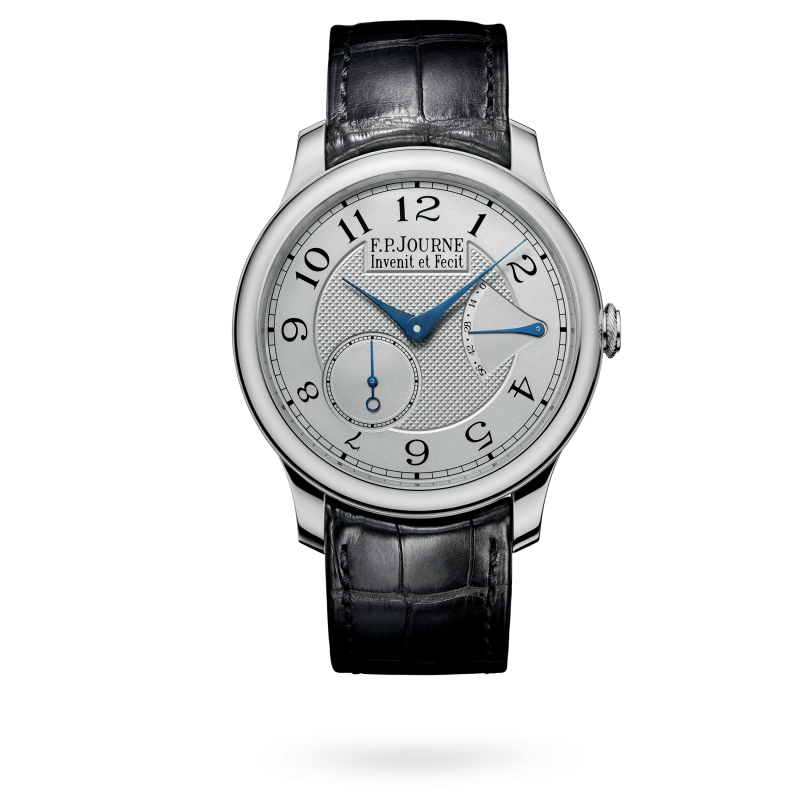
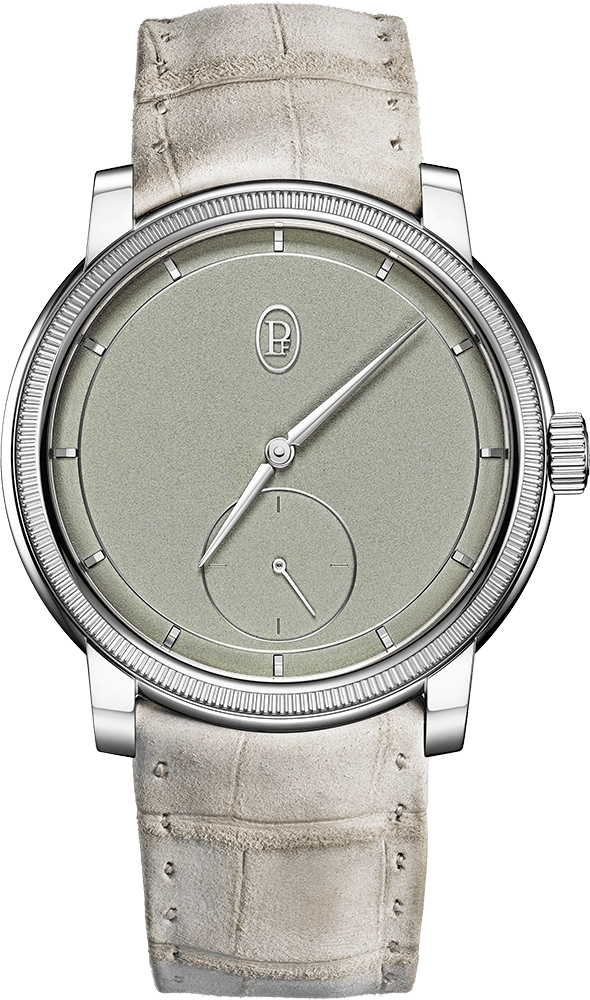
The Parmigiani measures 40.6mm by 8.8mm (Journe, following principles I admire, does not give decimal place measurements) and is also in platinum. It has a 60 hour power reserve from two barrels running at 28,800 vph; it’s a slightly smaller calibre, and it’s also hand-wound. Parmigiani has 157 components to its movement, Journe 1612.
One critical difference between the two is that the Chronometre Souverain can be bought on a metal bracelet, a five-link polished design that totally changes the character - and the price - of the watch. Because the Toric lacks that option, I’ll exclude this from my thinking, but if that kind of versatility is a priority, it’s another point to the Journe - as long as you can afford it.
Design:
Being as objective as possible about the most subjective part, it’s fair to say that with a near-20 year advantage, the Journe has an established aesthetic on its side. Those idiosyncratic numerals (look at the way the ‘7’ shrinks to fit) and signature hands are emblematic of the brand. Familiarity has bred approval, in this case. Parmigiani’s design language is still ‘on a journey’, and while it is to my personal taste, I can see that there’s a sparseness to it that might, in the long run, lack character. It’s a la mode though, if you think of the minimalism on offer from a Raul Pages or Luca Soprana, to say nothing of H. Moser (which manages to be minimalist and maximalist at the same time, so that may not be the best comparison).
The Toric embraces symmetry where the Chronometre Souverain does not. Parmigiani’s logo is more discreet than Journe’s, and the Toric’s plain, empty textured dial and retiring hour markers, so dainty in their retreat to the rehaut, are a direct contrast to the emphatic black print, guilloché and railroad track of the CS. I like the grey celadon (which seems quite sage green to me) of the Parmigiani, but the monochrome approach of the Journe, save for the blued hands, is more timeless. Similarly, the Journe’s black leather strap is more conservative; I’d probably swap straps if I bought the Toric.
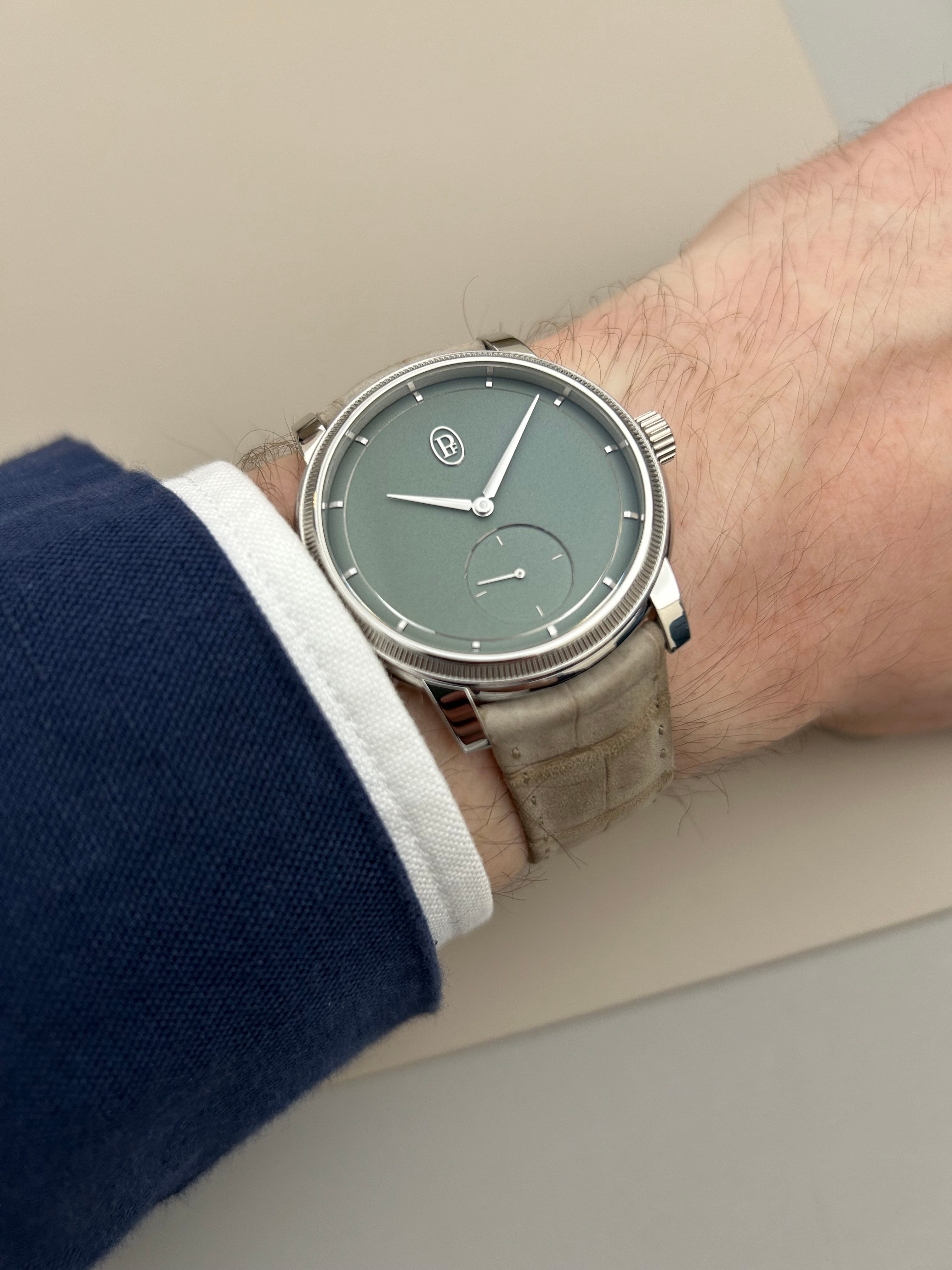
Each has a fairly straightforward case with quite substantial lugs - high-end daily wearers rather than fancy cocktail pieces, these. The Parmigiani the fussier bezel, to contrast with the dial, but quite a plain crown, whereas the reverse is true of the Journe. I slightly prefer FPJ’s thinking here, using a more humble frame for more exciting contents.
Movement:
I can’t rate their isochronism or vouch for their daily reliability3, so this is more of an aesthetic comparison rather than a highly technical one. They are very similar on paper - both have a free-sprung balance, for example - although there are differences in frequency and power reserve. Traditionalists might prefer the larger, slower-beating balance of the Journe.
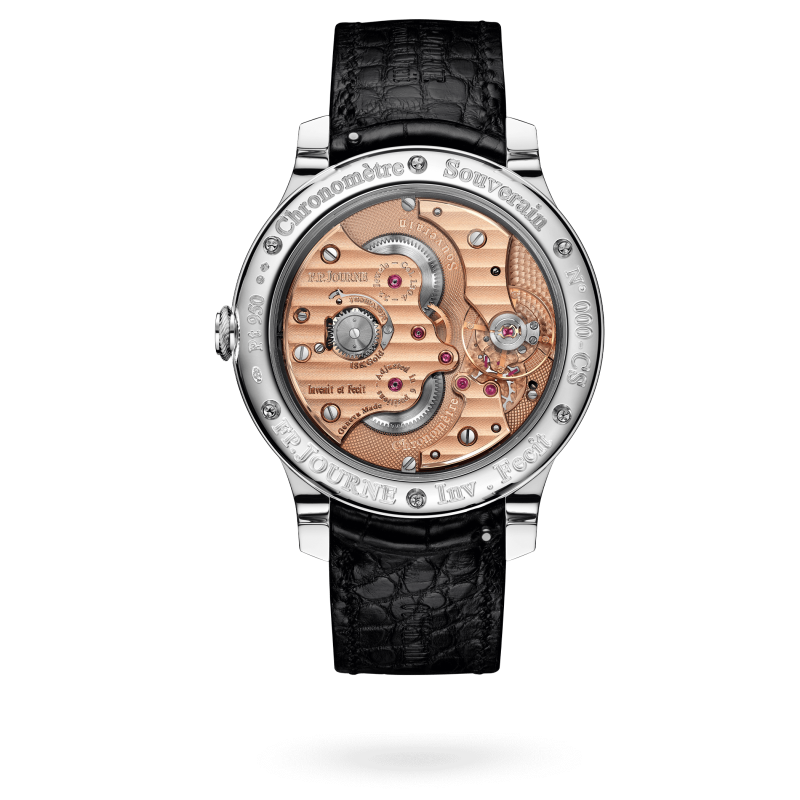
They will probably prefer its dial layout too; there is more on show, including the ratchet wheel and click spring, and slightly more of the escapement. The Toric has a curious combination of traditional touches and more contemporary styling, with that long straight line running off the balance wheel. It’s a very deliberate look, but while you gain eye-catching impact, you lose the sense that the bridge layout follows the construction of the gear train below - this feels a bit of an abstract choice. I prefer Journe’s sinuous layout, reminiscent of a coastline, and the impression of a more organic approach is intensified by the bevelling, which just looks a bit too perfect on the Parmigiani, a bit too clinical.
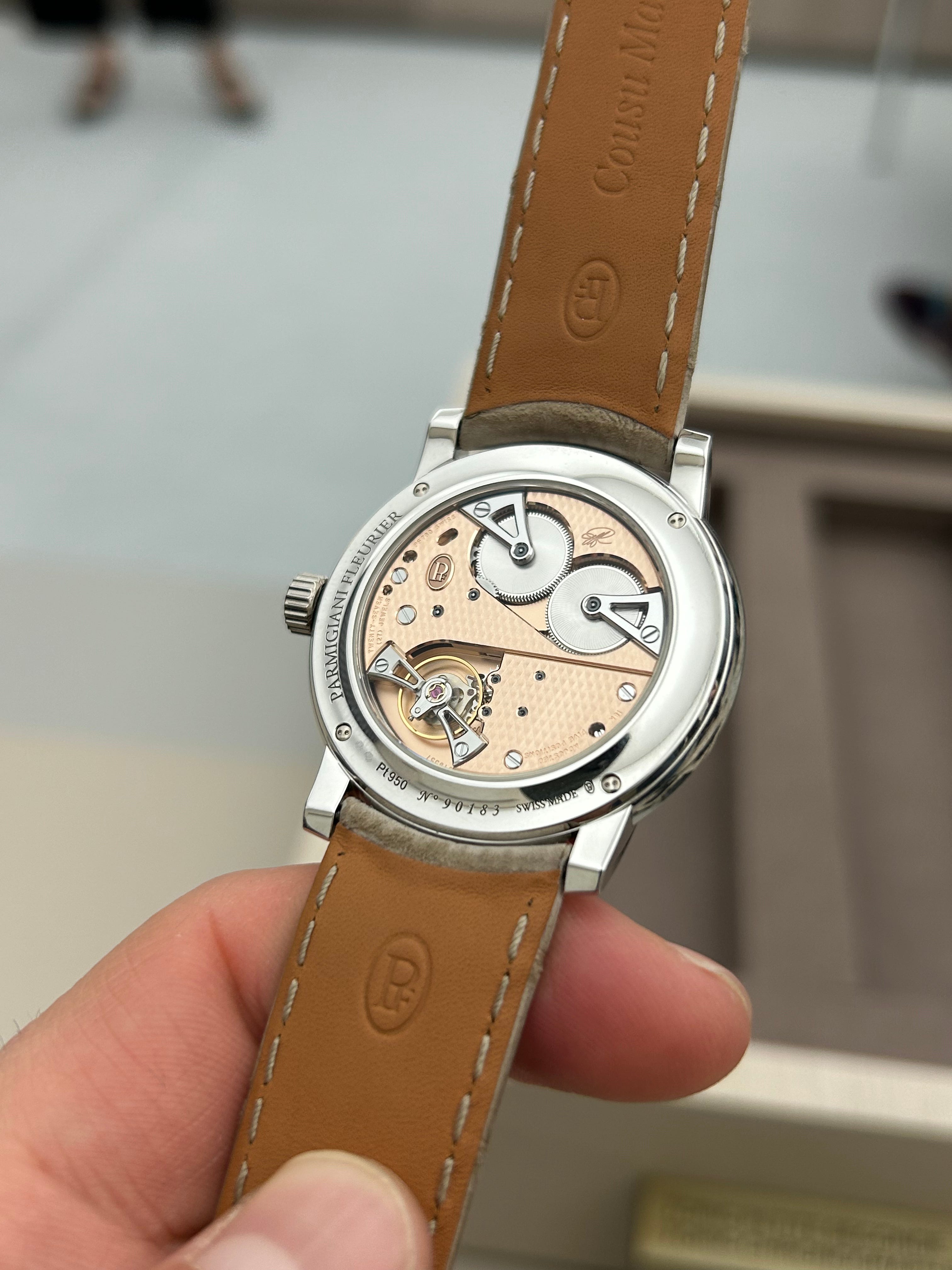
If we are on ‘internal angle watch’, points go to Parmigiani, which has openworked the balance and barrel bridges. If we are looking at surface treatments, it’s a matter of taste: the ‘Cotes de Fleurier’, as it’s described, is probably the single most subjective element of the movement decoration. I think it’s in-keeping with the other stylistic decisions that have been taken, and hats off to them for trying new things, but the Cotes de Geneve, perlage and guillochage on Journe’s bridges and plates take the honours for me.
Value:
Parmigiani is asking £52,500 (CHF 54,000 on the website) for the Toric Petite Seconde, while F.P. Journe charges £44,900 (I asked the boutique; not sure about the CHF price) for the CS on a leather strap. That’s a big enough difference to seal the deal for a lot of people - for the eight grand difference you can grab yourself a dive watch or chrono for sportier moments and pretty much complete your two-watch collection.
That’s a conclusion we’ve reached without considering brand value. Undoubtedly, Journe has the greater clout, and should it be a factor, the greater resale potential.
Conclusion:
This feels harsh on the Toric, which I think is a fine watch and has done wonders for Parmigiani’s brand image after years of less coherent, more exuberant design. We can’t seem to escape conversations about price in 2025, and the fifty grand time-only watch, platinum or otherwise, is going to have to be nigh-on perfect4. If you are in love with the look of the Toric, the CS is going to be a bit too stuffy for you, but if you are weighing them evenly, I think there is only one answer.
Some Short Stuff
Audemars Piguet’s PR Problem
You will have seen Miss Tweed’s story that AP CEO Ilaria Resta was set to leave after less than two years; you will probably have seen that Resta was recently appointed a director at Prada with a reported £100,000 compensation, and you will probably have seen Audemars Piguet’s board responding with a denial, saying that Resta isn’t going anywhere. Miss Tweed stuck by the initial story, attributing the board denial to the realpolitik of such situations; it could not accept the truth of the story without firing Resta on the spot, essentially. I don’t have any insider intel to add - not for lack of asking around - but it would amaze me if a publication like Miss Tweed ran that story, not to mention doubling down on it when the denial came, if it wasn’t 100% sure of its sources. It’s a horrible position for AP, for whom the main problem is how the story leaked in the first place - the sources have to be senior to be credible, I would say. I’m heading out to Le Brassus at the end of this month. Wonder what the chatter will be by then…
Berneron vs price sensitivity
In the wake of the GWD launch of Berneron’s annual calendar (which I had seen elements of in April, albeit not the finished prototype), I saw several IG posts lamenting its CHF 120,000 price as excessive.
I said above we can’t escape it and permanently talking about price - the reductio ad financiam, if you like - of watch collecting is a one-dimensional way to approach the hobby. But since those are the gripes, I wanted to mount something of a defence.
The watch features a completely bespoke calibre, designed from the ground up for this watch. It’s not modular, it’s not derived from an ebauche or borrowed from someone else, it’s all new, and you pay for that. Per The Deadbeat Seconds it has cost Berneron CHF 1.5m to develop. Now, you never hear what it costs big brands to create their movements, and arguably that’s not entirely relevant when you’re making a purchase, but given that a large part of collecting independent watches is about supporting the work of their makers, on an emotive level if not a purely financial one, that kind of figure does help rationalise your six-figure price tag. At the bare minimum, you know you aren’t paying for something that’s cut corners.
Does better value exist elsewhere? Like-for-like is hard to find. Patek Philippe only sells one platinum annual calendar; it’s also gem-set, and it’s also a flyback chronograph: it costs £150k. Bizarrely, Panerai makes a platinum annual cal; it costs £76,000, but it’s not in the same league as Berneron aesthetically, technically or conceptually. Few others even exist. Leave the case metal out of it and you can buy a Patek 5396G for £55k, but has it got an interesting, innovative, well-finished movement? It has not. Is that something you pay more than double for? I guess these days, it is.
Tariffs, tennis and Swiss humour
I wasn’t in Geneva for GWD but several people I spoke to in August expected the 39 per cent tariff to already be a thing of the past by the time the industry convened for its ‘back to school’ fair. Not so. Instead, brands are starting to raise prices and plan for the medium-long term future I outlined back in Issue 166.
Meanwhile, what is the watch industry doing to bend the ear of that noted horophile Donald Trump? Rolex hosted the president at its box for the US Open; was Jean-Frederique Dufour whispering sweet nothings in his tanned ear? Promising Daytona Le Mans allocations for his friends and family? Who can say. The response among the rest of the industry has been to embrace Switzerland’s national reputation for witty humour5.
First it was Raymond Weil - those cheeky chaps! - who brought out a tariff-themed limited edition. It has a 39mm case and was marketed with the spine-chilling phrase (at least, for a freelance writer like me) ‘it’s tax o’clock’. According to CEO Elie Bernheim, it’s almost sold out - helped by the fact he was also offering 39 per cent off.
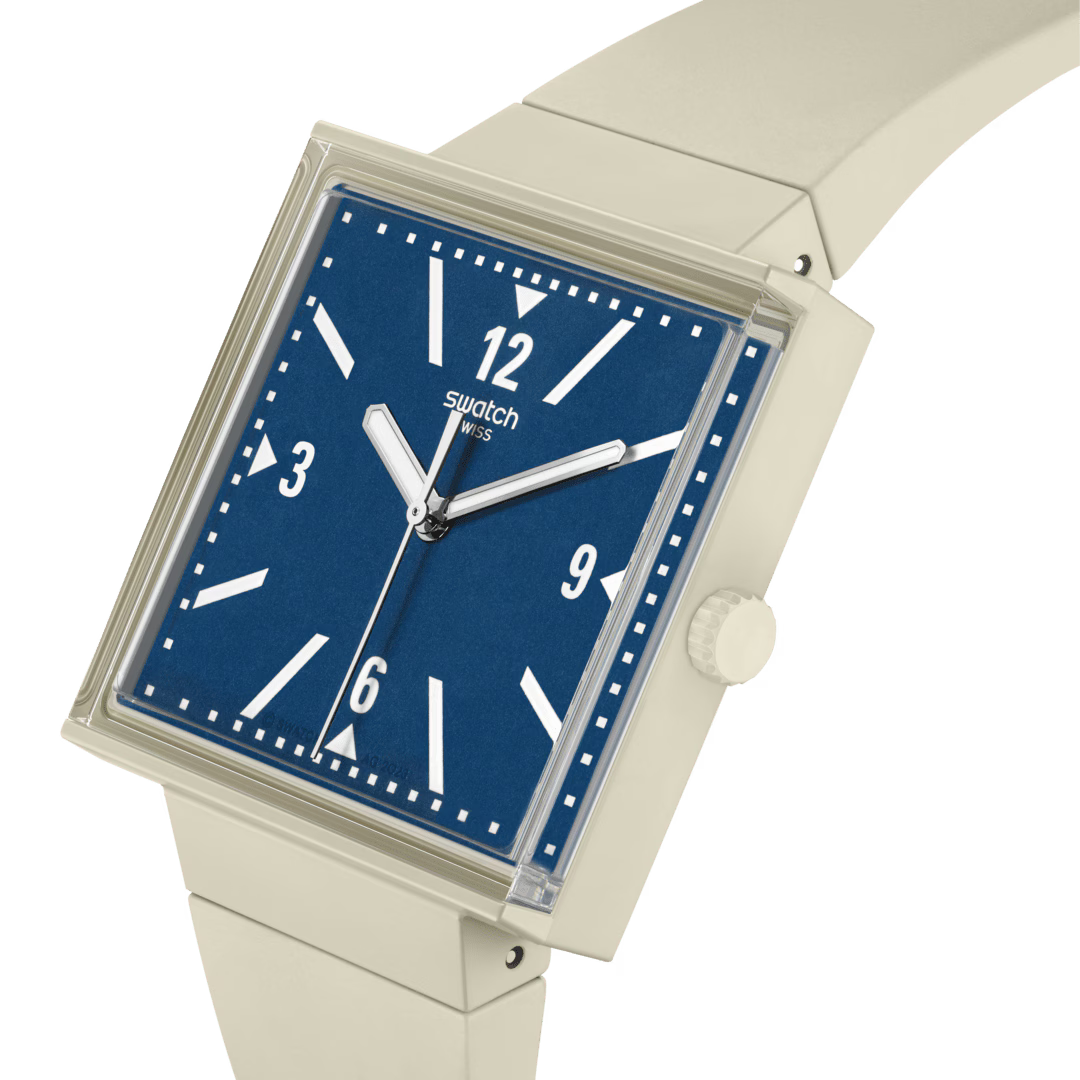
Now Swatch has released the What If… Tariffs, selling for CHF 139, transposing the 3 and the 9 on the dial, and bearing the tagline ‘hopefully just a limited edition’. What lols. On the one hand, you’ve got to raise a wry smile at their fatalistic humour - on the other, I feel like if astronomers told us an asteroid was on a collision course with planet Earth, destined to wipe out all life in a matter of days, Swatch would still find time to rush out a MoonSwatch Mission To The Apocalypse Special6.
Sotheby’s Strife
The New Yorker profile was withering; the reaction when I raised it with rival auction houses at a recent sale preview was telling, and the news breaking as I write this - that Sotheby’s annual losses have more than doubled - is depressing. Redundancies are a way of life at some businesses, and I wish the newly hired watch specialists, sincerely, all the very best, but you can add ‘global legacy auction giants’ to the list of luxury businesses going through tough times - not helped by management that, being kind, doesn’t seem to understand the business. Obviously the art market is far more to blame than watches, but we’re all in the same macro-economic boat.
The very long gestation d’une Montre
One of the headlines from GWD was the rapturous response to Naissance d’Une Montre 3, created by Ferdinand Berthoud and the Time Aeon Foundation. The project began in 2019, was expected to be finished in five years but ended up taking more than six; that’s not scandalous, in the context of a very labour intensive project where you will inevitably discover more work as you go, and we have lived through a global pandemic at the same time. But I hear a rumour that the project was delayed for an additional reason: a CEO that I won’t name, but whose brand was closely involved with the programme, was eager to abandon the project altogether. So much for guaranteeing the next 500 years of watchmaking!
Breguet’s Big Issue
So we come to the main course of this week’s newsletter: my first impressions from a brief hands-on with the Breguet Hora Mundi 5555, the latest limited edition in the maison’s year-long celebrations of its quarter-millennium milestone.
