

Issue 188: The Most Significant Watches Of The Last 15 Years
Rolex, Rexhep, Richard Mille and... the Omega Globemaster? Eleven designs that really changed the world of watches.

Hello and welcome back to The Fourth Wheel, the weekly watch newsletter that is pleased to announce, at long last, the return of The Watch Enquiry. For new readers, TWE is something of a spin-off series within the Fourth Wheel Media Universe1, a podcast series launched in 2025 and hosted by me and my good friend Tim Barber (which whom I once worked on QP Magazine). You can find previous episodes on Spotify or Apple Podcasts.
After something of a hiatus, today we’re back. We have four more episodes coming your way, and we start with a two-parter. It’s a list - do people on the internet enjoy lists? I think they might. Certainly I think you’ll find plenty to chew over with this one - our (chronological) run-down of the eleven - yes, eleven - watches that we feel have really moved things forward since we started writing about watches back in 2010.
Want to catch up on news from across the industry? You might enjoy my other podcast, the recently-launched and entirely self-explanatory News Of The Week. This goes out every Tuesday and, well, I did say it was self-explanatory. Go have a listen if you haven’t already.

The Fourth Wheel is a reader-supported publication with no advertising, sponsorship or commercial partnerships to influence its content. It is made possible by the generous support of its readers: if you think watch journalism could do with a voice that exists outside of the usual media dynamic, please consider taking out a paid subscription. You can start with a free trial!
Here’s a little taste of what you might have missed recently:


Game Changers Part 1 & 2
The watches that have done the most, in our esteemed opinion, to advance the world of watchmaking in the last 15 years.
Part One
Publishing any kind of list online should come with body armour, but it’s ok, I am prepared. It is inconceivable that you will all agree with our list; in fact, it’s perfectly possible that if we sat down tomorrow faced with the same task that we would come up with a few different answers. But I will defend this list to the hilt regardless.
Because you are all lovely, engaged, sensible people I know you will do this anyway, but please take the time to listen to the episodes if you want to understand our full reasoning behind each choice (and then argue the hell out of it in the comments). I have reproduced the full list here with some notes but I’m not transcribing the whole thing.
The criteria for inclusion sounds simple but allows for a few different interpretations of ‘game-changing’. That was intentional: these are not the ten watches with the most important mechanical innovations, the ten biggest sellers or the ten most stupendously impressive. What we tried to tease out, from our shared experience of handling thousands of new launches over a decade-and-a-half, were the watches that could best be associated with wider change. That might mean change for the brand that made them - in which case, it is likely that the brand itself is seen as a notable influence on others during this time - or change that resonated far and wide.
We freely admit that not every watch on this list is a great design. There are a couple that I personally dislike, even, but we think that nevertheless they introduced ideas or prompted behavioural shifts that altered watch manufacturing, collecting and appreciation thereafter.
It was absurdly difficult to whittle down our choices to a manageable number. Some watches that just missed the cut include the Ressence Type 3, Omega Speedmaster Dark Side Of The Moon, Vacheron Constantin’s 2017 revamp of the Overseas, Greubel Forsey’s Quantieme Perpetuel a Equation, Laurent Ferrier’s Classic Tourbillon Double Hairspring, the Cartier Crash reissue and… well, so many others. The list is totally lacking in hyper-complications like the GrandMaster Chime or Solaria, our reasoning being that although such watches push a very specific line forward in increments, and contain within them numerous ingenious inventions, they have not actually transformed the horological landscape. They are a part of it; extreme in one sense yet entirely predictable in another.
The same goes for so many advancements in complicated watchmaking; each one may be quite rightly heralded, but they are for the most part, no matter how intricate or unusual, the everyday business of fine watchmaking. In very few cases do people speak of a time pre- and post-, which is one way of reducing our thought process to a single sentence. Similarly, there are dozens - probably hundreds - of watches released in the last fifteen years that are seen as important to their brand or to collectors of that specific genre/complication/aesthetic, but that did not truly impact the watch industry as a whole. If you find yourself apoplectic at our ignorance and audacity in leaving something off your list, it may be that it falls into this category. Or we may genuinely have overlooked a true game-changer - either way, don’t be shy. I’d love to hear what you think deserved to be on the list.
Without further ado, here are the watches in chronological order.
Richard Mille RM027, 2010
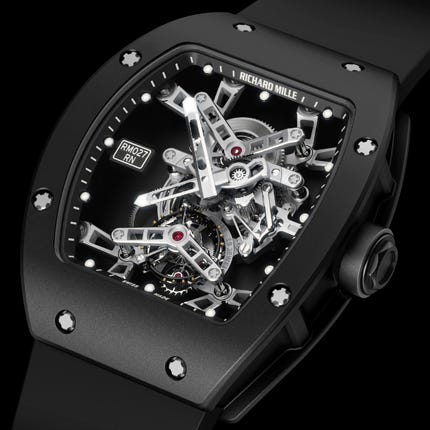
The idea of a tennis player stepping onto the court at the French Open wearing a $500,000 tourbillon was unheard of sixteen years ago. Richard Mille was already well known, of course, and had already worked with sportspeople - but this felt like a turning point for us. This is the watch that cemented the idea of what Richard Mille stands for in the popular consciousness: as Tim says, it made lightweightness a desirable quality in luxury watchmaking. This watch weighed less than 20 grams including its strap - something Tim described as ‘like wearing a piece of paper on your wrist’ when he pinched it off the wrist of Rafael Nadal, for of course he was the player that brought the watch to the baseline.
MB&F Legacy Machine 1, 2012
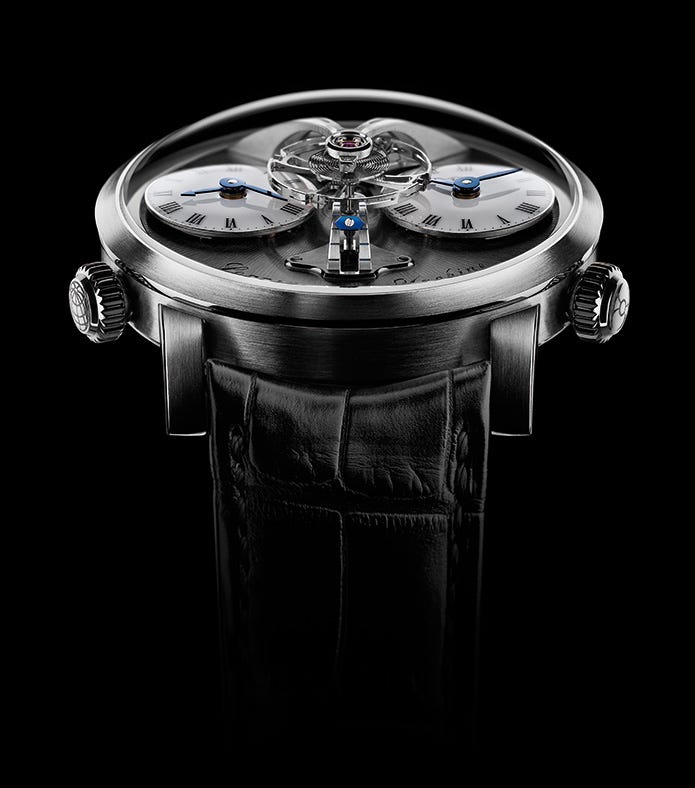
The brand launched in 2005 and released HM1 in 20072 and although it deserves all the credit it gets for inventing novel timekeeping displays and wonderful new case shapes under the Horological Machines banner, I argue that it is the Legacy Machine line, which made its debut in 2012, that changed the game. A strange set-up, perhaps: having become one of the leading names of a horological avant-garde (in the wake of Vianney Halter et al and alongside Urwerk and De Bethune) the Big Twist was to see this iconoclastic watchmaker bring out something much more faithful to traditional ideas. Of course, we don’t consider it ‘conventional’ in the same way that a Patek or a Blancpain is conventional - but, we argue, its impact was to demonstrate to a whole new generation of independent watchmakers that there was a way to be both individualistic and informed by watchmaking history. It put craft to the fore, as opposed to sci-fi design, and in our opinion showed the depth and breadth of what MB&F could be - as well as providing the platform for the brand’s most serious complications, particularly the LM Perpetual and LM Sequential chronograph.
Tudor Black Bay, 2012
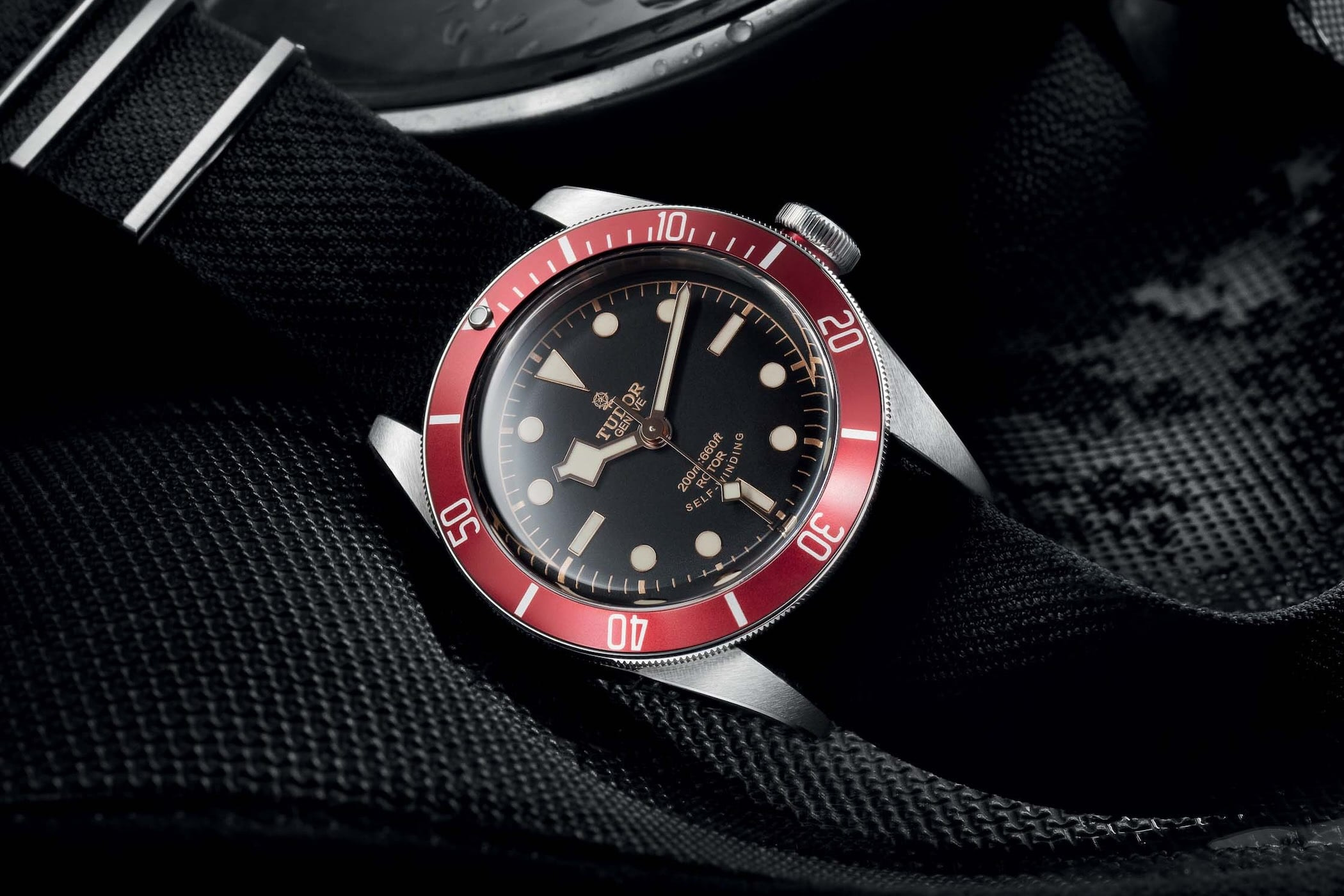
It could not be ignored, could it? Tudor’s revival in 2011 - spearheaded by the immaculately dressed Davide Cerrato - brought pep and colour to sports watches. In a way, the masterstroke was to avoid reviving specific models from Tudor’s past but instead to synthesise something evocative of the age yet also perfectly modern. The Black Bay launched with its crimson bezel and smily gilt dial and set the template for a totally new idea: stylish sports watches. It’s not that sports watches prior had never had style, but it was never so deliberate. It spawned a generation of imitators, many of them successful and credible in their own right, and it turned Tudor from an irrelevance into a lynchpin of the mainstream watch market. It’s a design classic - despite being arguably quite formulaic - and helped the dive watch leapfrog the chronograph, at least for a generation, to become the dominant sports watch genre.
