Issue 200: The Big Watches & Wonders Special
39 thoughts on everything from the Daytona 'Grand Feu' to the Cubitus perpetual, with dancing robots, astronauts and secretive exhibitions at Rolex HQ along the way.

Hello and welcome back to The Fourth Wheel, the weekly watch newsletter that has spent five days in Geneva, met with nearly 70 brands, taken over 1,100 photos and videos and eaten a surprisingly small amount of chocolate. I’ve seen the most hyped pieces from the biggest brands in the world, sleeper hits that Instagram is yet to really appreciate, and brands that haven’t even launched yet. I’ve met an astronaut, watched a robot dance, and heard the phrase “cheese-shaped appliqué1”. The most impressive horological creations I saw all week were 200 years old and at Rolex’s HQ - yes, you can read about that below - and I saw a few watches I couldn’t believe nobody objected to before their presentation to the world. And after five solid days my main sensation is that I haven’t even come close to seeing everything.
This week’s newsletter is a stream-of-consciouness list of my reactions, hot takes and first attempts at analysis. Over the coming weeks I’m sure more will follow as I start to digest it all. On Tuesday, the podcast will be dedicated to the ten watches that most impressed me from W&W and its surroundings, and next Friday’s newsletter will be an AMA - the twentieth! - so please, send me your questions.
Also - 200 issues! I’ll figure out how to celebrate it another time…
The Fourth Wheel is a reader-supported publication with no advertising, sponsorship or commercial partnerships to influence its content. It is made possible by the generous support of its readers: if you think watch journalism could do with a voice that exists outside of the usual media dynamic, please consider taking out a paid subscription. You can start with a free trial!
Here’s a little taste of what you might have missed recently:


Watches & Wonders: what I liked, learned and loathed
My phrase of the week was “people-pleasing”. More than ever, I sat in presentations to be happily told that ‘finally, we have listened to the fans’ (I paraphrase slightly). This could be adding a micro-adjustment clasp, a 37mm model, slimming down a staple, or producing precise combinations that have been absent and much requested on social media. Certainly I don’t think that’s actually how most brands run their product development, but it was a telling narrative: against a challenging economic and commercial backdrop, the subliminal message seemed to be “we are making what people want”.
Equally and just as importantly, there seemed to be fewer really disagreable pieces.2 I saw plenty I wouldn’t buy with my own money, but far fewer pieces for which I couldn’t see a market at all.
Patek Philippe did not bungle the 50th anniversary of the Nautilus. A lot has changed in the last decade. It doesn’t matter one bit that AP put ‘50th’ on the automatic rotor already - big deal. Coming out with two sizes was a good move.
Rolex, by contrast, normally the safer pair of hands, didn’t quite get it right for 100 years of the Oyster. I think the two-tone OP with ‘100 Years’ replacing Swiss Made is good evidence that the previous policy of not really marking anniversaries was the right one.
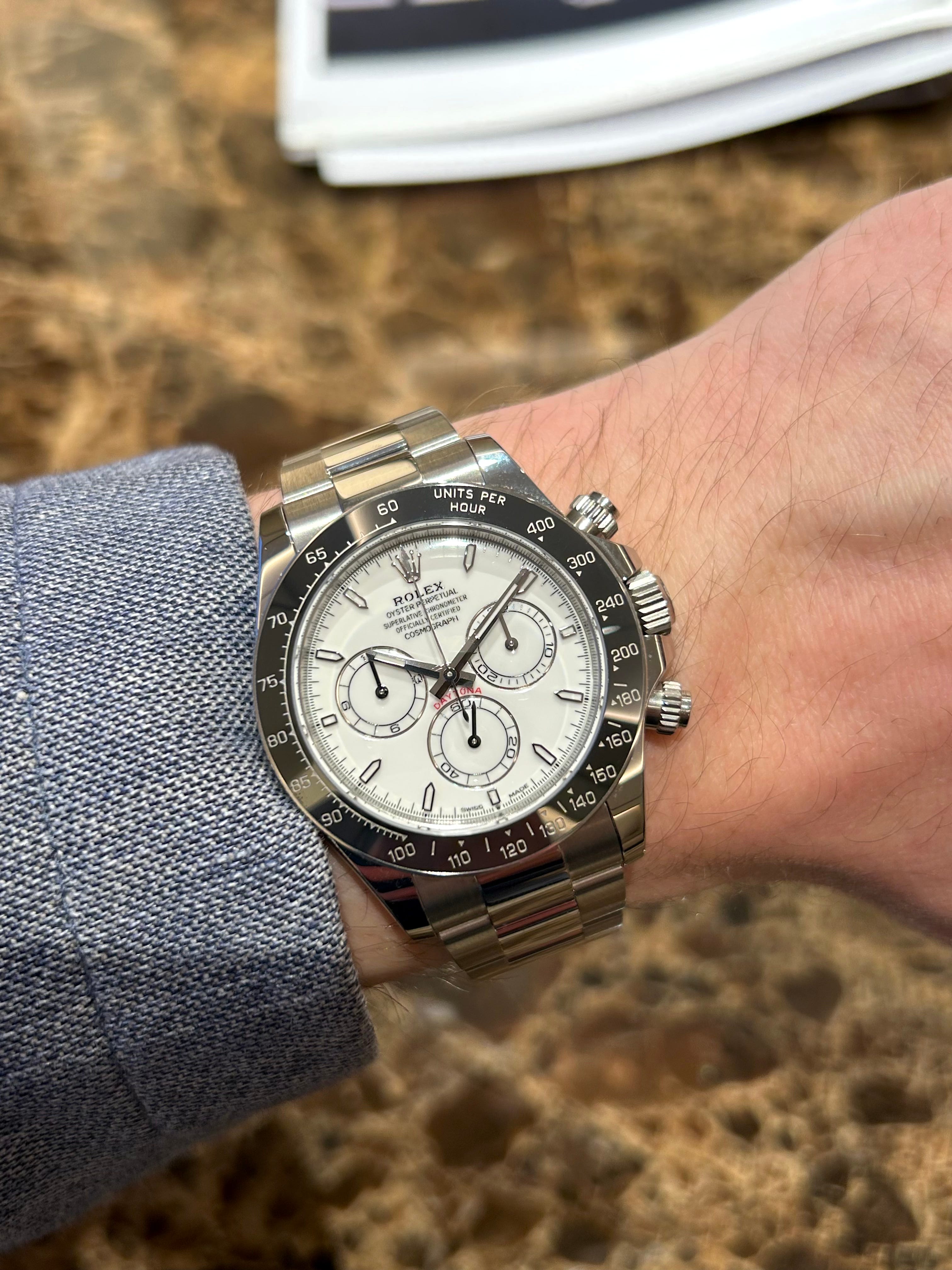
Sticking with Rolex…The furore over the ‘Grand Feu’ enamel dial has been my favourite storm in a teacup this week. If you’re not up to speed, the new Daytona has an enamel dial that comprises enamel fired onto ceramic, which is then glued to brass dial plates. It’s described as grand feu by Rolex but technically shouldn’t be, as the definition is traditionally reserved for the act of enamelling on metal. I read kingflum’s latest with interest but did wonder: do we define ‘grand feu’ as enamelling on metal because when these definitions arose, enamelling on a ceramic disc wasn’t really an option? In any case, I agree with the sentiment that Rolex has dispensed with a large part of what makes enamelling sought-after, which is the craft. But it exposes a beautifully irrational aspect of watch collecting: Rolex has by any reasonable measure improved the process of enamelling, coming up with a solution that drastically reduces failure rates yet delivers the same ‘experience’ to the wearer, and the response of the community has been to disparage it for using the wrong terminology rather than applaud its commitment to technical advancement. I totally understand why we prize real grand feu enamel work - the difficulty is the point, to an extent - and of course watch collecting is not rational, but this whole thing is kind of amusing.
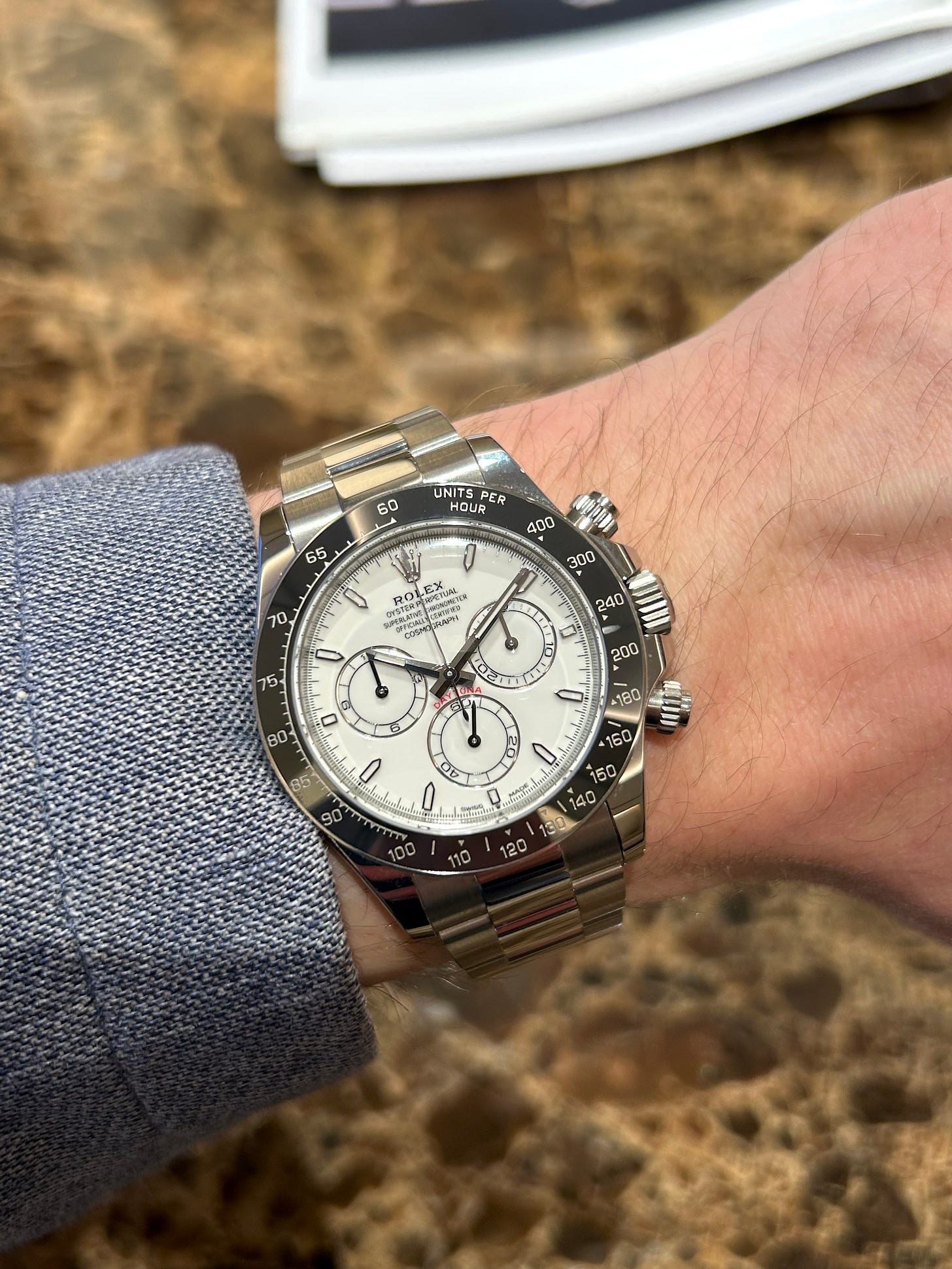
My main point of interest with Rolex was the announcement of improvements to the Superlative Chronometer standard. Or should I say ‘partial announcement’, because although Rolex now says the standard includes more stringent levels of magnetic resistance, sustainability and reliability, but does not say what these levels are or how they are measured. I pushed Rolex for answers and was only told that the standards were sufficient for everyday life. I am also told - this might be news! - that Rolex intends to take all its testing in-house by 2030, moving away from COSC. Aside from the fact that that might actually torpedo COSC in terms of revenue, Rolex being its biggest client by far, I can’t really understand how this will work if Rolex wants to continue referring to its watches as chronometers at all, superlative or otherwise. There was also mention of working with another independent body - not METAS, though3 - so really, the whole thing is clear as mud, but something is happening. I feel like it is tying itself in knots to avoid direct comparisons with Omega, or Tudor, but as Velociphile and others have noted with regards to JLC, coming up with fancy standards but not explaining how they work is pretty much par for the course these days.