

Issue 206: $10,000 For A Sellita, Or $10,000 For A Space Watch?
Why it's not always appropriate to fixate on a watch's movement: inside the economics of the Barrelhand Monolith

Hello and welcome back to The Fourth Wheel, the weekly watch newsletter that appreciates everyone who responded to my crowd-sourcing call to arms. (If you didn’t see it, by Thursday afternoon I had completely run out of inspiration and took to Instagram looking for solutions - desperate times indeed!) One person suggested writing about the very saturation and burnout that might be to blame - and I nearly did, but it feels self-indulgent. Maybe another time. Others made excellent suggestions and I have kept several for the coming weeks. But in the end, I fell back on a reliable method; I got angry about something somebody wrote on the internet.

I did some journalism, too, to try and buttress my keyboard-warrior qualities with, you know, facts, or at the very least, original1 comment from the brand in question. I know it’s not the norm, but to spare most of you I have at least done the decent thing and hidden the more professional content behind the paywall. Enjoy!
The Fourth Wheel is a reader-supported publication with no advertising, sponsorship or commercial partnerships to influence its content. It is made possible by the generous support of its readers: if you think watch journalism could do with a voice that exists outside of the usual media dynamic, please consider taking out a paid subscription. You can start with a free trial!
Here’s a little taste of what you might have missed recently:


Come and see me at London Watch Week next week!
Before we get to the Barrelhand stuff, I need to tell you: together with my podcast co-host Tim Barber, I have been putting together a few talks for London Watch Week. They’ll be taking place next Friday and Saturday (June 5th & 6th). If you’re around please come and say hi (and stay for the talks…!)
On Friday, I’ll be sitting down with Bremont CEO Davide Cerrato to ask him how that’s all going, and on Saturday I’m going to be bringing together some of the indie brands exhibiting to hear about the reality of their lives right now. Then later on I think Tim and I are going to sit down and have a bit of a debate with a few of our more outspoken friends in the media. It should all be good fun, and we’re going to record it all so if you miss it, we’ll have it in podcast form later in the summer.
You can find out all about London Watch Week here.
At that price, it should include a trip to the moon!
I did something yesterday I very rarely do; I got involved in the comments below an article. Specifically, Hodinkee’s write-up of the Barrelhand Monolith, which officially launched yesterday but has been around for a little while under the radar. For reasons of space2 I’m not going to go over the watch’s basic details, but it is worth familiarising yourself with them, either there or on the brand’s website.
I’ve spoken to Barrelhand co-founder Karel Bachand a few times, for articles that have already come out and for one that you’ll read in Esquire later this year. I like what he’s doing but I have no other vested interest; I’ve never done any work for Barrelhand or taken any money from them for any reason. I’m coming out to bat for them purely because I believe in what they’re trying to do.
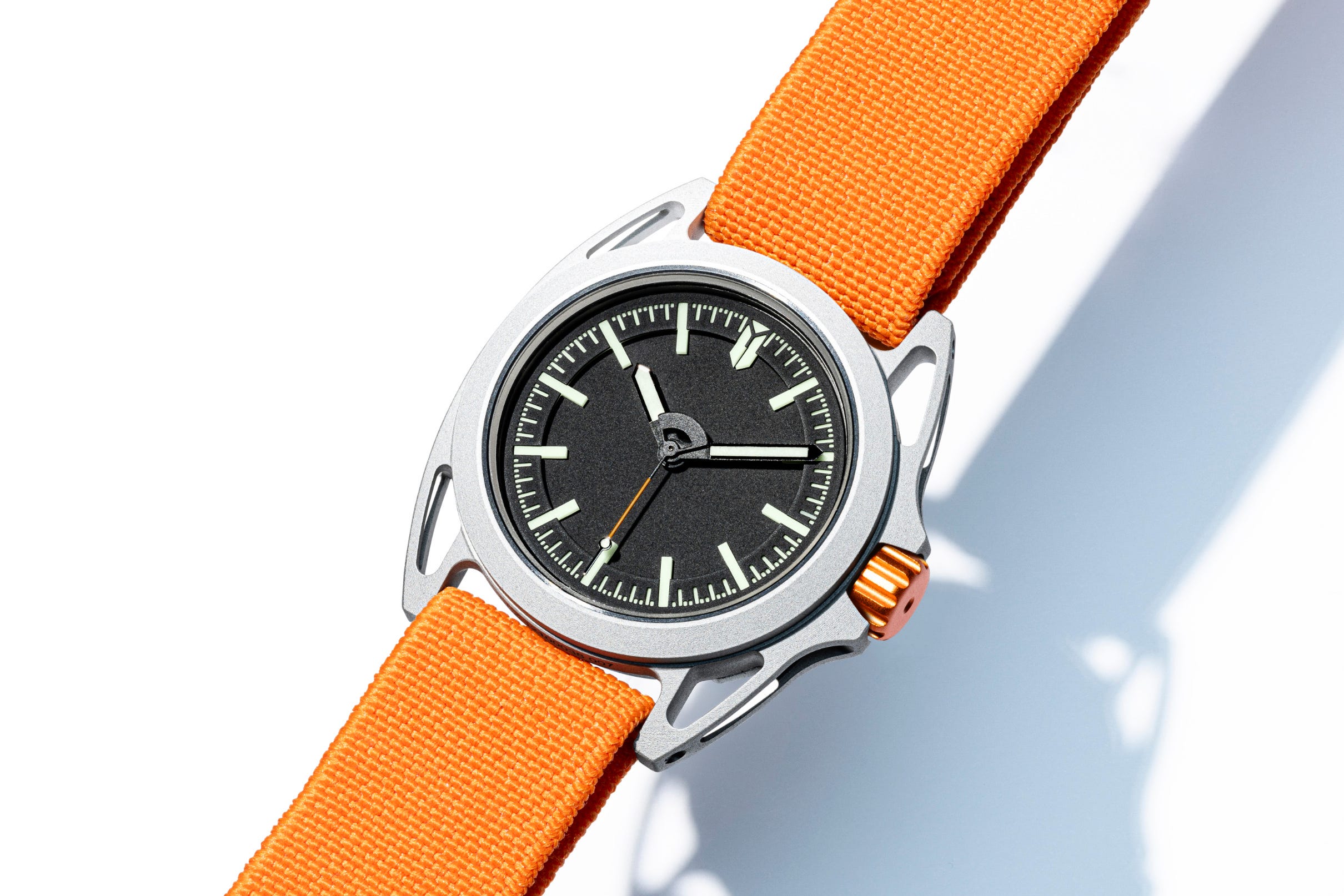
This is also something of a pent-up frustration on my part, and comments below the Hodinkee article were the straw that broke the camel’s back. I know better, but sometimes you have to take the bait. Specifically, we’re talking about the number of comments that go along very similar lines under so, so many new watch releases:
“How much for a Sellita movement?”3
There is a saying: a little learning is a dangerous thing. In many ways, the internet and social media have transformed watch collecting and enthusiasm for the better, but they have also been a live demonstration of the veracity of this phrase. It is great that so many more people know about watches, but having some clue4 about the unit cost of a Sellita SW300-1 is not even close to being all the ammunition you need before you are prepared for a conversation about what constitutes value in a watch.
I expect some reactions to this piece along the lines that I too have somehow been duped by a persuasive brand, taken in by a romantic story or am somehow in the pocket of the manufacturer. This is partly why I have chosen this particular time to take a stab at this response, because there could hardly be a less likely brand to be paying off journalists. Yes, there is a romance to it, as I’ve already admitted, but I really am clear-eyed about what’s going on here.
I am not, necessarily, coming out and saying that $9,750 is a bargain price for this watch. It is more than I’ve ever spent on a watch, and if that was my budget today I’d be very tempted by a lot of mainstream offerings. What I am here to achieve, if nothing else, is an end to the knee-jerk, unthinking response that the Monolith and so many other watches receive. I accept I might be preaching to the choir, but the advantage of having one’s own platform is that I can write this instead of ranting and raving in the comments section. I trust you will all link to it every time you see this kind of remark in future.
The waters are made murkier by the fact that there are absolutely brands out there using Sellita movements, doing relatively little to them and charging a generous mark-up. Mainstream watchmakers invested millions in marketing the concept of in-house movements, demonising perfectly reasonable alternatives that are tried and tested, reliable, serviceable and so on. This gave enthusiasts a misplaced sense of snobbery towards third-party movements, which is doubly hypocritical as so many big brands use ETA or Sellita clones anyway. But I digress; the point is that in a lot of cases, the movement really isn’t the story; value can be found in many other places.
You don’t have to take my word for it. I rang up Karel to ask him directly how this price makes sense. Let’s see what he had to say.
