

Issue 211: Watchmaking's Unsolved Problems
Easter ain't the half of it. How watches could still get better - and the areas in which they might be just about as good as they're going to get

Hello and welcome back to The Fourth Wheel, the weekly watch newsletter that wishes it had some subtle way of commenting on the week’s N3W51. I’m sure it will come to me. It was a good week for Antoine Pin, too, who almost exactly six months after parting ways with TAG Heuer, has been announced as the new CEO of De Bethune. My focus this week is on the future, however, as I make good on my word and answer an outstanding question from last week’s AMA. It takes us into all kinds of places, and was great fun to write. Hope you enjoy it!
The Fourth Wheel is a reader-supported publication with no advertising, sponsorship or commercial partnerships to influence its content. It is made possible by the generous support of its readers: if you think watch journalism could do with a voice that exists outside of the usual media dynamic, please consider taking out a paid subscription. You can start with a free trial!
Here’s a little taste of what you might have missed recently:


And he wept, for there were no more worlds to conquer
Last week I was asked what watchmaking problems are still out there to solve. The question comes from NorcalWatch on Instagram and I think you will all agree that even a few minutes’ contemplation is enough to know that this deserves a longer answer.
First, let’s make sure the question is completely clear. Note it does not say ‘mechanical watchmaking’, so we can consider any kind of wrist-based or, I suppose, portable timekeeping. Then there’s the part about problems. It would be easy to ask “what has not yet been done in the field of watchmaking?” - the answer could include some intractable conundrums but might just as reasonably include all kinds of irrelevant suggestions. No-one, to my knowledge, has ever created a minute repeater dive watch, and there are some pretty obvious reasons for that. Even if you could address the obstacles to its water-resistance, it would be a pretty pointless exercise2 - although as we all know, the watch industry is fond of pointless exercises.
So, while there is obviously an infinite range of things that haven’t happened, our question is about problems that need solving, or at least, could be solved. Let’s further assume that we’re looking for problems whose solution would have some kind of practical benefit or that would fill a logical gap in the abilities of a watch. I still think we have a very broad remit, so I’m going to try and break the problems down thematically.
Resistance: how can watches better cope with the world around them.
Chronometry: Daily accuracy, but also efficiency of energy transfer.
Ergonomics: can the watch be better integrated into our lives (while still being considered ‘a watch’)?
Complications: what can a watch still not do? Here I think we must restrict ourselves to mechanical watches, because a smartwatch with an internet connection can in theory display any information known to man, and if we start asking ‘what can modern technology not yet do’ we are writing a very different article.
After that, I’m going to talk about refinement, because there is a big difference between achieving a specific goal and making a watch that is wearable, practical, and commercially viable.
Resistance
It’s not futile. On the contrary, today’s watchmakers have done a pretty outstanding job of combatting the natural threats and forces that will ruin a watch’s day if left unchecked.
Magnetism is to all intents a closed case. METAS certification warrants your watch will withstand any magnetic field3 you are likely to encounter. Obviously that doesn’t mean it couldn’t be improved upon, but it falls into the category of ‘you’d have bigger problems than looking after your watch’.
Water resistance, likewise, has been addressed: Omega’s Planet Ocean Ultra Deep Professional, as worn by Victor Vescovo to the deepest point on the planet, is pressure-tested to withstand even greater depths. When a watch can survive ocean depths that don’t even exist, the battle is won. At an everyday level, watches with more than adequate water resistance are available at reasonable budgets and in wearable forms. You could ask about complicated watches, as mentioned above, but the idea of creating a perpetual calendar that you could adjust under water is creating a problem simply to be able to solve it, if you ask me.
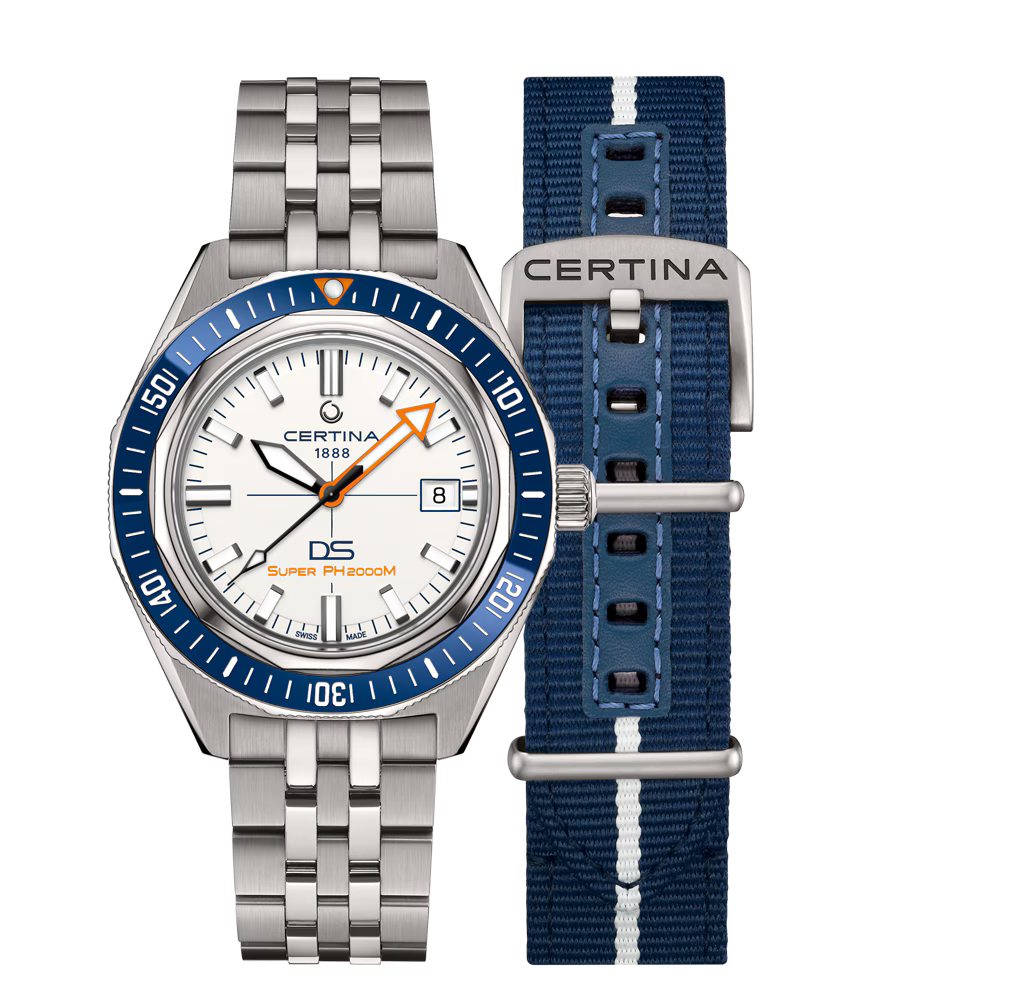
Shock. This is a bit more promising. IWC’s Shock Absorber concept watch notwithstanding, most watches have a relatively low threshold of shock resistance. I’ve had a modern tool watch completely conk out after a ~70cm fall onto an office carpet, so I’d welcome a higher standard of shock resistance in our everyday watches. The “1m fall onto a hard surface” is the quoted industry standard for a robust watch, but anecdotal evidence suggests it really is all about how the watch lands. Certina introduced a shock resistance system that went almost completely unnoticed a year or two ago. It claims to be able to withstand forces of up to 10,000G and is commercially available for a fraction of the price of the IWC. But, out of necessity, it is a pretty chunky dive watch: as we’ll see, in general, the question is so often not just about ‘can you solve the problem’ but ‘can you solve the problem and meet a number of other criteria’. Whether Certina’s system, which includes a thin plate between the movement and the dial, an external housing ring for the movement, and reinforced sapphire crystal, could be evolved to work in smaller watches, I have no idea. I’m chalking this one up as ‘technically solved but there’s definitely work still to be done’.
Other damage. All material choices sit on a spectrum of affordability, practicality and ability. Steel is so commonly used because it’s strong enough and we put up with the scratches in return for a reasonable price. For all that watch companies have experimented with case materials in the last 20 years - Magic Gold, Quartz-TPT, Cermet and more - we are still broadly satisfied with the same metals that have been around for a century. I saw the question posed recently of whether titanium is on track to eventually overtake steel as the dominant tool watch material and while I’d never considered it, I guess it’s possible - but the answer will have more to do with marketing, fashion and price than material resilience. I think some of the substances that are now pretty common in mid-to-high end watches are getting us pretty close to a practical maximum level of resistance to scratches, chips and so on. At the more expensive end, Richard Mille has some pretty impressive results, and in the mainstream luxury market I think Cermet/Ceratanium and other metal-ceramic hybrids are about as good as things can get without chasing down diminishing returns at an extortionate cost.
Chronometry
We are going to continue butting up against the laws of physics, here. Without writing an exhaustive technical treatise or an entire history book, this is really the core quest of mechanical watchmaking. How well can you keep time, and for how long?
