

Issue 216: What The GPHG Longlist Data Tells Us About The World
The mainstream exodus continues; India's brands arrive; Complication confusion. Plus: how to define a British watch brand.

Hello and welcome back to The Fourth Wheel, the weekly watch newsletter that is catching up, a little, after a few months with nose in a grindstone-adjacent position. Hence the topic of this week’s newsletter. I realise the GPHG list has been out for a couple of weeks at least, but I only just found time to really delve into it and as ever, I find myself more captivated than I want to admit. Below is a largely numerical analysis of what’s going on in the land of red carpets and champagne - but simply as a fan, I find browsing the list fascinating. Aliens arriving on earth with no greater priority than understanding our watch culture would infer from this that we all own the most ornate and extravagant watches imaginable. Say what you like about them (and I will), there aren’t many boring designs.
I also wanted to take a minute to talk about The British Bench, a curious and rather ambitious new project that’s passed my bow this week. Set up by IT worker and former military man Stephen O’Connor, it aims to put forward a comprehensive framework for grading geographical provenance. O’Connor’s gripe - reasonable - was that there is no official standard for a British watch and therefore a number of brands could be said to be getting away with sweeping statements about their place of manufacture or design. I’ll invite you to discover it for yourselves - it’s something that a few years ago I would have thought guaranteed to invite conflict, but may benefit from warmer attitudes towards supply-chain transparency today. The tier-based system O’Connor has come up with seems robust enough, but he has set himself a challenge and no mistake. Anything like this requires all the major players’ buy-in, and while it looks like he has some, there’s a lot more to do. I wonder what the Alliance of British Watch and Clockmakers makes of it all - you’d have thought assessing a degree of ‘Britishness’ might fall under their remit. There’s an interview with O’Connor here, if you want to know a bit more.
The Fourth Wheel is hand-finished in London, accurate to +/- one newsletter per week, and has a seven-day power reserve. If you like it, tell your friends!
The Fourth Wheel is a reader-supported publication with no advertising, sponsorship or commercial partnerships to influence its content. It is made possible by the generous support of its readers: if you think watch journalism could do with a voice that exists outside of the usual media dynamic, please consider taking out a paid subscription. You can start with a free trial!
Here’s a little taste of what you might have missed recently:


GPHG 2026 By The Numbers
I did my GPHG voting this week, like a good little Academy member. In the last couple of years I have changed the way I approach the awards process in The Fourth Wheel; as I wrote last year, it is a very useful dataset if you can interpret it properly.

I hesitated over returning to the same ground but then reasoned that if I am going to take a primarily data-led approach, the only sensible thing is to build on last year’s work. Also I made space for a rant towards the end, so stick around for that.
M’learned friend kingflum wrote recently about the importance of not misunderstanding the GPHG’s longlist stage so for any recent arrivals (there has been a recent flurry; welcome!) a quick re-cap. Brands pay CHF8001 to appear on the longlist, there is no other screening process. I don’t think it’s even necessary to prove that you have manufactured a watch at this stage2. Not that I’m implying otherwise, just making the point that the real scrutiny - and the point at which anyone who is going to be impressed should start to really care (at least in terms of the result of the awards) comes at the end of August once the shortlist has been announced. Tune in then, imagine you’re hitting the Netflix ‘skip recap’ button and take it from there.
But I care about the longlist as a dataset in itself, because I think it tells us a few things. We have our eyes open: we know it’s a pay-to-play marketing tool. That gives us a rare, maybe unique insight into the marketing strategies of hundreds of brands.
The vital statistics
In 2025, 184 brands entered 302 watches, which as I noted last year, felt like a hell of a lot and was indeed a rise on historic levels. This year - when, as a side note, I felt the voting was less onerous; maybe I entered a flow state and just ran the whole thing on vibes - 194 brands have entered 320 watches.
As before, the vast majority of these are attacking the Petit Aiguille and Challenge categories; this increasingly feels like a two-tier GPHG developing. Part of me wonders whether these two categories should be spun out into their own separate entity… but of course the whole appeal of paying your 800 francs is being able to say you’re on the same web page as AP.
Indies vs the world
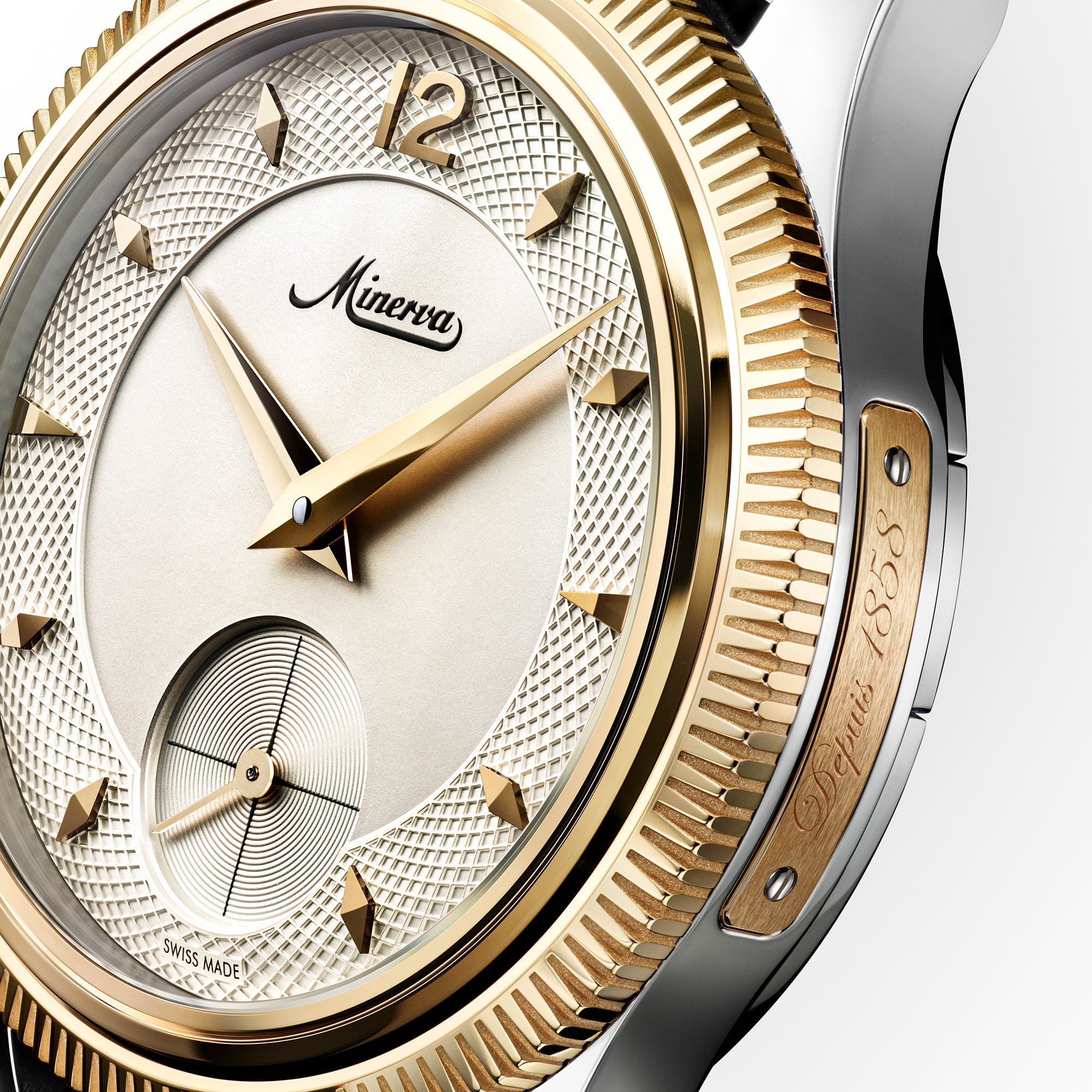
By my calculations, there are just 23 brands that you could reasonably call ‘establishment’ names - that’s major group brands or long-standing quasi-indies like Ulysse Nardin and Girard-Perregaux. Even that count is generous, because it includes indie-in-all-but-ownership brands like Daniel Roth, Gerald Genta, Minerva (hello!), and Ferdinand Berthoud. There are fewer mainstream watches on the longlist than ever before.
Last year I wrote that 30 of Morgan Stanley’s top 50 estimated leaderboard by revenue were absent; this year, it’s 28, but the MS list itself contains more indies than last year, so the trend is actually further away from the mainstream. This year LVMH has only fielded five watches from TAG Heuer to represent its core watch division. Richemont has let IWC back on the field (for all the good that’s going to do), but taken off serial winner Van Cleef & Arpels, presumably to let some of the other jewellery brands have a go for a change. If it wasn’t for the Montblanc-Minerva split, it would be its slimmest representation ever, and it skews massively towards dressier brands. It’s the same story all over: Bulgari, Dior, Gucci, Hermes, Louis Vuitton and Piaget are the ‘mainstream’ brands I’m talking about. Don’t get me wrong, I love some of their watches, but these are the companies that, taking the long view, still need to earn the acceptance of the watch community.
Audemars Piguet, with six watches entered, is by a clear margin the most credible major company in attendance. Chopard comes next, also with six. Swatch Group has somewhat bizarrely submitted just two watches: the Blancpain Grande Double Sonnerie (which it must be hoping will ‘do a Breguet’) and the Longines Hydroconquest, which is more likely to do a runner. It’s actually a perfectly nice watch, but doesn’t have a hope - if it makes it to the shortlist, it’s on brand recognition alone.
