

The Fourth Wheel, Issue 28
'Friends don't write about friends selling franken-watches'

Hello everyone! Welcome one and all, subscribers new and old. Thank you to everyone who told me how much they enjoyed last week’s run-through of the GPHG awards. I actually thought it was fairly uncontroversial but there you go. There are fewer slings and arrows this week, as we do a little compare-and-contrast hot take on some re-issued chronographs, and have a think about the problems of mythbusting versus the laws of libel. Enjoy.
I have a feeling that Wei Koh’s latest project, Grail Watch, is going to be a regular in this newsletter, and for all the right reasons. Say what you like about Wei - people usually do, sometimes to his face - he has a very finely tuned sense of what watch collectors want. Funnily enough, so does William Massena. It’s almost as if they were watch collectors themselves…
Both announced new limited edition chronographs this week, something the wealthy target market will never tire of hearing. Grail Watch has worked with Franck Muller on reviving three models from the 1990s with new-old-stock movements; Massena LAB has partnered with Mathey-Tissot to produce two limited runs of the Type XX Flyback. These are very different projects, but I think each says something interesting about where tastes are at the moment.
I won’t go through the exact details of the Franck Muller pieces; there is a two-register chrono, a three-register one and a really interesting split-seconds chronograph with a pinion that runs all the way through the watch to power an additional seconds hand on the caseback, which is given over entirely to tachymetric scales.1 You can see them all here. For a comparison to the original chronographs, check out the five that have sold at A Collected Man.
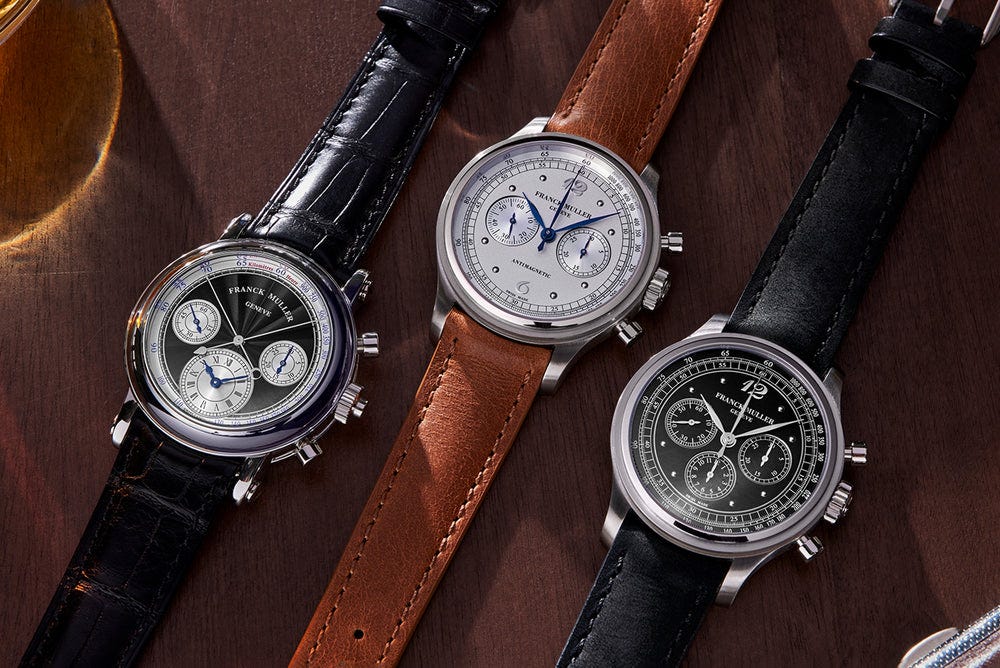
What’s funny about this project is that for anyone under 40 - such as I am - these don’t match up to your conception of what Franck Muller represents, because they pre-date such over-the-top creations as the Conquistador, the Master Banker and the Crazy Hours, all of which sat in the oversized tonneau case that became Muller’s recognisable silhouette. If you came into the watch industry at the end of the 2010s, as I did, Franck Muller was a name you heard mentioned but saw very little of, and when you did hear it it wasn’t in the most flattering tones. It took a long time for me to understand his significance, and realise that I’d come along far too late to witness any of the exuberance, eccentricity and later scandal that accompany the name.
In brief: Muller blasted into the watch world in the 80s with enormous ambition, created some ridiculously complicated watches, rode a wave of popularity that saw him become something close to an actual celebrity in the 90s, then got bound up in bitter internal disputes and scandalous allegations in the 2000s, including illegal workers, Russian movements masquerading as Swiss, and something called ‘the Jaquet Affair’, a counterfeiting scandal. Then the financial crash of 2007-09 swept in. When I heard about Franck Muller, it was as a bit of a punchline, rather than out of respect for a trailblazing pioneer.2
With this project, I feel like we’re going full circle on Franck Muller and that as well as three interesting and appealing watches, it represents a strong attempt to rehabilitate the brand’s (and the man’s) reputation. See also the recent Bamford x Franck Muller x Popeye collaboration. Whether tastes are going to come back to the cintree curvex shape, I’m not sure, but I’m filing it in the now stuffed folder marked ‘Mounting evidence that the time to buy interesting watches from the 1990s is NOW’.3
The Massena LAB x Mathey-Tissot pieces are interesting because over the last 12-18 months you could well have got the impression we’d all moved on from chronographs of the 1950s and 1960s.4 I exaggerate slightly - these are such heartland designs they're never really going out of fashion, but all the attention on vintage Cartier, on dress watches generally, and of integrated designs of the 70s and 80s, did make me feel like military chronographs were on the back burner. I certainly hadn't realised that Mathey-Tissot has been making Type XX watches for a few years now. These two new limited editions are very close to Mathey-Tissot's existing range aesthetically, but introduce more deliberately vintage-inspired details such as aged yellow lume or a tropical brown dial.
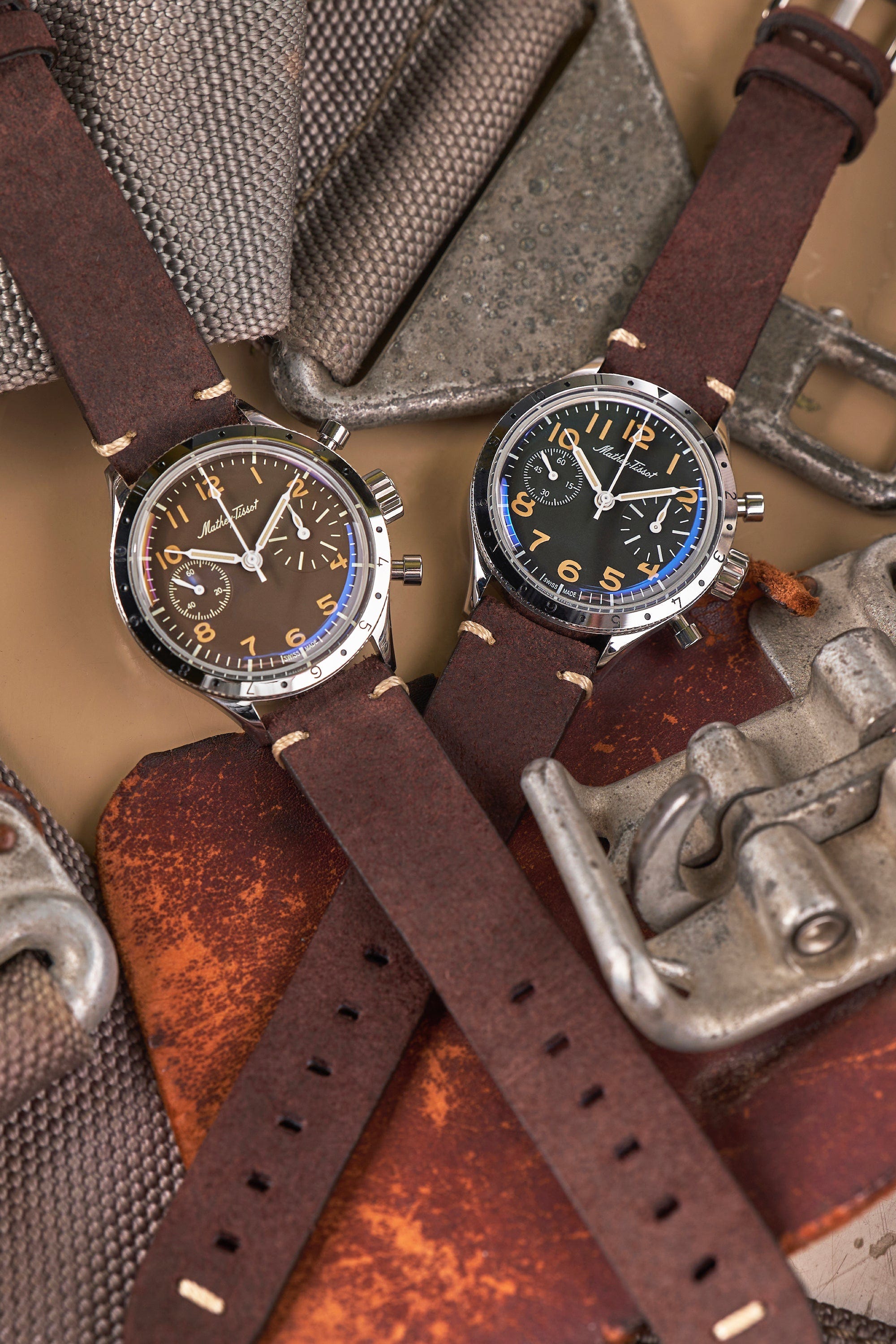
Breguet is of course the most famous name associated with the Type XX/Type 20 design. I’ve heard on the grapevine that a refreshed Type XX might be the brand’s big push for 2023 (a mere four years after it got everyone excited by making a lovely one-off for Only Watch 2019). But the trouble is, no-one has exclusive ownership of the design - it’s like Dirty Dozen watches in that respect, or ‘flieger’ pieces generally.5 The production history of the Type XX is extremely messy - Ken Kessler's breakdown for Revolution is useful, as is this deep dive on the Breguet pieces alone at Hodinkee. At least six manufacturers have a claim on the Type XX; some are defunct but others still exist. This is great for Massena LAB, which can get access to a famous, historic design without coming up against the intransigent might of the Swatch Group. But not so great for Breguet, which will always have other brands buzzing around in its airspace when it tries to take control of the narrative.
Busting the myth of why the mainstream media never busts myths
I expect many of you will know and follow Jose Pereztroika on Instagram, aka Perezcope. He’s a blogger whose writing I find fascinating - he’s very good at working through historical material, combining sources and getting to grips with the truth in places where sometimes it’s not forthcoming. His two main subjects are the history of Panerai and vintage Rolex, the latter usually focussing on the top-level auction market. He recently posted about a ‘Paul Newman’ Daytona that sold in 2018 at Phillips. Like a lot of his posts, it’s a ‘mythbusting’ exposé that seems to show the watch as sold (for $3m) was not as described. I’m not here to say whether that’s true - the reason I’m talking about it is Jose’s disappointment that ‘the mainstream watch media’ didn’t pick up on the story6. This is a regular complaint: that he uncovers fakes, dodgy dealing, scandalous re-writing of history, Franken-watches, and that no-one at Hodinkee or Monochrome or Quill & Pad or anywhere else ever sees fit to write about what he’s discovered. I thought I’d say a little bit about why that is.
The implication - or sometimes, overt assertion - is that us watch journalists are too much in thrall to the auction houses and brands to dare talk about this kind of thing. Maybe there’s a grain of truth to that: journalists enjoy good access to the big sale previews, frequently go to the auction house experts for comments and insight, and many have good relationships with the big hitters of the auction world. But auction houses don’t spend a whole lot on advertising or editorial partnerships7. Phillips is easily the most effective in working with the media, followed by Christie's... after that, I'd say the rest do very little.
I’m not ruling out the idea that things are all a bit too clubby, and there might well be an element of ‘friends don’t write about friends selling franken-watches’ but there are definitely sites out there that would have relatively little to lose in publishing a few juicy ‘scandal’ stories. So why don’t they?
A look at the posts Jose writes provides a few answers. Firstly, and to their credit, they’re very long and very in-depth. I’m all for long, in-depth, investigative journalism - really, it’s my favourite - but the reality is few titles can commit the resources to doing it. That’s not letting the media off the hook, but it’s the way things are.
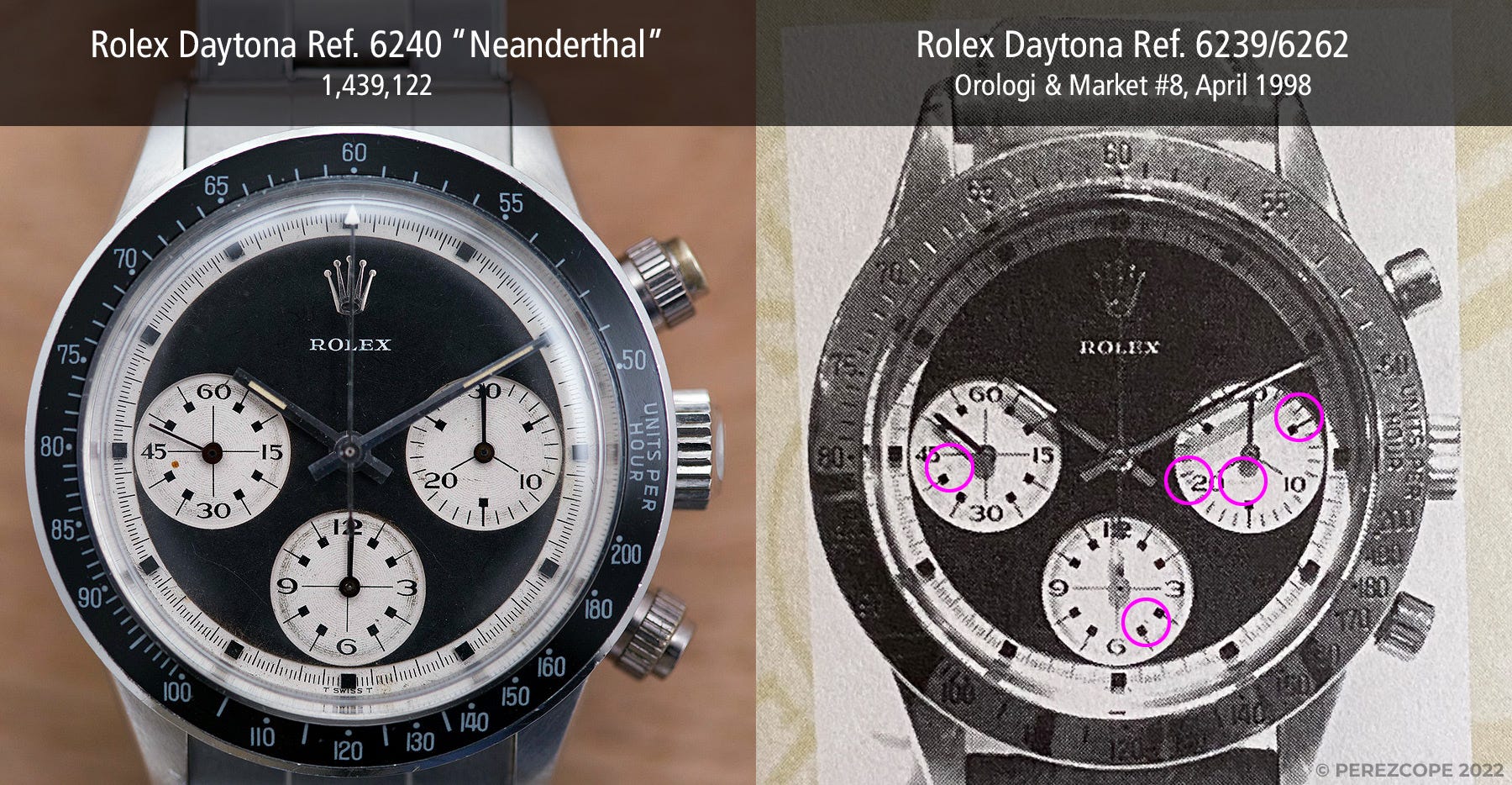
Secondly, although Jose’s research is very thorough, there are limits. His work highlights the difficulty in arriving at definitive, inarguable conclusions when combing through the murky world of vintage watches. Some of his posts are pretty conclusive, but where they concern possible fakes or franken-watches, often you’re left with a lot of strong evidence and persuasive argument, but no smoking gun. Take this post from 2021, which rigorously combs through Patek Philippe serial numbers, makes a very convincing point about the state of the dial, but for its coup de grace (the weirdness concerning the extract from the archives), relies on the rumour that decades ago, individuals at Patek Philippe were bribed to falsify the paperwork. Very few editors will indulge a 3000-word story that doesn’t quite have a rock-solid argument at its core and, to boot, may well get you a letter from some of Geneva’s best-paid lawyers.
This brings me to the biggest reason you won’t see Jose’s reporting at more professional media outlets. If you write that Patek Philippe has a history of fudging its provenance, or that Antiquorum, or Christie’s, or Phillips, knowingly sells watches that are not as they appear, there is a very real chance that you will get sued to high heaven. I know people think newspapers and magazines (especially the tabloids) relish testing the bounds of libel laws, but I’ve worked at a few, and I can tell you getting stuck in a legal battle with a wealthy adversary is right at the very bottom of their to-do lists. Which begs the question: why isn’t Jose getting cease-and-desist letters? Maybe he is. Maybe they’d rather ignore it entirely. I’d love to know.
Quick Links
Wristcheck x Audemars Piguet Winners Announcement, at YouTube
A little while back, Wristcheck launched a design competition in conjunction with none other than Audemars Piguet, to let three lucky winners design a Royal Oak that, if the brand fancied it, would actually get made. It turned out they couldn’t keep it to three, and the five winners were announced this week. There’s some fun stuff in there, for sure, and I think we could stand to see a bit more of this kind of freewheeling generally. But at the very least, the winner should get their own watch given to them when it’s made; this is a whole lot of free creativity that AP just harvested (not to mention market research) and it’ll sell the resulting pieces for substantial sums. A trip to Le Brassus and a handshake with F-HB doesn’t quite cut it.GB Talks: Chris Hall & Nomos Glashutte, at Apple Podcasts
In Self-Promotion Corner this week, another visit to the podcast booth. A few weeks ago I shared the podcast I recorded with George Bamford on TAG Heuer and its Mario Kart themed Formula 1 pieces; at the same time, we also recorded an episode on perhaps the horological polar opposite: all things Nomos Glashutte. I ramble on about how the new Club Sport is kind of the Rolex Oyster Perpetual that you can actually buy, and we both discussed where the brand is (and isn’t) going. Since recording it I’ve had a clearer insight: Oris is the new Nomos. Simple as that.The Case Against The Ancient Art Of Watchmaking, at WatchPro
Listen, I know what you’re thinking. This is not the south London chapter of the Robin Swithinbank appreciation society. But how many other writers are bringing behavioural economic theory into articles about watch brand marketing? There’s a sting in the tail for us professional writers, too.
And Finally…
This is the least likely Formula 1 related watch of the year (and that’s in a year when TAG Heuer made the Mario Kart watch) and I love it. Stepan Sarpaneva x Valtteri Bottas with a ‘northern lights’ dial and no sign of carbon fibre weave, red accents, tyre-print rubber or alloy-wheel shaped rotors. Finns for the win.
I’ve never really ‘got’ Armin Strom. They took me to Palma and sailed me around on the back of a racing catamaran once, which was great fun but it didn’t further my appreciation of the brand an awful lot. This watch is making me look again, however. Horomariobro posted some really sharp macro pics of the finishing, if that’s your cup of tea.
This week I discovered this Instagram account, via James Buttery, who described it as “definite candidate for most interesting vintage feed”. And I laughed a lot at this post: Kari Voutilainen as Abraham Louis Breguet was *chef’s kiss*.
Last but not least, this is my favourite headline in 2022. Makes zero sense, but I don’t care, it made me laugh out loud. Thanks Johnny.
If you think about it, you quickly realise that this has to be read ‘backwards’ as you’re effectively looking at the watch upside down.
The watch industry has a funny relationship with big personalities; some get deified, a la Genta, Biver, Aurel Bacs, Mac Busser: others end up in a love-hate conflict with the whole thing.
As ever, I can’t afford to actually follow my own hunch.
As it happens, I was talking to Jonathan Darracott at Bonhams last Friday, who said he feels that 60s Heuer could be about to have another moment. Like its 2015 all over again.
IWC has the lions share of popular recognition with the Big Pilot, but there’s still Stowa, Laco, Archimede, Hanhart, Fortis and others making generic B-Uhr watches.
He said as much in his Instagram stories last week, which is what drew me in.
Social/influencer marketing is a different story!