

The Fourth Wheel, Issue 38
The most complicated issue of this newsletter EVER

Welcome back to The Fourth Wheel, the newsletter that will never feel the need to exaggerate its own complexity to win over an audience of high net worth individuals. Oh, gosh, spoiler alert - yes, this week I am writing about the Code 11.59 RD#4 Universelle. But I’m not just throwing rocks, I promise. This was a massive release1 and it generated an equally substantial reaction. I have tried my best to be balanced - but you can’t please everyone. As ever, I welcome your comments.
Ask Me Anything
Regular readers will know that every ten issues of the newsletter I like to throw it open to the floor and give you a chance to ask questions. In two weeks’ time I’ll answer any enquiries you may have. Preferably about watches, but hey, surprise me.
You can reply to the email, comment on Substack or DM me on Instagram (be warned I don’t check this as often) but the best place to ask a question is on this thread, as you’ll see some of the questions that have been asked before.
Last week was dominated by the news of Audemars Piguet’s latest releases, a large collection of new references unveiled over two days. First came the simple automatics and chronographs, followed by a day of complicated models. Leading the charge was a reference called the Ultra-Complication Universelle RD#4, which is described as the most complicated watch ever produced by AP.
I want to note that I haven’t seen the watch in real life, so I won’t be commenting on how it wears, how easy it is to operate, the finishing2 or any other element that has to be witnessed up close. Thankfully that still gives me plenty to say...
Firstly, to anyone who doesn’t get why AP made the watch at all3, it has to be said that investing huge amounts of time and money in phenomenally complicated watchmaking is what sets the really top brands apart from the rest. It's easy to think that AP's reputation stems from the Royal Oak: for sure, its current commercial success is driven by the Royal Oak, and it doesn't hurt that to most eyes, the RO is the most appealing of all the 1970s sports-luxe designs, but AP's reputation is as one of the best watch brands in the world, and that’s been built up over nearly 150 years. It’s a position that must be maintained; rather like international diplomacy, anyone at the top table must be permanently jostling for supremacy. Patek Philippe, A. Lange & Sohne, Vacheron Constantin and, perhaps, Richard Mille4, are all sat at the same table, with another half a dozen keen to take a seat. Each needs to continually demonstrate their credentials; a moment's complacency could lead to slipping out of the top bracket altogether.
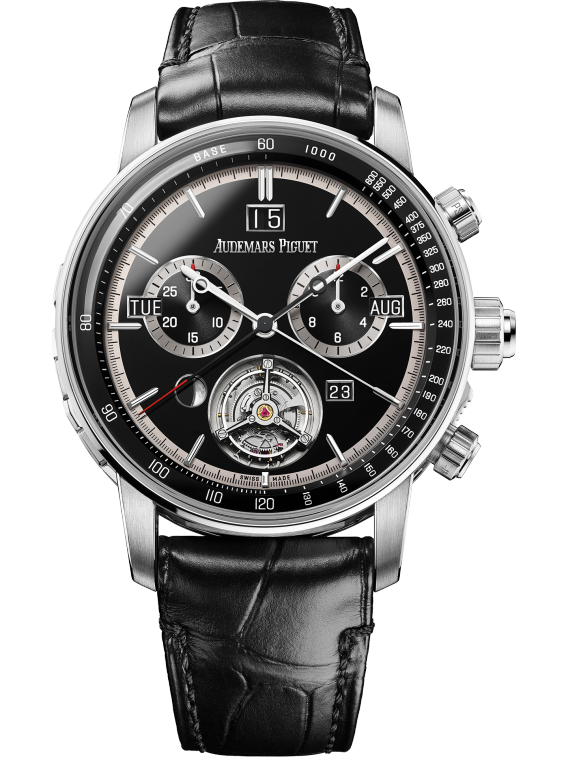
Secondly, I’ve seen a few negative reactions - mostly centred on the design - and accompanying these, the suggestion that no watch journalists dare say anything negative about new releases from a big, influential, important brand like AP.
There are multiple thoughts being merged together here. Some people will never like the Code 11.59 design (or the name) and that’s a valid opinion, but a subjective one. I’m coming onto the design of the Universelle in particular shortly, but I subscribe to the school of thought that the Code 11.59 is growing into its looks. I prefer the more complicated models, I think the new dial textures and baton markers are transformative, as are the hands, and I think the debut collection, particularly the white dial automatic, is not particularly appealing. I think it’s significant, and astute on the brand’s part, that Audemars Piguet is the only legacy watchmaker in its class5 to have a circular case shape that’s even remotely contemporary. AP stopped making the ultra-classic Jules Audemars designs because they weren't selling; meanwhile the Saxonia, Patrimony, Calatrava et al soldier on. Go figure.
I think it’s probably true that watch journalists are overwhelmingly polite about watch design - not just from AP but across the board. One valid reason for this is that beauty really is in the eye of the beholder. A personal review can include the journalist’s opinion of a watch’s looks, but inasmuch as the purpose of a review is to tell the reader whether they should buy a product or not, that view is of limited use. I believe a review should be a more comprehensive critical appraisal of a product, assessing whether or not it succeeds in what it sets out to do, but not everyone works that way, and still as the reviewer you have to admit that there are people out there who love all the watches you don’t.
But it’s also true that offending brands is no path to success in watch media. We are returning to familiar territory so I apologise to regular readers, but this is not, primarily, the journalists’ fault. Brands cannot take criticism6, and the risk of being cut out of the loop for a writer is significant; similarly the potential loss of advertising or partnership revenue is a risk most publications don’t feel they can take. I return to my regular refrain that media titles should move to a business model that means they can't be held to ransom over advertising, but in this situation, it's not the only consideration. Mysteriously dropping off the invite list for the next big reveal is actually more damaging, if the title in question wants to hold itself out as a credible source of watch news.
Taking it as a starting point that the Universelle is not actually perfection in watchmaking form, let’s ask ourselves: what are these points of criticism that the mainstream meejah7 are so cravenly missing?
Part of the problem is that none of us is really here to offer a detailed technical critique of the actual watchmaking - especially not within a week of the watch launching, and having (at best) had a short time hands-on and a technical presentation from the brand. Even if you have the knowledge, it’s an entirely different task. Someone like Jack Forster may well embark on a substantial dissection of just how impressive the Universelle is, but that takes time. My point is, in the here and now, you have to write about what you can get to grips with. To wit: the design, the price, the facts and figures of it all, and where it fits into AP’s overall trajectory as a company.
The price, then. I saw Santa Laura on Instagram describe it as “comically overpriced at $1.2m”. The Patek Philippe Grand Master Chime 6300G was reported as costing $2.2m in 2019. The A. Lange & Sohne Grand Complication, released a full decade ago, cost $2.7m in 2013 dollars. A Franck Muller Aeternitas Mega 4, launched in 2018, would have set you back $2.7m. Two years ago the four-faced Reverso Hybris Mechanica was released at $1.6m. And a Vacheron Constantin Les Cabinotiers Celestia Astronomical Grand Complication 3600 is quoted here and there as costing ‘over $1m’ in 2017. These are all alternative purchases for the collector looking to own one of the most complicated wristwatches ever made. The 2016 Royal Oak Concept SuperSonnerie RD1 was priced at just over half a million Swiss Francs, and the Universelle takes what that watch could do and adds a considerable amount more. So I think, in the realm of incredibly expensive watches, the Universelle is not particularly overpriced.
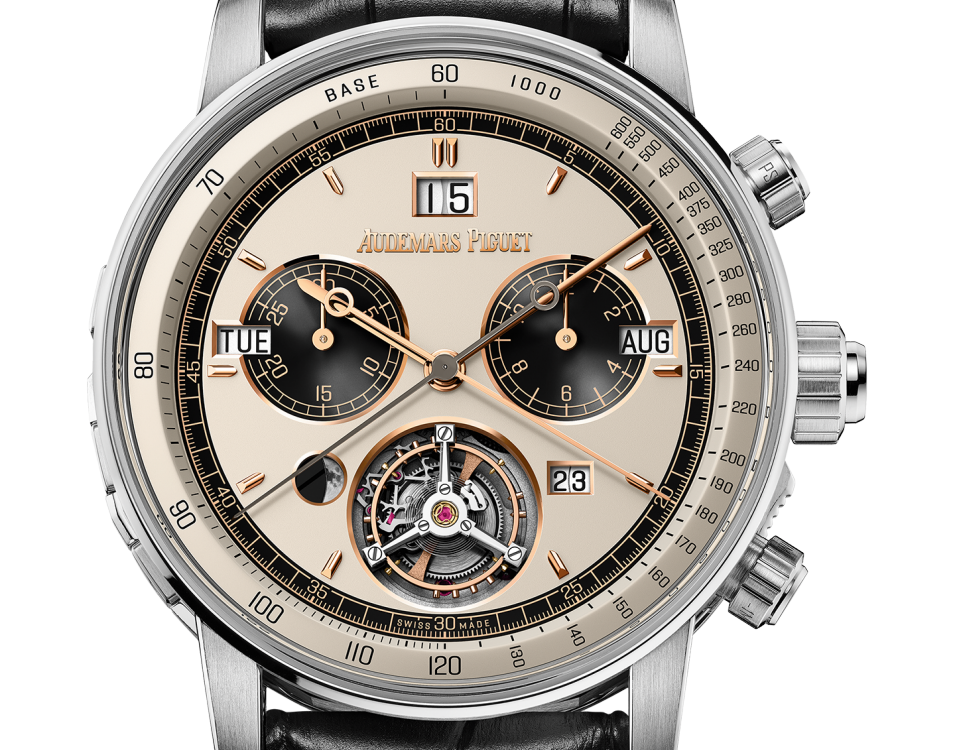
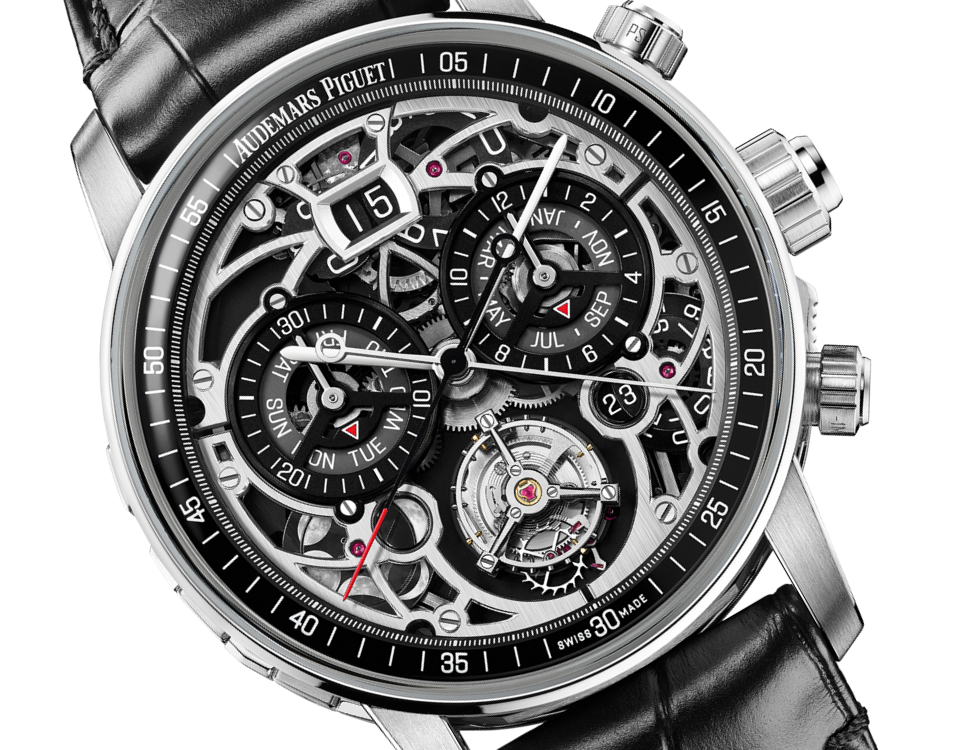
The design. I think any consideration of the Universelle’s appearance has to take into account how hard it is to fit this much mechanical complexity in a wearable case and I would take it over a Grandmaster Chime for wearability every single day. So if there are a few aesthetic compromises, they’re probably worth it. My two cents are that it looks as though the watch was designed first and foremost to be openworked: it just seems better resolved that way. The solid dial models have some points that look uncomfortable to me: the way the date window sits between the brand logo and the 12 o’clock is the main one. The way the day and month windows take a bite out of the chronograph counters is another - this is more notable on the beige-dialled version where the calendar discs aren’t colour-matched to the dial. The openworked versions allow for a nicer shape to the big date window, and they also allow for greater symmetry between the year window at 4.30 and the moon phase indicator opposite. Skeletonisation always trades showstopper impact for legibility and I am no evangelist for modern openworked designs, but I find these ones - from the press pics, granted - to be highly readable despite the sheer amount going on.
There’s only one area in which I really think the collective corps of watch writers really needs to do better when discussing the Universelle. It came up in a private conversation between a few watch writers earlier this week: it’s this pesky business of ‘most complicated’.
Superlatives matter in marketing, even if everyone involved can acknowledge that they’re reductive and simplistic. Thinnest. Deepest. Most accurate. We all know which watches I’m talking about just by those words alone - that’s the power of asserting a new record has been broken. It’s also one of the yardsticks by which brands at the top can quantify their jostling, as mentioned above.
The problem is, everyone tends to get a bit carried away. If writers simply repeat brands’ assertions, and it’s left to those in the comments below to point out the bleeding obvious, everyone loses. The brands’ credibility is questioned (albeit not in way that’s likely to have an effect), and the media’s credibility definitely suffers. What am I talking about? From the Hodinkee article introducing the watch - although everyone else including SJX, Fratello, Monochrome and ABTW all repeat the claim that the watch has 23 complications - I quote:
Update 2/4/23: According to AP, the 23 complications are: chronograph, split seconds, minutes counters, hours counters, flyback function, minute repeater, grande sonnerie, petite sonnerie, silence, quarters silence, locking of automatic and manual activation when the barrel is insufficiently wound, automatic winding of the grande sonnerie barrel, Supersonnerie, perpetual calendar, date display, day display, month display, moonphase, year display, semi-Gregorian, accurate astronomical moon, tourbillon, automatic winding
At least it says ‘According to AP’. But we’ve got to start asking, how does ‘silence’ (of the chiming functions) count as a separate complication?8 Is it really valid to count ‘perpetual calendar’ as a complication as well as all the individual date displays that constitute the perpetual calendar?9 As my friend Tim asked, does this mean that a perpetual calendar watch has in fact got six complications10? And for me personally, the coup de grace: ‘automatic winding’ is now a complication. The ability for your watch to actually run - the petrol in the engine, if you like - is a complication? According to the FHH’s Glossary of Watchmaking, it is, but we all know that’s a long way from the de facto understanding of complicated watchmaking .
The stupid thing is, it really doesn’t matter if it has 20, 21 or 23 complications11. We all agree the Universelle is a brilliant technical achievement. Over-stating the number of complications just to puff it up even further… I can’t help feeling this actually undermines how marvellous it really is. It’s a small point in the grand scheme of things, but in terms of journalists demonstrating to collectors that you’re capable of applying the right kind of scrutiny, I think it’s valuable. At bare minimum I think it's necessary to acknowledge that the official definitions of 'complication' aren't necessarily in line with public opinion. And as long as it’s not the only thing you have to say about the watch - how could it be? - I think AP should be able to tolerate it being said. Now, who wants to go first?
Quick Links
Brands Weigh Cost Against Popularity Of Watch Fairs, at the FT
Robin Swithinbank has been reporting on the back and forth of our industry trade fairs ever since it got interesting, i.e. when Baselworld went into a tailspin. This is a useful update on the situation today, and adds weight to the idea that W&W is acquiring the necessary gravity to become the single dominant trade event. I was a bit confused by Jean-Claude Babin’s comments about LVMH, though - given that TAG Heuer, Zenith and Hublot are all exhibiting at the fair. Bulgari has always operated at one remove from those three, but at a group level, M. Arnault seems to have decided where the future lies.Coin Watches Gain Currency Among Collectors, at the FT
Simple, classic headline puns will always add to a story’s appeal for me. But this is also a nice look at a sub-niche of watch collecting that I’ll bet few are really up to speed on.Movement Finishing In Modern High Grade Watchmaking, at Watchbox
We are blessed, it seems, with useful, bookmarkable explainers this week. Serious watch geeks won’t learn an awful lot but that’s not the article’s purpose; nevertheless it’s still really valuable to have someone like JF lay out a clear background to one of the most misunderstood (and mis-sold, let’s be honest) areas of watchmaking.A Challenge To Watchmakers: Who’s Up For A Really Accurate Moonphase? by Jack Forster at Split Seconds
That guy again - take a day off, Jack! But if anyone’s going to roll up his or her sleeves and get stuck into the precise details of astronomical measurement, Jack’s the man. By contrast to the above, this is high-end geekery (and comes with suitably cringeworthy puns). It’s also an interesting follow-on, if you like, to my vague points about why watch brands feel the need to develop ever more complicated mechanical movements. These ridiculous challenges - like, as Jack says, an Easter calendar - are the Everest of mechanical engineering and someone will climb them just because they are there.A Closer Look At Collecting In Singapore With Tom Chng
I interviewed Tom Chng a few months back, and very much enjoyed the experience. This is a deeper interview and particularly worthwhile for anyone developing an interest in neo-vintage AP.Milestone Watches: Marriage, Divorce, F*** You, at About Effing Time
I confess I haven’t had time to watch much of AFT recently - it’s best as a video, rather than a podcast, but that does mean you have to set aside time. This episode is worth a look though, because it shows what’s best and most relatable about watch buying: the personal reasons behind a purchase.The Most Important Decades In Watchmaking (Part 1: The 1980s), at Wristcheck
The last of our ‘useful introductions to X’ this week. Felix Scholz gives us a whistle-stop tour of the 1980s in watchmaking. There are eight or nine subjects touched upon here that could merit a deep dive of their own (indeed, those articles must already exist) but I recommend it as a great starting point for anyone who wants to understand today’s watch landscape. Because I share the belief that, although we set great store by the 1950s, 60s and 70s thanks to the many brilliant watches born in those decades, the period that really set the scene for the modern luxury watch market was the 1980s and 90s.
And Finally…
I almost got worked up about this but just lacked the emotional energy: I really can’t believe we’ve reached a point where WristCheck can host a competition where you don’t win a watch, you win the opportunity to buy a watch at retail price. I get that it’s desirable but it’s also fucking nuts, pardon my French.
Secondly in ‘things I really struggled to understand’: this Hublot x Murakami collab. Not the watches, they’re ok. But this:
Each of the 12 unique watches will be delivered with an NFT reflecting the respective watch, which leads to the second stage of the lottery that takes place over a year until April 2024. The owner of all 12 NFTs linked to the unique watches will be able to purchase the 13th unique edition. This is naturally conditional on the fact that all of the original owners of the NFTs decide to sell them.
I mean, what the hell? This is the watch collecting equivalent of an Assassin’s Creed side-quest. Collect all 12 pixelated pictures of flower watches and only then will you unlock the right to spend your money on the 13th. A very modern gimmick.
Last but not least, anything that puts Barcelona on the horological map is alright by me. I smell a press trip coming on.
Stop it, grow up, that’s not what I meant
Press pictures, while factually accurate, are heavily edited and can’t be used to assess the fineness of hand-finishing. I bet it’s great; I just haven’t seen it to say so.
I have seen some comments along these lines, believe it or not
Discuss!
By ‘legacy’ here I mean not including Richard Mille, because the brand was founded this century so jolly well ought to have contemporary design at its heart.
Ironically, we’ve reached a point where no-one actually knows whether watch brands can take any criticism or not, because no-one wants to be the canary in the coal mine for pissing off Swiss executives. Contrary to appearances, it’s not a role I want for myself, and in my capacity as a writer for Mr Porter and elsewhere, I am as careful as anyone else not to make waves.
I can’t emphasise enough how ironic I’m being here; this being the internet, it’s always better to point that out.
I understand it’s an additional piece of engineering to be able to disable the chime. But a) a chime you couldn’t disable would be pretty annoying and b) this doesn’t make it a separate complication - to me, it’s part of the chiming complication(s).
This feels to me like claiming you have five limbs.
And does a perpetual calendar that doesn’t actually show every calendar indication, like H. Moser’s Perpetuals for example, count as less complicated than one that does? It’s the same level of watchmaking involved either way; the addition of a display disc really isn’t the hard part. Fundamentally all this tells us is that boiling watchmaking down to stats and numbers is a poor way to compare achievements.
I know I said superlatives matter just now, but this can still be described as AP’s ‘most complicated watch’ with as ‘few’ as 20 complications. Or you can find other ways to talk about how brilliant the watch is.
Really enjoyed this piece, Chris, thanks so much. The nuclear arms race of horological marketing is a dark art unto itself, but when the marketing of a product actually overshadows the merit and value of the product itself, it no longer serves its function. Or at least, not properly, as I suppose here we are talking about it. But we're not talking about what makes the watch great.