

The Fourth Wheel, Issue 76
A brief history of ultra-light watches, free to all subscribers and stuffed with oddballs of the mid-2000s

Hello and welcome back to The Fourth Wheel, the weekly watch newsletter that this week, as it’s the first Friday of the month, is free to all to read. It’s also a super-long inbox-busting edition so do make sure you get to the end1. I’ve been speaking to Ming Thein about making ultra-light watches, and ended up down a rabbit hole of quickly-forgotten pieces from the last 15 years or so. We also spent some time imagining what the LW.01 would have been like if it ran off new-old-stock Jaeger-LeCoultre calibre 101 movements… Enjoy!
The Fourth Wheel is a reader-supported publication with no advertising, sponsorship or commercial partnerships to influence its content. It is made possible by the generous support of its readers: if you think watch journalism could do with a voice that exists outside of the usual media dynamic, please consider taking out a paid subscription. You can start with a free trial!
Here’s a little taste of what you might have missed recently:
The Only Watch Saga, Part 1, Part 2, Part 3 and Part 4
Hands-on review: The Patek Philippe 6007G
The Twelve Most Significant Watches In The World
Should We Boycott Watches From Russia?
The Many Faces Of Moonphase Watches
The pursuit of extremes in watchmaking is as relentless, and captivating, as it is irrelevant. Some are easier to comprehend than others; we have all seen pictures of Rolex’s first Deep Sea Special2, as bulbous and otherworldly as the creatures it would have encountered on its way to the bottom of the ocean, but none of us can really imagine what the unbelievable pressures of the Mariana trench are like. The steroidal figures of the deepest diving watches are all we have to go on. Conversely, the size-zero bodies of ultra-thin watches tell the whole story: the trading of world records between Bulgari and Piaget over the last decade, both overtaken at the final corner by Richard Mille’s Ferrari UP-01, is an entirely visual spectacle. We are amazed by the sight of them, astounded more by what’s absent than what’s present.
Appearances that deceive have become a recurring element in extreme watchmaking. Omega and Rolex’s latest deep divers may be awkwardly oversized, but the real take-home is how relatively normal they look; conventional designs that are simply boosted for maximum pressure. The cutting edge in hyper-complicated watches is occupied by creations that not only do it all, but do so within the silhouette of a more or less ordinary watch. The best example is Audemars Piguet’s Code 11.59 Universelle, but you don’t have to look far to find others - take H. Moser’s recent combination of Chinese and Gregorian calendars, or the Omega Chrono Chime. Casting my mind back to 2015 when Vacheron Constantin unveiled the ‘most complicated watch in the world’, the snappily-titled Reference 572603, I remember amid the outpouring of admiration for such an ambitious project, at least a few who felt that at 98mm by 50mm it was pushing the limits of what could honestly be described as a watch.
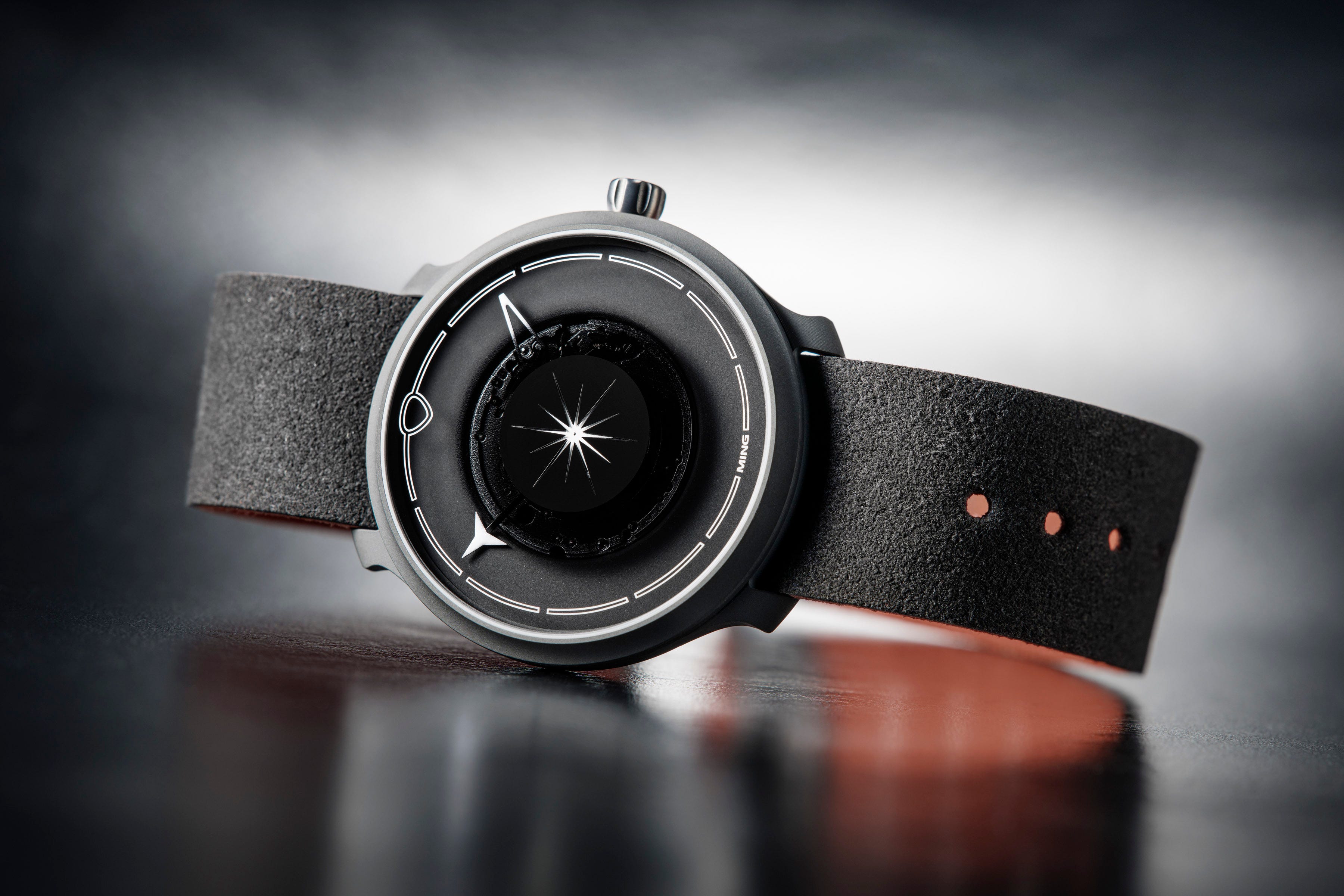
And so we come to Ming’s LW.01, announced last week but blown off the front page of The Fourth Wheel by my last word on the Only Watch saga (at least for a good while). It is described as ‘probably the lightest watch in the world’, weighs just 10.6g on its strap4 and along with being a remarkable piece of work - it weighs about the same as two sheets of A4 paper and actually tells the time! - is quite the conversation-starter for a number of reasons. I asked Ming Thein, the company founder, why this came about.
MT: What is it about any challenge in horology? I think we are fundamentally masochists and want to push the boundaries a bit; else there wouldn’t be ceramic lume in sapphire in entry level watches, for instance. The ultralight came out of a hypothetical discussion at the office one evening, and I have trouble turning down dares...
When I started thinking about the idea of the ‘lightest watch’, it initially seemed like this was a record that was going to come with a number of caveats. Of course when we say ‘watch’ we mean ‘mechanical watch’ and that’s par for the course5, but Ming went a step further: it was important to them that the LW.01 be a ‘conventional’ watch in appearance.
Another key requirement behind the LW.01: it had to be a typical size for an everyday watch. But the fact is, Ming has met these criteria and still broken the outright record, which makes it all the more impressive. The LW.01 models measure 38mm across and 5.6mm thick; I wondered whether it might have been possible to deliver the same design at 36mm, or in an even thinner case, and shave a little more weight off.
MT: There are a lot of interlinked trade-offs in designing something like this - we could make it thinner overall but [would] have to use more metal to maintain rigidity, which means no net weight saving (or actually, a weight increase). A good example is the decision to use fixed bars: this allowed us to make the lugs thinner since they don’t have to accommodate sufficient wall thickness for spring bar holes, on top of spring bars themselves being heavier. Furthermore, the integrated bars aren’t a circular cross section and are optimised to enhance overall case torsional rigidity - which in turn allowed more material to be removed from the buttresses. The total saving here is greater than just changing the density of the spring bar volume alone from steel to AZ31. Overall, I feel that without changing the form or diameter significantly, we’re at about the limits of what’s possible with current materials.
Before we get further into how exactly Ming created the LW.01, I thought we could take a look at the history of ultra-light watches. Straight away we have to acknowledge that all watches were historically a lot lighter than they have become. Pick up a vintage watch - even a diver - and one of the first impressions you’ll have is that it’s considerably lighter than the modern equivalent. I’d go so far as to say it’s a defining part of the vintage experience, and the reasons for it are obvious: watches used to be smaller, and they didn’t used to be as durable. Improvements in build quality and changing tastes meant watches got heavier; that’s no surprise, but it’s worth bearing in mind as we evaluate what we consider a lightweight watch. Material choices also play a role, naturally: an original 19116 Cartier Santos-Dumont is a mere slip of a thing, but it was only produced in precious metals. Modern engineering techniques have allowed watchmakers to create watches that are both big and light, using titanium, ceramic, aluminium, carbon fibre and related polymers, but the know-how required to create ultra-light watches was present nearly a century ago. It just wasn’t thought of in that way.
You might have guessed that I’m talking about jewellery watches, and specifically the Jaeger-LeCoultre Duoplan and Calibre 101 pieces. Calibre 101, the smallest mechanical movement ever made, weighs approximately 1g; I haven’t been able to find reliable weights for watches with it in, but some sources claim weights in the 20-30g range for cased-up bracelet watches - made from gold and fully set with diamonds. If Jaeger-LeCoultre felt inclined to make a plain-Jane titanium-cased 101 and give it a thin leather strap - or go even further into exotic case materials - you’d probably have a watch that would give Ming’s LW.01 a run for its money7.
So: small watches are light, but not by design. So are ultra-thin watches - so far, so glaringly obvious. In this sense, everything slim from the Piaget Altiplano onwards, (introduced in 1957) including watches from Vacheron Constantin and Audemars Piguet to Bulgari’s Octo Finissimo series and eventually the current record holder, the Richard Mille Ferrari UP-01, is in a way a contribution to the pantheon of ultra-light watchmaking, but again we must say that lightness is an obvious side-effect rather than the main goal.
I could not find much, if any, evidence of watchmakers pursuing lightness as a goal in its own right prior to the early 2000s8. Do write in if you know differently, but to me this does make some sense as the era when the aforementioned ‘advanced materials’ started to become commonplace.9 Luxury, traditionally, meant heft and substance and gravitas - the more gold, or platinum, the better - and redefining, or broadening the definition to also include ingenious, high-tech creations is a phenomenon of the last 20 years. For so-called ‘light luxury’ to work, you have to substitute those physical qualities for intangible ones: heavy metals make way for heavyweight thinking. It’s not impressive that a timekeeping device be light, in itself; it’s impressive if it was really hard to do.
By no means do I think this list is exhaustive, but here we go.
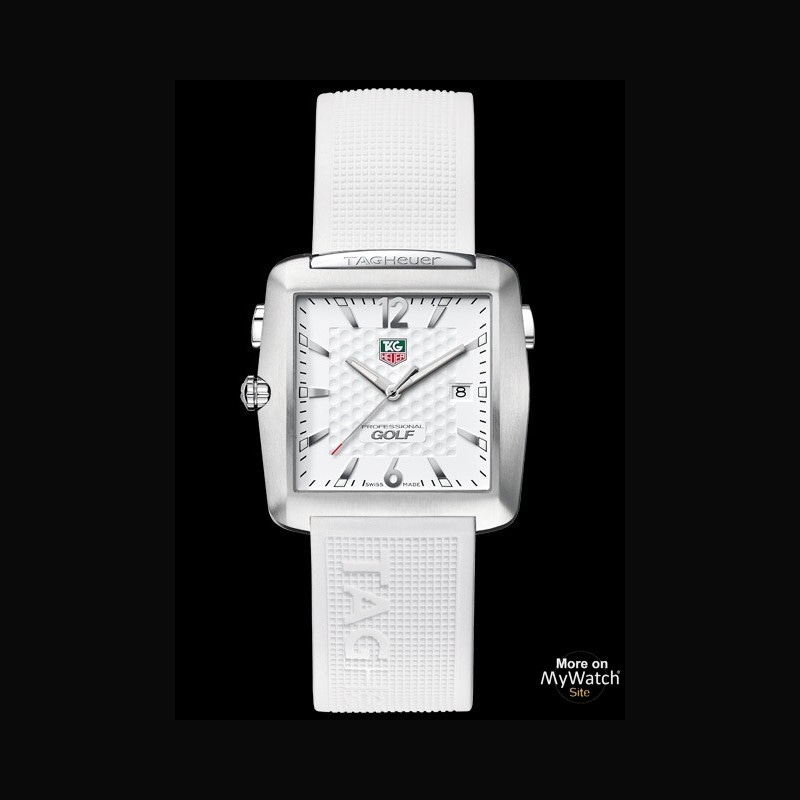
In 2005 Richard Mille released the RM009 Felipe Massa, a tourbillon watch that weighed just 29g without the strap. This arguably defined ‘light luxury’ and epitomised RM’s entire proposition: very expensive watches that felt like nothing at all. In 2006, we have the all-but forgotten (and nigh-on unGoogleable) TAG Heuer Professional Golf Watch, a titanium-cased square design (in fact the work of Ross Lovegrove, who we recently profiled at Mr Porter) which weighed 55g. Interestingly, it includes a feature I’ve never seen before or since: the folding clasp is integrated into the case, allowing the rubber strap to form one continuous (and I assume more comfortable?) loop. It’s a quartz watch, which muddies the waters slightly in terms of comparison, but I thought it suitably quirky to kick things off.
We then jump forward to 2013. I’m not sure what the record for lightest mechanical watch was at this point - probably still the RM009 - but Zenith put its mark in the sand with the launch of the El Primero Lightweight, a 45mm chronograph cased in ceramised aluminium with a carbon fibre overlay and a titanium movement. I remember attending the launch event in the UK for this watch, and being pretty jolly well impressed with its feather-like presence. It weighed 40g in total, which if not an outright record was definitely a record for the lightest chronograph, a benchmark which I suspect still stands. If it doesn’t, the holder is very likely some variant of RM011, which leads us neatly to 2013’s other significant announcement: the RM 27-01 Rafa Nadal.
“With this watch, the brand wanted to beat the world record for the lightest mechanical watch once and for all. An exceptional creation, the RM 27-01 pushes the concepts of lightness and strength to the ultimate extreme. The record was smashed in 2013 with this watch weighing exactly 18.83 grams, including the strap, which is the heaviest part. This was a huge challenge.” - Richard Mille website
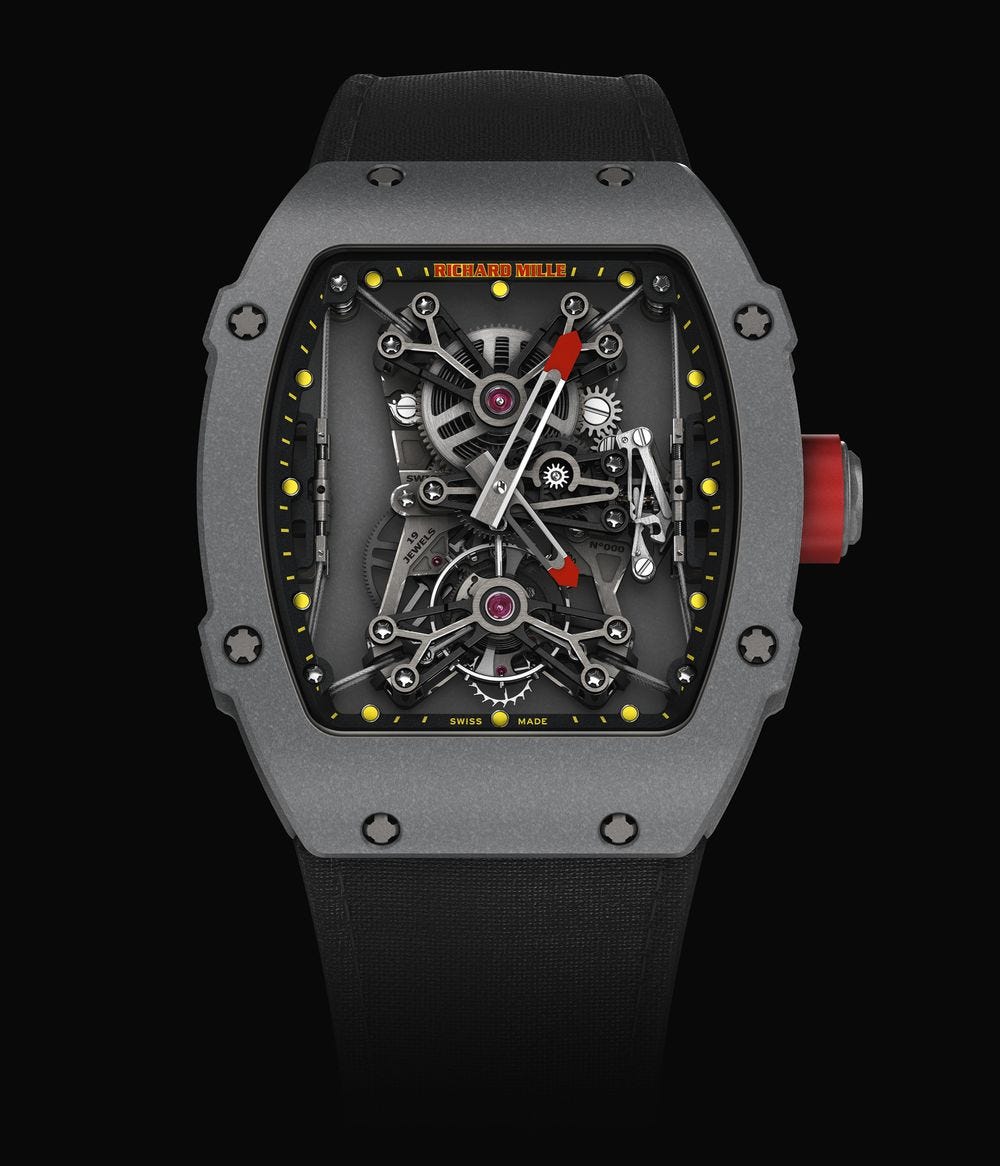
Richard Mille has made more ultra-light watches since - the UP-01 weighs just 30g; the colourful RM 07-04 weighs 36g - but it has never beaten its own record, established a decade ago with this 50-piece edition. The movement is titanium and aluminium, and is suspended within the carbon nanotube case by steel cables 0.35mm in diameter. It’s a hand-wound tourbillon with a power reserve of 45 hours.
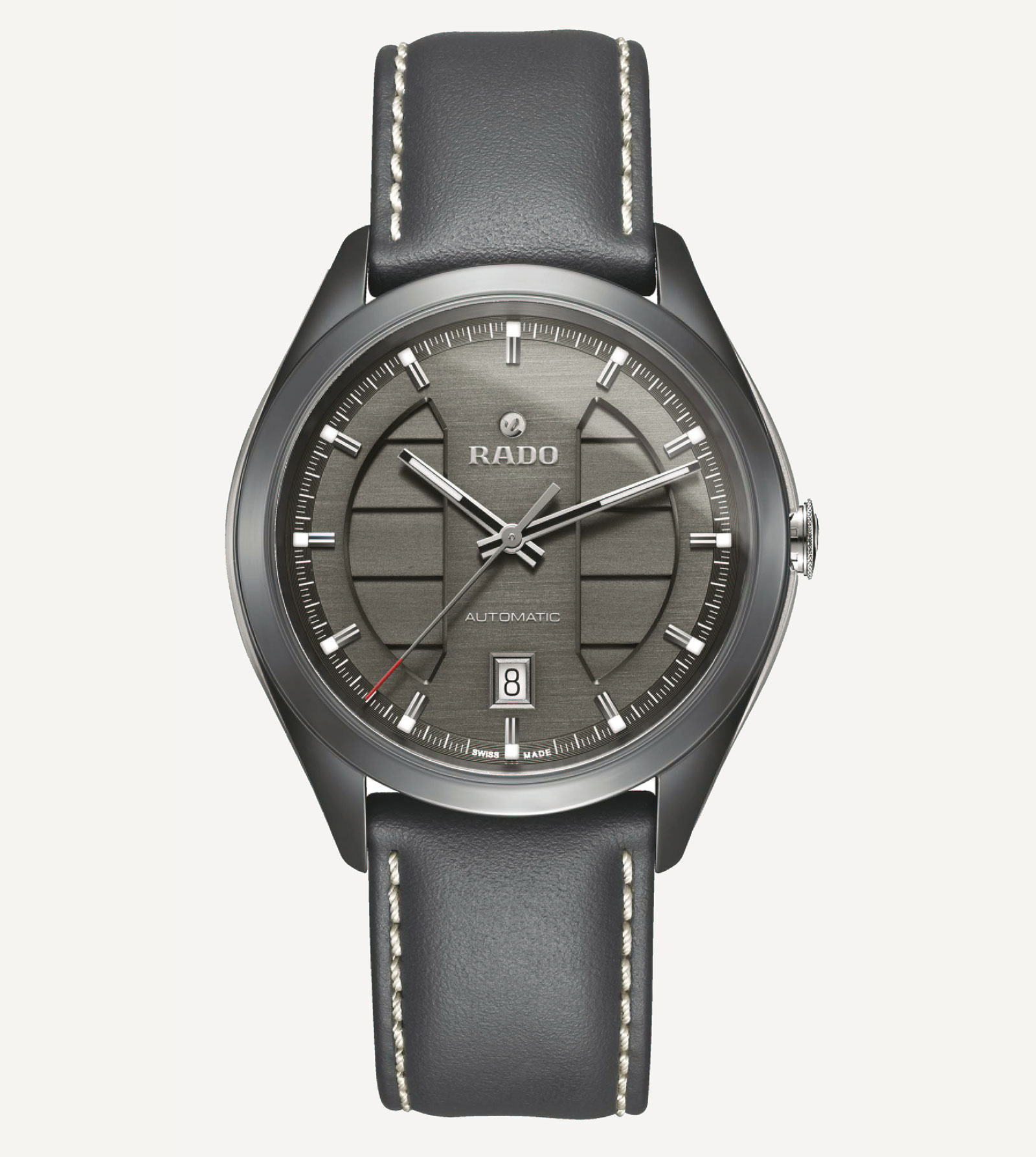
Other superleggera offerings appeared over the next few years. Rado, in 2016, debuted the HyperChrome Ultra-Light Deep Grey, a 43mm silicon nitride number with aluminium bridges. It weighed a relatively massive 56g, though.
Omega followed in 2019 with the Aqua Terra 150m Ultra Light, a 55g take on its least dive-worthy Seamaster. Cased in an alloy Omega calls ‘Gamma Titanium’, with a ceramic bezel and the brand’s only titanium movement to date, it was described as “the ultimate athlete’s watch” and featured a telescopic, receding crown.
Until this year then, no-one else had got close to Richard Mille’s marker, right? Wrong. Let me introduce a couple of watchmakers that are somewhat lesser known. First up is Behrens, a Chinese brand that has doggedly submitted watches to the GHPG longlist for the last few years without success. Noted for its asymmetrical and sometimes curved case shape, Behrens’ real trump card is its commitment to lightweight construction. Earlier this year it announced both the BHR030 20G and BHR030 11G; the former in titanium and the latter cased in carbon fibre composite. These weights are for the watch head only; Behrens does not provide a weight of the whole watch on a strap, but it’s safe to assume that the 11G smashed the record, albeit briefly. I’m not sure any finished watches have yet been shown, but that is a huge achievement, and Behrens cannot be accused of doing things the easy way. Curved cases with an in-house movement that follows the curve, with up to 15 degrees between connecting gears? There are no off-the-shelf parts: if this was made in Switzerland I think you’d be looking at a price tag well north of $20,000. Behrens is charging $7,600 for the 20G and $11,800 for the 11G. These guys are one to watch.
But back to the story: in 2017 another watchmaker also made a watch that weighs less than the RM 27-01. His name is Valentin Remontet, and his watch, simply dubbed ‘the Ultra Light’, weighs 17g including the bracelet. It measures 41mm square and 9mm thick, and houses its own manufacture movement, according to Remontet’s website. It weighs so little thanks to a 3D-printed case made from a carbon-infused resin that’s nine times lighter than steel. There is no crown; it has to be wound with a key10, and sits on a braided lightweight fabric strap. According to Les Rhabilleurs, Remontet produced it in a limited run of 25 pieces, priced at €2,800 each. You might consider that even better value than the Behrens for something so inventive, but you can’t ignore the fact that whereas the Behrens looks like a professionally manufactured watch, the Remontet looks like a university project.
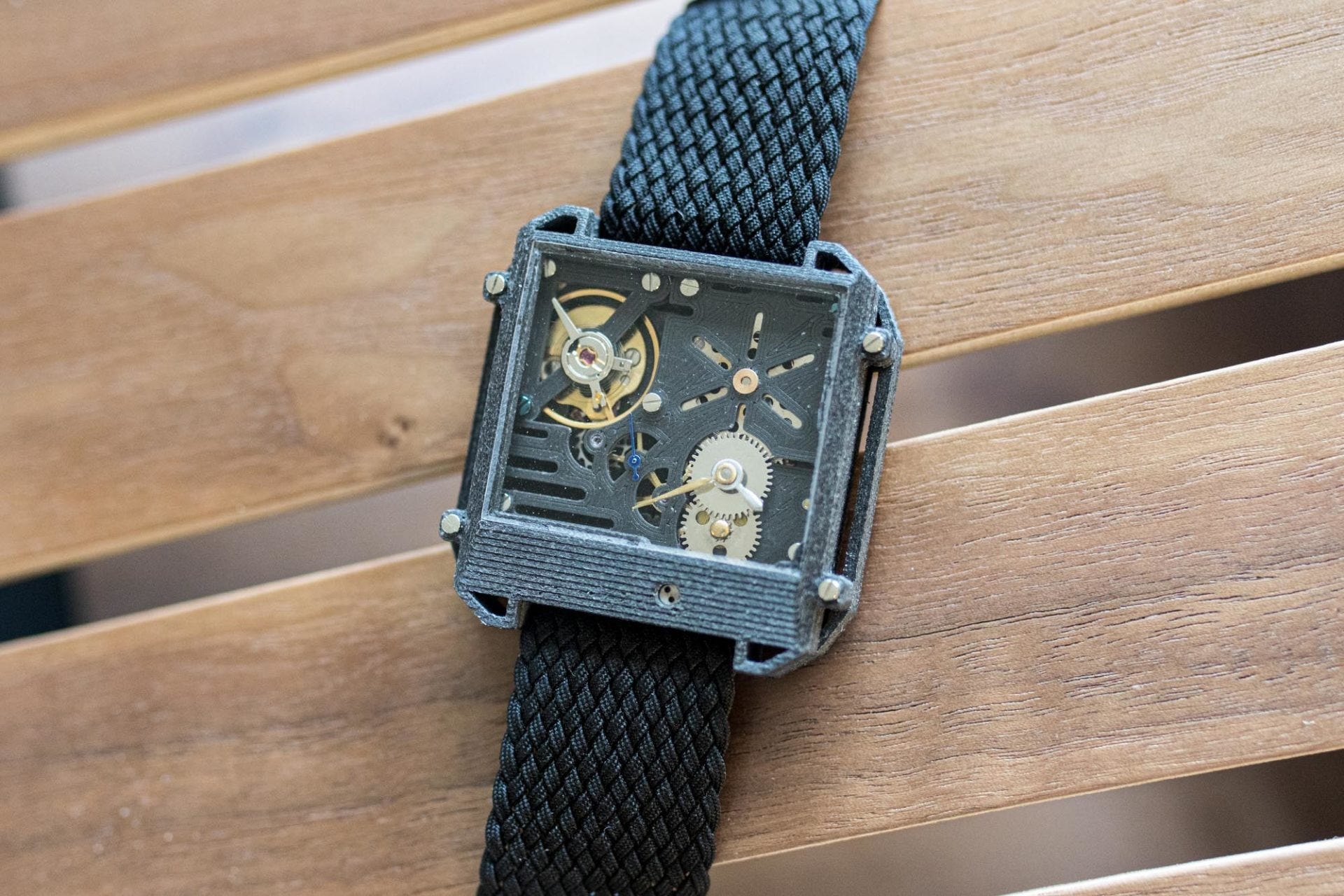
Three-dimensional printing is something Ming actually considered, but rejected in favour of machined magnesium alloy. It is lighter than carbon, the process delivers more consistent results than 3D printing, and ‘more importantly retained the feel of metal’. Geeky little side-note: the raw AZ31 Magnesium-Aluminium-Zinc-Manganese alloy was sourced from Smiths High Performance in the UK. That’s a subsidiary of Smiths Metal Centres Ltd, which is - yes, you guessed it - descended from Smiths, the watch and clockmaker that produced timepieces on these shores until 1970. So this light slice of Malaysian/Swiss horology has a connection, no matter how distant, to British watchmaking.
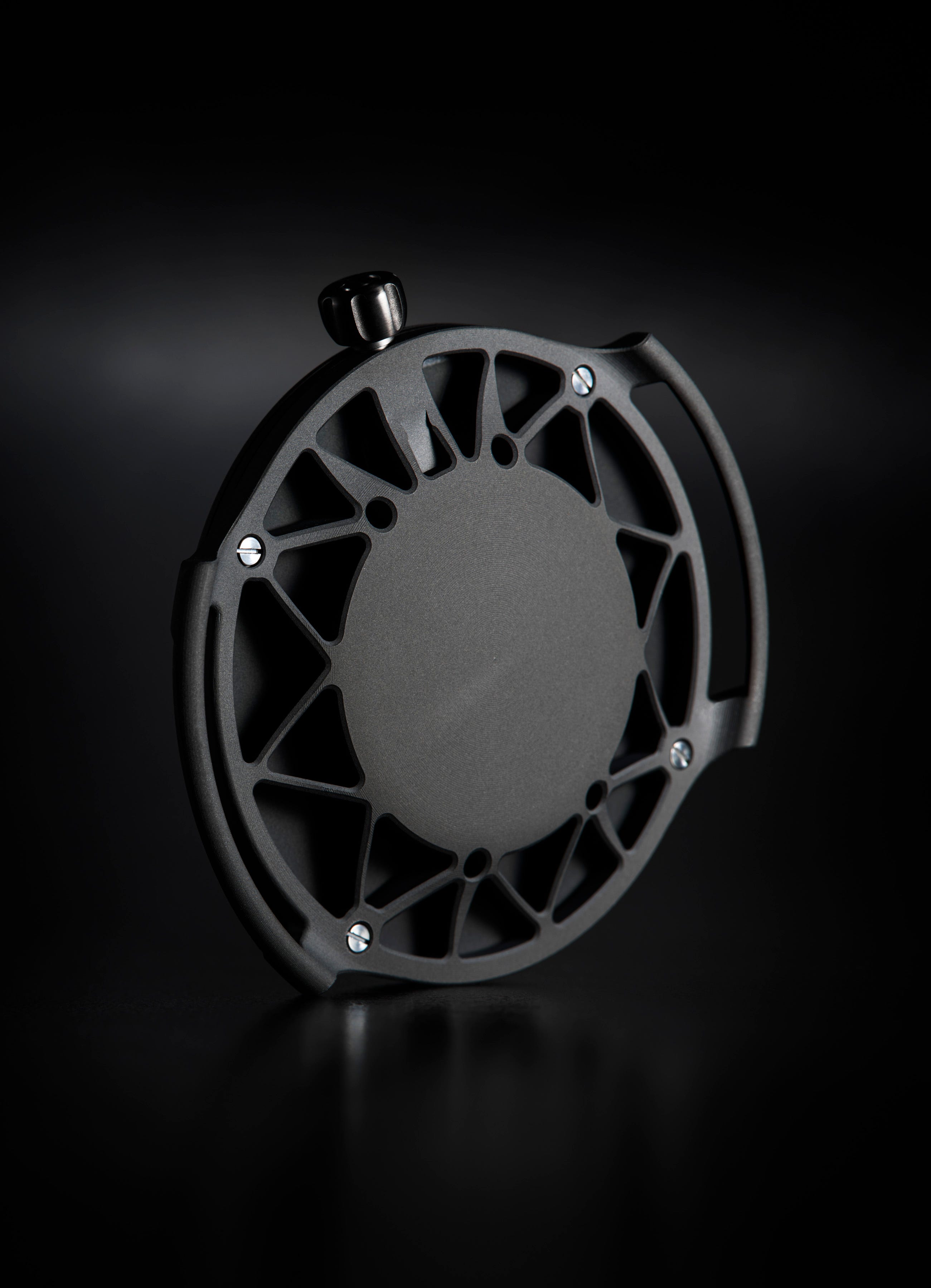
The case construction of the LW.01 is probably where the most weight was saved (even the screws are machined in PEEK polymer rather than metal), but you can’t have a watch without a movement. Value, reliability and ease of development were considerations as well as weight, which led Ming to use an ETA 2000 calibre, something traditionally intended for use in ladies’ watches. Long-standing movement partner Schwartz Etienne ‘figured out which components within the ETA2000 could be removed or lightened to further save weight, and which had to remain untouched for reliability’. Ming decided to make an automatic version as well as a manual, and unsurprisingly the automatic winding system adds two grams, almost a 25 per cent weight gain on the manual version. I wondered if this too was at the limit of efficiency, and how light a rotor could be to still effectively wind the mainspring. And how extensively SE could alter the movement without compromising its reliability.
MT: The rotor is already at pretty much the minimum weight to be effective. Given people are generally less active than ever - a lot of customers complain SW330s don’t stay wound, and they’ve got quite efficient mechanics - any further reductions would likely be counterproductive. If we were to work further on the winding system, we’d basically have to redesign it. And at that point we might as well do the bridges too, and it’s effectively a whole new movement development AND a very different price point and reliability level. Could we make [it] lighter with a proprietary movement, integrated into the case? Sure, but at the expense of cost, timeline, possibly reliability etc. We left changes [to the ETA2000] fairly conservative... It wouldn’t make sense to pick a tested caliber and then make it unreliable…that would defeat the point.
I’d like to finish by drawing attention to possibly my favourite feature of the LW.01, its running indicator. The shaded area in the centre of the watch is printed onto the underside of the Gorilla Glass crystal, and contains a pattern. Beneath that, the seconds hand has been replaced with a small disc, printed with a pattern that interferes with the one above; the end result is that the white star pulses in and out from the centre. In a video released along with the press kit, Ming Thein says that ‘there is a cognitive dissonance with this piece, because it seems so light it’s almost impossible that there can be a movement inside. this is the reason we chose to create a dynamic running indicator, to reassure the wearer that there’s actually something going on.’ I love it. Could the watch have been even lighter if it just displayed the hours and minutes? Yes - but Ming wanted it to not just break records, but deliver a fun, engaging and practical wearing experience, and that says a lot.
My final thought - and this is one I have all the time when I’m presented with outlandish and demanding horological creations - was to ask: was there anything Ming discovered or developed in the three-year process of making such a one-off, unusual watch that could have wider applications for, shall we say, more mainstream watchmaking? Ming replied:
‘Short answer - yes, but you’ll have to wait and see ;-)’
Quick Links
Where Does (Some of) Your Rolex Money Go?, at Coronet
A couple of weeks ago I linked to a NZZ story on the Hans Wilsdorf Foundation; Hamish at the Watch Collectors’ Club drew my attention to this story, which adds some more colour to the picture.Price War Breaks Out Between Certified Pre-Owned Rolex Partners, at WatchPro
I’ve written before about how detached from reality the Rolex CPO prices are at Bucherer and WOS - now with the creation of the 1916 group marketplace, it seems like we might finally have some competition. Buried in the story is the revelation that WatchBox will stop trading in non-CPO secondary Rolex, though.What We Learn About Artists From Their Watches, at Mr Porter
What do we learn? Well, Picasso was an egomaniac, Henry Moore takes a cavalier attitude to sensible quarry attire and Mark Bradford knows how to keep his feet on the ground.The Guardians Of Watchmaking Diversity, at Europa Star
It’s hardly Guardians of the Galaxy… and it’s got nothing to do with diversity of a demographic nature either… but this is a useful and in-depth look at some of the various movement and module suppliers that actually do a very substantial amount of the watchmaking innovation and development for which we lavish praise upon the brands who buy it in.The Rolex 6062 Triple Calendar Moonphase, And Why It Remains The Biggest Star In All Of Vintage Rolex, at Hodinkee
A big ‘calm down’ to all the Hodinkee readers who found the Alpine Eagle ‘how to wear it’ so upsetting (I’m keeping my own counsel on that one, for once). This is what you came to Hodinkee for: deep, deep dives on vintage Rolex, now with bonus added spreadsheets of data! A 6062, as Tony makes clear, is the kind of vintage Rolex that actually sits more comfortably alongside vintage Patek, and the fact that five are selling (or have sold) this autumn is reason enough to dive in.
And Finally…
Chris Mann aka the founder of Time4APint and its get togethers is back doing his regular Movember raffle. You can buy tickets here, and raise money for a good cause while standing a chance of winning watch-related goodies. And as a little extra bonus, every winner of his prize draws will also receive a year’s free subscription to The Fourth Wheel.
Are you paying attention? Articles like this mean you should buy Boucheron and buy it now. I’ve already seen one dealer on IG putting out an open call for pieces.
I actually really like the idea of hiding a watch somewhere in the world as a marketing stunt - little geocaching throwback mixed with good old fashioned viral media attention - but as this article politely notes, you might need the watch to be a bit more desirable/better known before people will scour the earth for it. Still, a free watch is a free watch.
King Flum over at ScrewDownCrown reckons Dufour Simplicity owners are getting out at the top of the market. Can’t say I know any different. Would it be such a shock? I did laugh - I shouldn’t, I know - at the IG commenter suggesting that collectors looking for a rapid bump in values should take out a hit on M. Dufour. For the record, the Fourth Wheel strongly discourages assassinations of any watchmakers11.
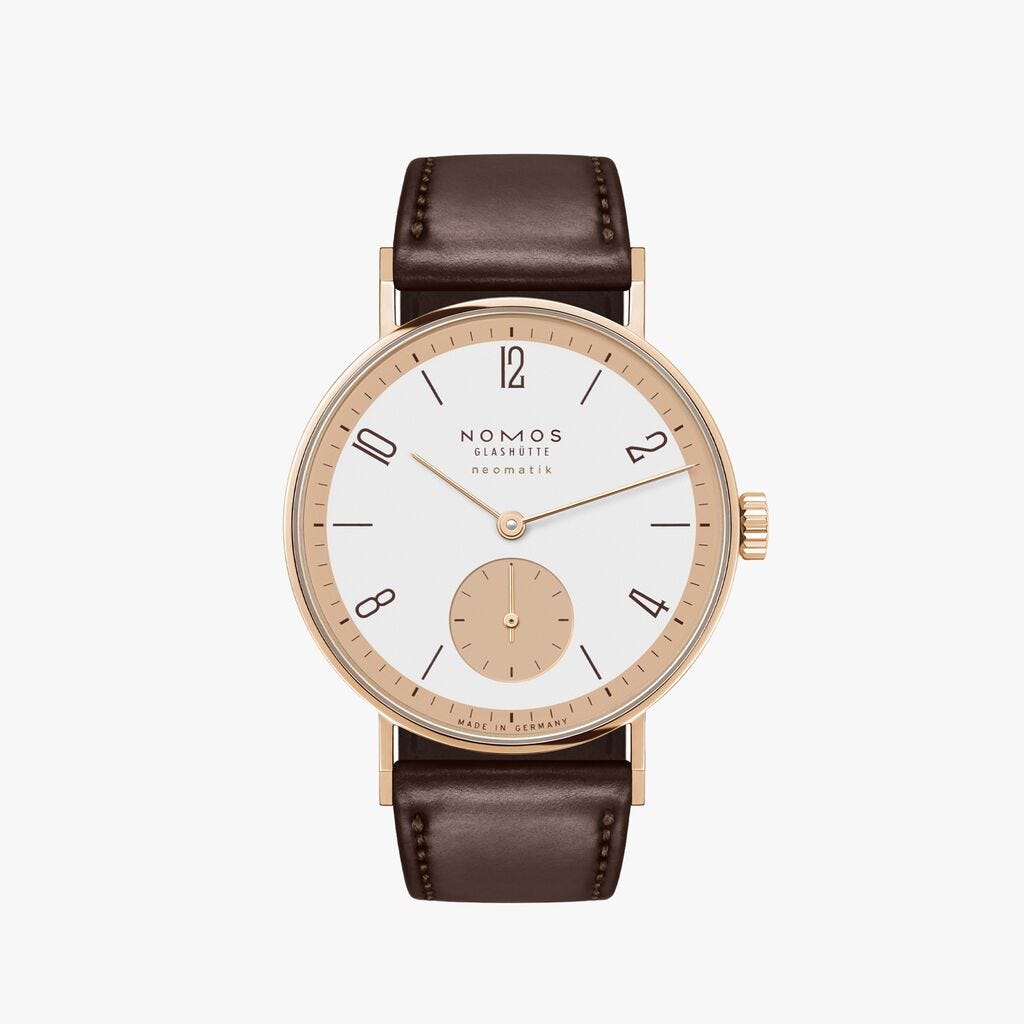
We finish for the week with a nice picture of a new Nomos. Very much the horological equivalent of a cute cat. How can you not like this?
Thanks for reading. See you next week!
There’s not a test or anything. It’s just, you know, good.
Or maybe the real thing - it comes out occasionally for exhibitions
Fair’s fair, I could still remember it eight years later. But come on, give it a NAME!
You’ll see 8.8g cited a lot - that’s the weight of the watch head alone. You can’t wear a watch head, so I am using the figure with a strap. It also keeps it consistent with most of the other weights in the article. The LW.01 automatic weighs slightly more: 10.8g for the head and 12.6g with the strap and buckle.
Otherwise you can start calling a moderately capable Casio a grand complication
Yes, it was made in 1904 for Alberto Santos-Dumont, but only sold to the public 7 years later.
But crucially, you’d have a watch with no seconds hand, and a movement that might not even be able to drive the bigger hands of a 38mm watch. And you’d need more metal to support it, if you were using this calibre in a bigger watch, and if you were making a watch the size of a usual 101 high jewellery piece… are you even making a ‘usable’ watch? Only just.
Weight is very rarely recorded as a specification for watches that aren’t touting it as a defining characteristic
Titanium and ceramic had obviously been used for decades at this stage, but as far as I can find, no watch using them did so with the specific aim of losing weight; scratch-resistance and durability took priority.
Should the weight of the key be included, if the watch doesn’t work without it? Same goes for the RM UP-01. Answers on a postcard
Even the ones who do unforgivable things with date windows
How light are the lightest Piaget ultra-thins?
😂 implying I do know... but I know nothing at all. Peanut gallery must have served too many fermented grapes 🍇