

Issue 181: Dubai Watch Week In Review
The watches that caught my eye, some little bits of news, plus a whole host of insider insights from CEOs

Hello and welcome back to The Fourth Wheel, the weekly watch newsletter that has returned from the desert. Sorry that Friday became Saturday and eventually Monday - on the plus side this is a nice long round-up of DWW news and opinion, and you get two newsletters in one week, you lucky things. Thank you to everyone who has subscribed since DWW, as well - welcome on board!
The Fourth Wheel is a reader-supported publication with no advertising, sponsorship or commercial partnerships to influence its content. It is made possible by the generous support of its readers: if you think watch journalism could do with a voice that exists outside of the usual media dynamic, please consider taking out a paid subscription. You can start with a free trial!
Here’s a little taste of what you might have missed recently:


The view from Dubai
I’ve been attending watch fairs since 2011. Between Baselworld, SIHH and Watches & Wonders, to say nothing of four years working on SalonQP, I would have said I had the whole thing pretty much down. This was a readjustment in a number of ways.
A lot of you will know Dubai very well, and some of you will have done DWW many times before, but it was my first time in both senses, so indulge me for a moment with some first impressions.
I don’t think there is anywhere else that could pull this off. The production values are high, the attention to detail is excellent and the mood - which is impossible to engineer - is the most relaxed I’ve experienced in an event of this kind. There’s a lot of energy, but no-one seems stressed. Maybe it’s the heat. Maybe the open-air setting. Maybe it’s people’s expectations - if your event has a reputation for being more chilled out, that’s how people will approach it, even if there are nearly 100 brands in a fairly small space and it’s punishingly hot outside.
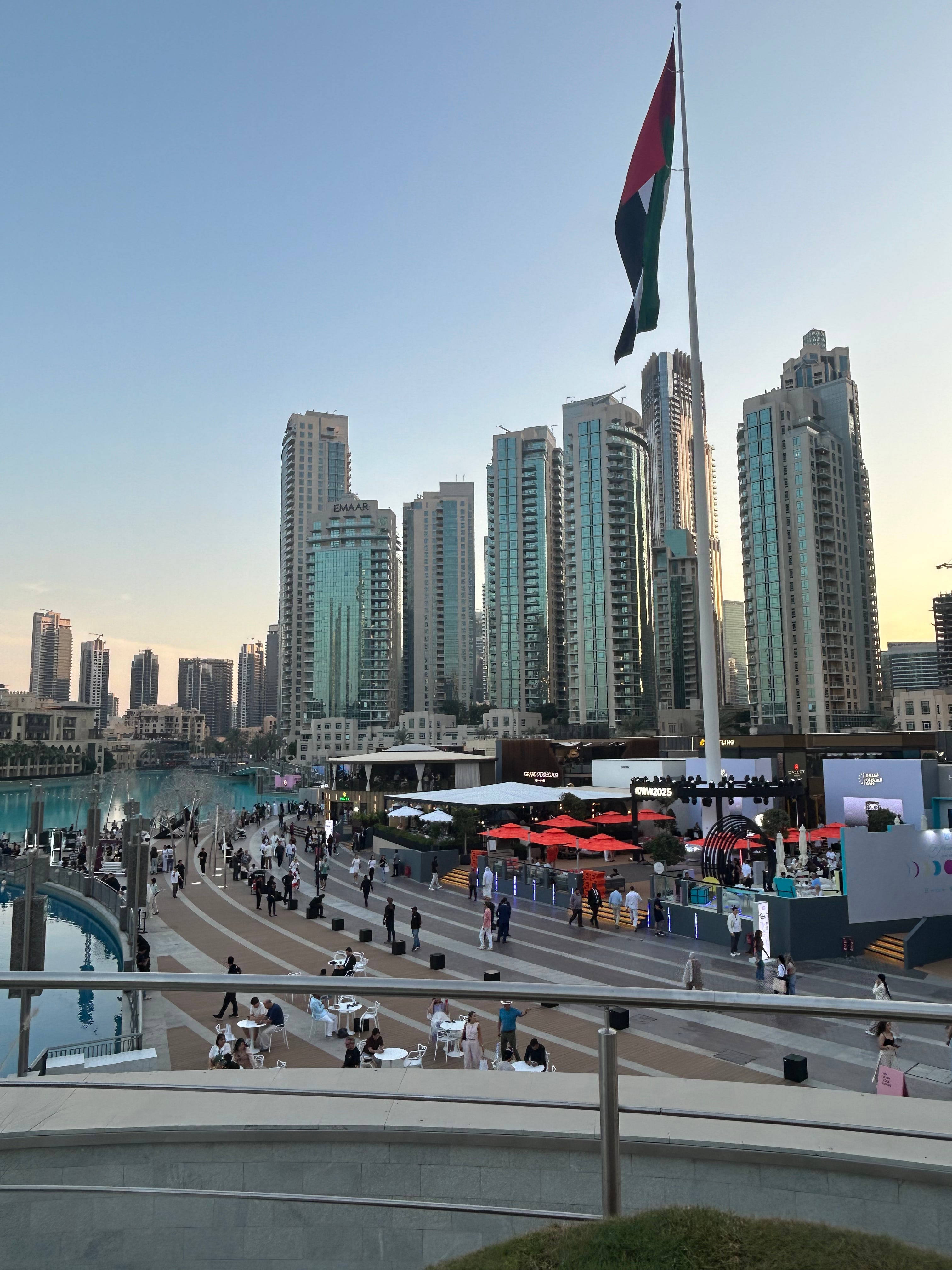
This year, several brands joined for the first time, including A. Lange & Sohne, Hermes, Nomos, Parmigiani, Roger Dubuis and Roger Smith. Audemars Piguet had by far the biggest stand - a vast exhibition space that loomed over the Burj Park (which had the feel of a very upscale outlet village). Rather than a conventional brand booth, this was a travelling exhibition celebrating AP’s history for its 150th anniversary and I want to call special mention to it because if you ask me, it set a new standard for immersive educational exhibitions. It was brilliantly produced, with rooms including a mirrored library that was straight out of Lewis Carroll to a life-size recreation of the roof of its Le Brassus HQ, dedicated to celestial complications. There were dozens, maybe hundreds of priceless museum watches on display, half a dozen demonstration stations where AP’s team explained complications to visitors, and plenty of archive material dotted in between. Visitor numbers were well managed (there was a long queue to get in) and you never felt rushed or overcrowded. At the end, there was a cafe/bar/lounge area where you could hang out and watch the world go by (or the explosive fountain display that goes off once an hour or so and makes Geneva’s Jet d’Eau look like a garden hose). It’s coming to W&W next year: go and see it if you can.
Despite lacking first hand experience of its past, I get a sense that DWW is at something of a tipping point. The change of location, the addition of more brands and the emergence of a substantial satellite fair (Timezones, held a ten minute walk away with another 70+ brands in attendance1) all add to the impression of an event that is maturing into something far beyond its origins. That it coincides this year with the 75th anniversary of Ahmed Seddiqi, the retailer behind the entire operation, is the cherry on top. A couple of times I heard it mentioned that the government is eager for the event to become annual, so great is the cachet it has attained in the luxury world (to say nothing of the influx of wealthy visitors).
It made me wonder whether DWW - like Geneva Watch Days and Watches & Wonders - could become a victim of its own success. On the one hand, the event is quite different from how it sounded from the anecdotes I used to hear; I don’t think brands take collectors or guests off for desert buggy excursions any more, for example2. If you wanted, you could fill every day with scheduled meetings, but that feels like imposing an old-fashioned European model for no good reason - and besides, that’s only the press experience3.
Nobody expects to be able to see everyone. And on that note, I have to say there will certainly be incredible watches here that I’ve missed. I don’t know if it was ever easy, but it’s practically impossible to say you’re across the entire watch industry today. But the landscape for watch fairs has changed; Baselworld was your only chance every year to see a watchmaker. Now you can catch them half a dozen times.
DWW is physically much smaller than W&W; individual stands, even for the likes of Rolex, are fractions of the size, and the vast majority of brands, including some pretty major ones, are content with modest booths that hold a handful of people and a few glass showcases. There are hardly any barriers between you and the brands, and their owners/designers/CEOs/master watchmakers.
This bijou setup does mean it gets pretty crowded, but not to the point where it’s frustrating. I would say DWW could get quite a bit bigger, at least in terms of participating brands, before it felt like it was stretching its identity too thin.
That proximity I mentioned is a big part of what makes DWW special. But it’s not the only thing. It’s not just that you can bump into a CEO and strike up a conversation, but in Dubai people are happier to be stopped. I won’t claim to be an expert in the culture after four days, but the event seemed to be a natural extension of people’s existing behaviour; by staying open well into the evening and with a location right next to the Dubai Mall, it saw locals wandering through, browsing, bringing their families and socialising. For a Brit, any mention of late night culture will always include alcohol, and although the big brands could serve booze at private functions on their stands, the dry status of the event definitely made it safer and more relaxed after hours.
Anyway, enough of that. You want to know if I learned anything interesting. Of course I did. I’ll talk about some of the watches I saw, and behind the paywall I’ll get to the industry news, rumours, what came out of the Horology Forum talks (or didn’t) and so on. Is De Bethune about to be sold? Who has Chanel invested in now? Who thinks things are picking up, and who’s not so sure? All that good stuff.
Watches!
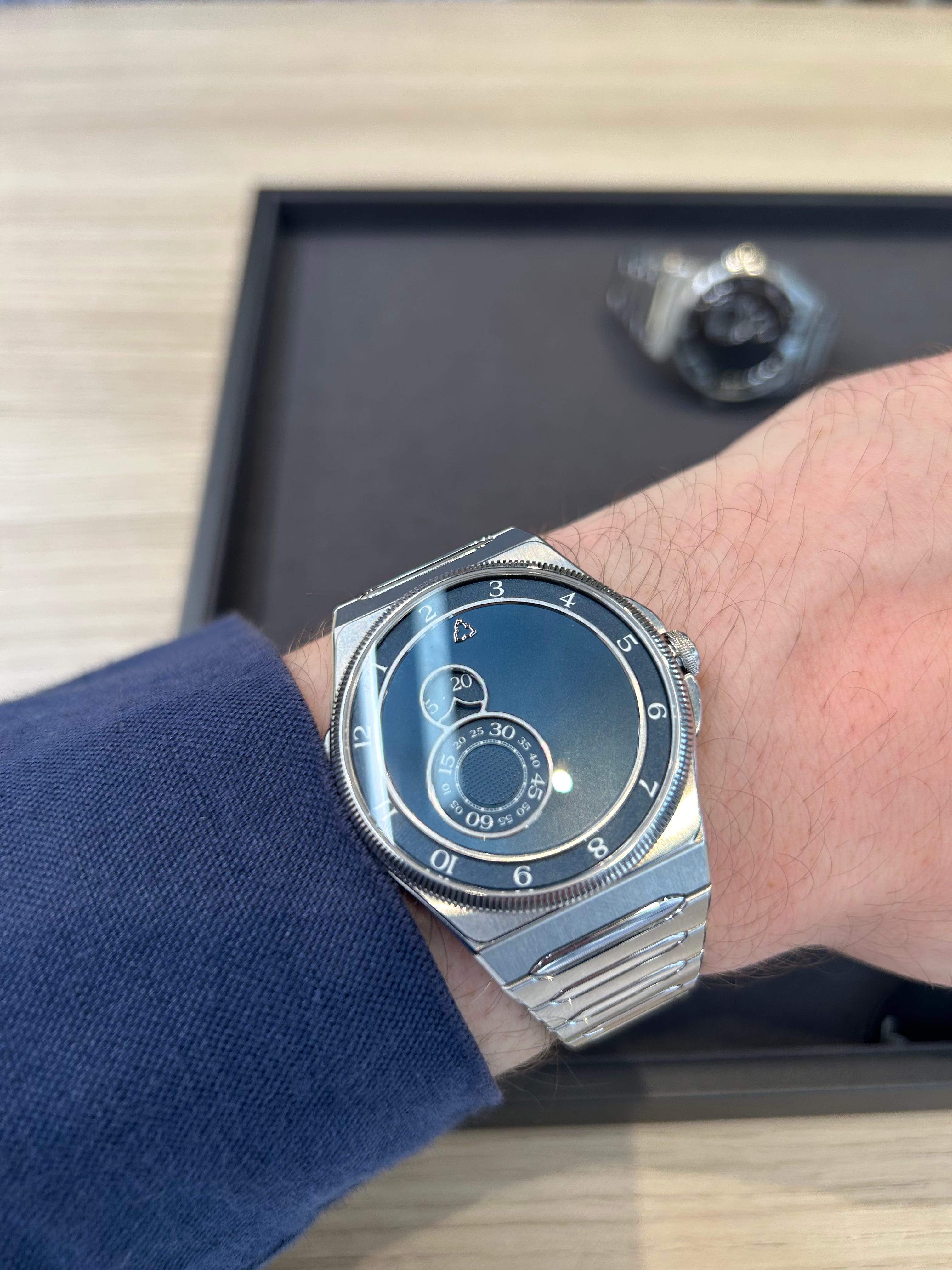
I took the opportunity to see some previously announced watches that I hadn’t had time with. Trilobe’s Trente-Deux did not disappoint: the movement looks really special and it wears well. It comes up quite large, thanks to the slim bezel and negative space on the dial, but I can deal with that (it measures 39.5mm across, aka the perfect size). You can keep your Tambours, Laureatos and Polos; this might be my new favourite ‘alternative’ integrated bracelet option.
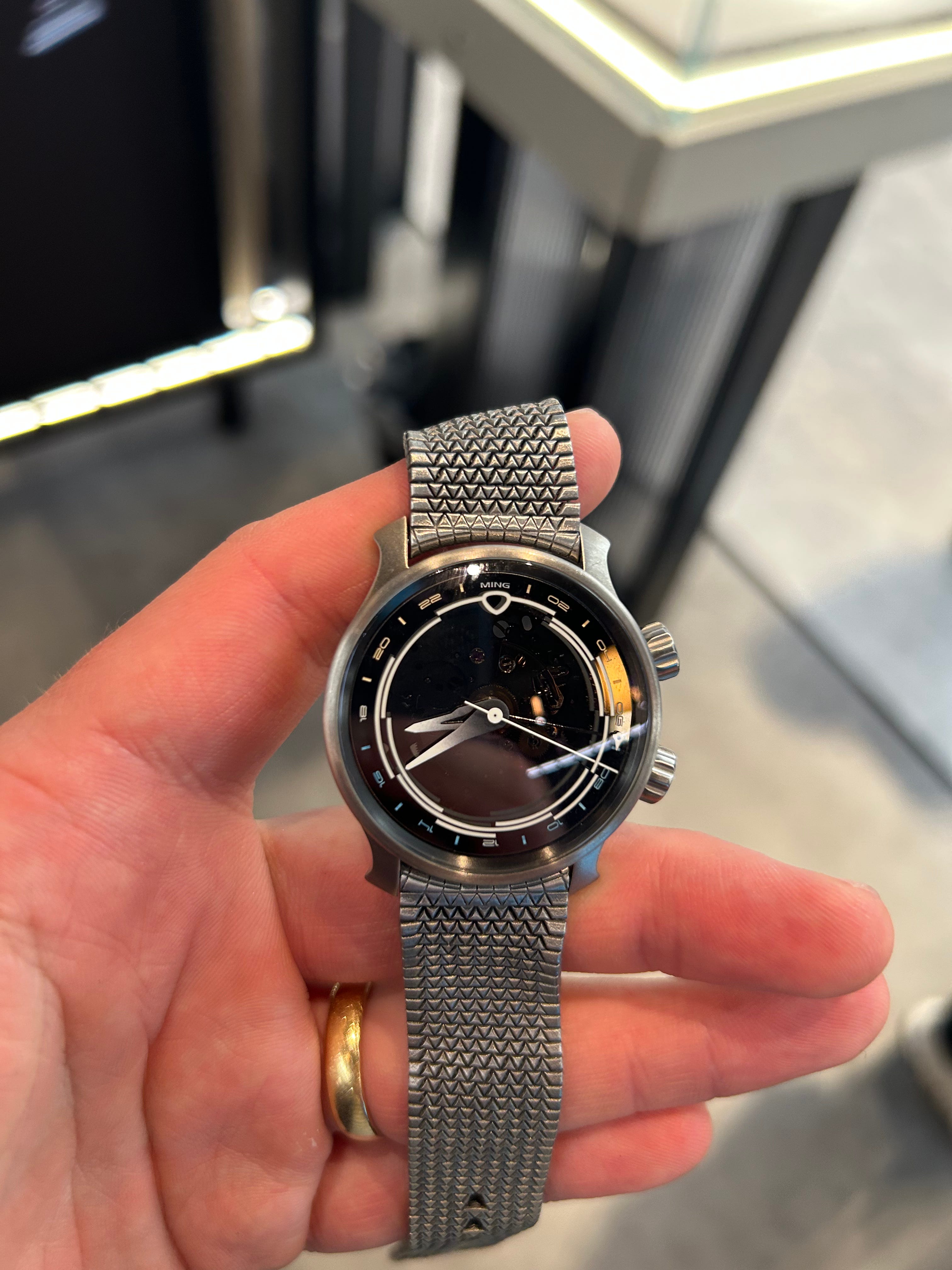
Can’t wait any longer to mention it: the Ming Polymesh bracelet isn’t just the best strap I’ve seen all year, it’s one of the best things I’ve handled full stop. Very few things stop you in your tracks like this: it drapes like a necklace across your fingers, and wears like textile. It sort of crunches together when you play with it (I asked Ming’s team about wear and tear from the links rubbing against each other, and they weren’t concerned; on the other hand, they also said they are eager to get the first batch of 50 out onto customers’ wrists so they can get real life feedback from unforeseen scenarios). Word on the street is that Ming might not be the only brand with something like this for very long, but they have got it into production first and it’s extremely impressive. Apparently orders are paused until February, at a production rate of five a day. At CHF1500 apiece, that’s not too shabby.
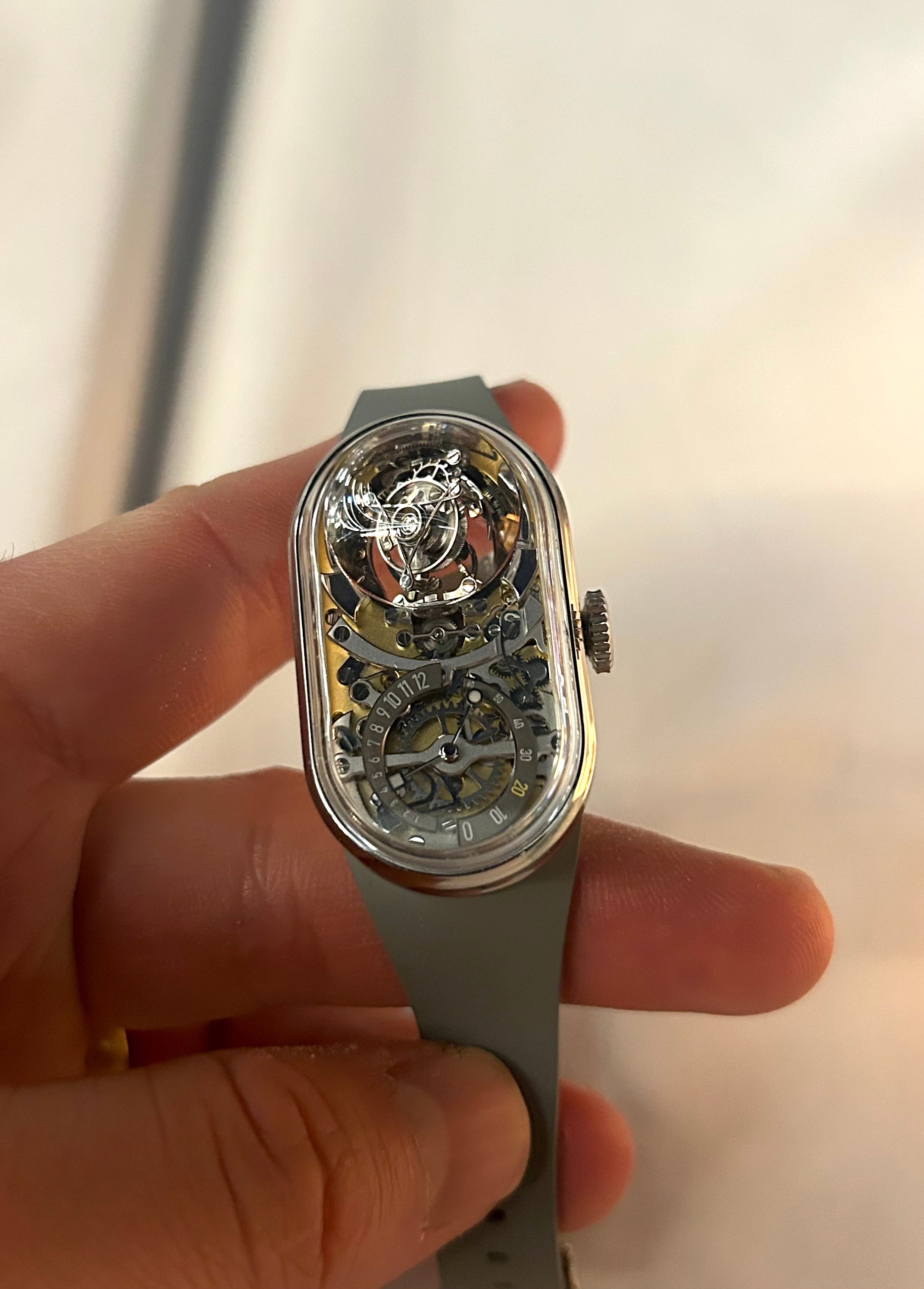
I also got my first sight of Fam al-Hut’s bi-retrograde tourbillon (in the form of an unfinished prototype of the brand’s collaboration with Revolution (sorry, Maison de la Revolution). It’s a dinky little thing! I don’t know if I’m personally won over by the form - knowingly nodding to a Fitbit, with the strap at the very base of the concave case - but the creativity and the movement engineering are worth the praise it has been getting. The brand also won the Grail Watch competition, judged live on the Saturday of DWW, so it’s safe to say it is the breakout rising star of the indie world today.
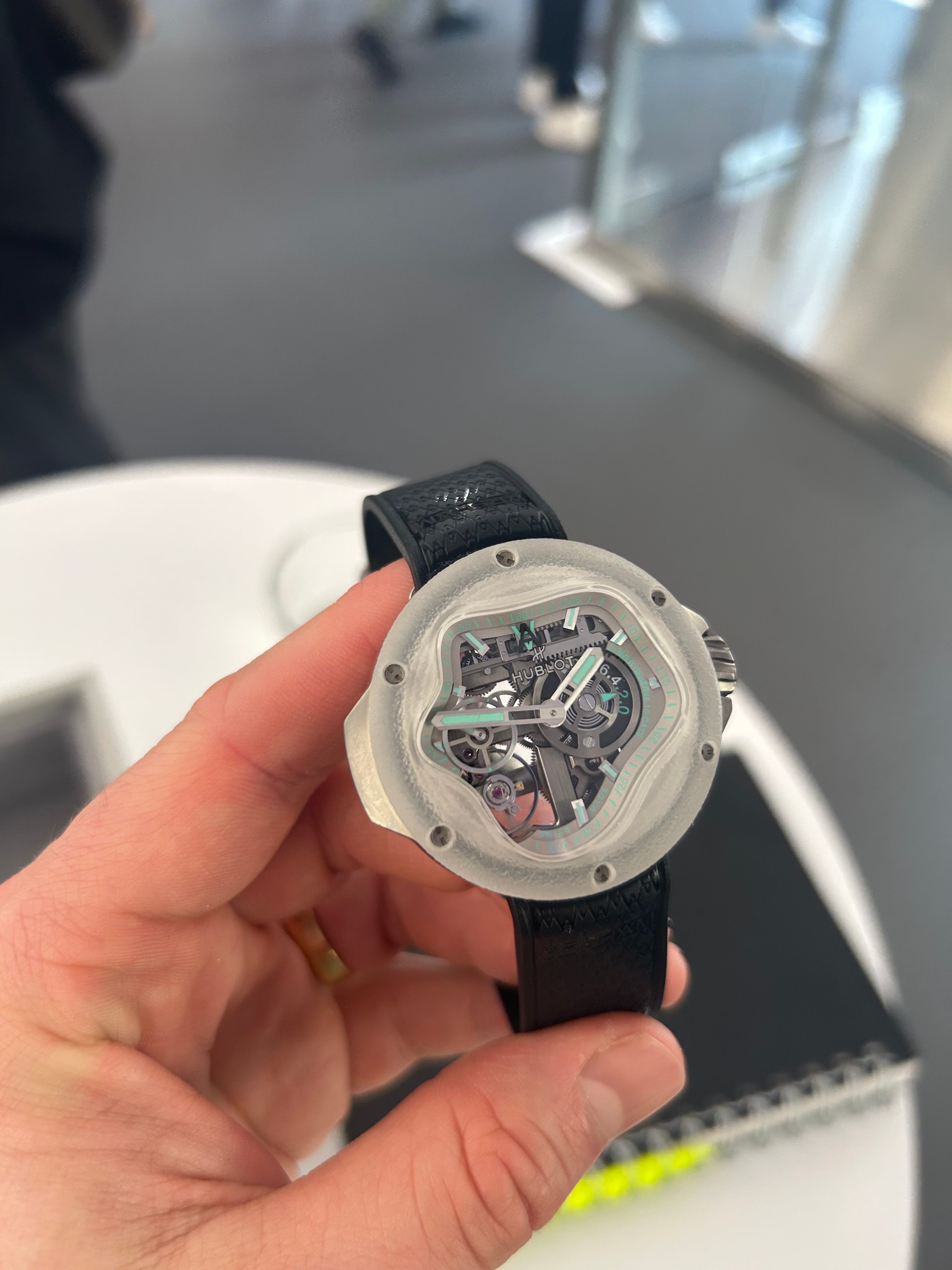
Also in this category, the Hublot x Daniel Arsham MP-17 Meca-10 “Splash”. Hard to remember a Hublot I felt so impressed by. It’s almost small - I mean, at 42mm it’s objectively not, but the ‘disco volante’ build and pebble-like form go a long way - and it feels like something a small indie brand might have created. The sandblasted sapphire bezel does look and feel kind of plasticky - it’s not soft, of course, but once you give sapphire that kind of tactile texture you take away the sense of crystalline strength - but overall it has a daring, concept-watch vibe that’s more playful than Hublot’s regular product categories are allowed to be.
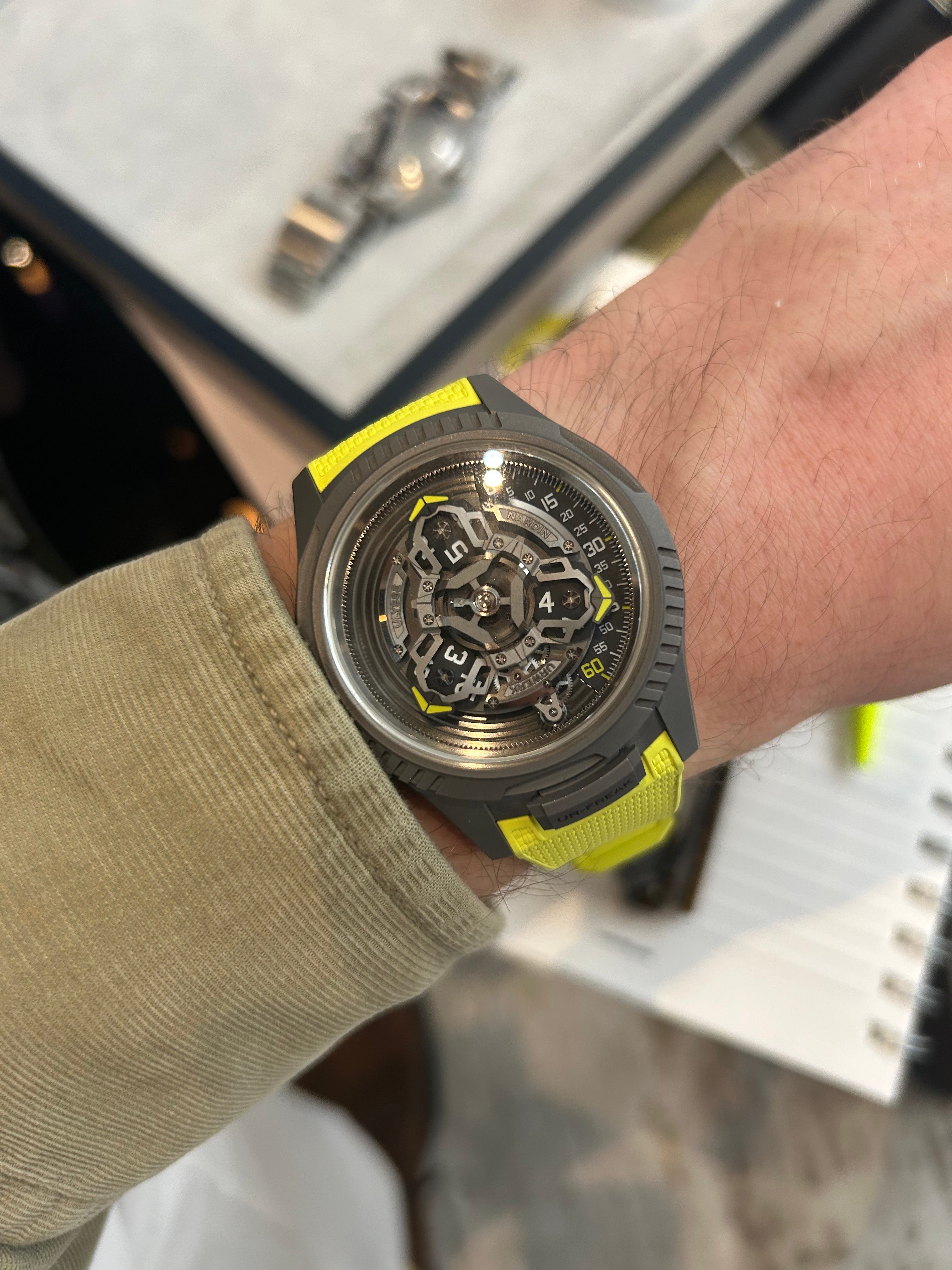
What else stuck in my mind? The UR-Freak from Ulysse Nardin and Urwerk is a very neat integration of two concepts of roughly similar age - maybe, just maybe, you can make the argument that the end result is a little bit more conservative than expected given the DNA that’s gone into it, but this wasn’t my initial reaction, as anyone who saw me during the fair will attest. It’s damned clever, with around 60 per cent totally new components despite theoretically fusing two existing movements. Ulysse Nardin are the ones actually making it, but it looks more Urwerk than UN, thanks to the size of the wandering hours and the details of the sandblasted case. I had a good debate with Constant from Revolution one night over which brand stood to benefit more from the project - suffice to say there are different schools of thought over which brand’s star is higher right now - and having slept on it a bit more, maybe the boring but fair answer is that this is something they both needed.
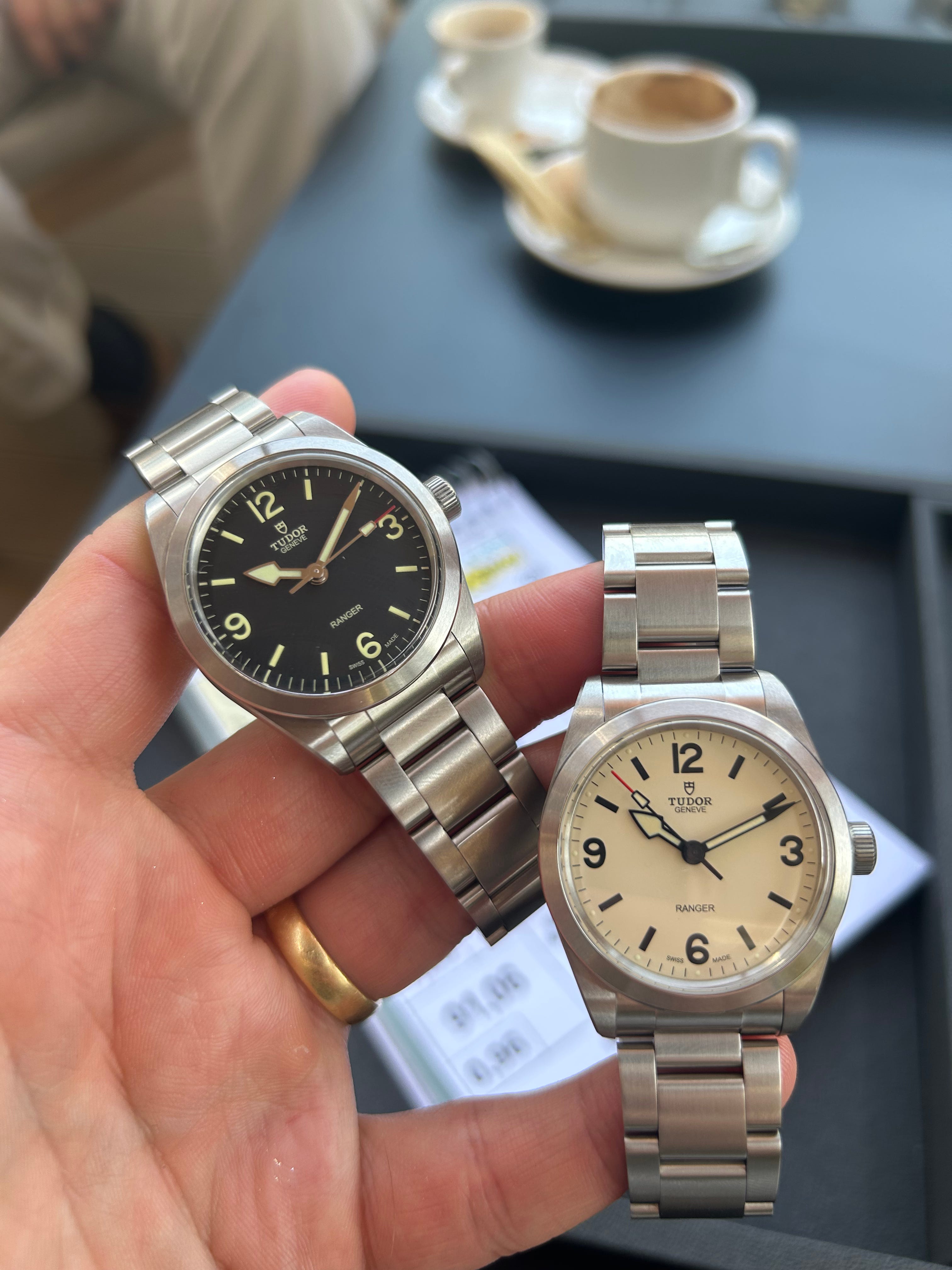
Tudor brought out a new Ranger. This is easily the simplest watch I saw all week; Dubai’s vibe isn’t necessarily ‘value monsters’, it’s more ‘rainbow Daytona’4, so there was something jarring about it, like being brought a side of French fries halfway through a sixteen-course tasting menu, but that’s not to disparage either. The big news for the masses is the 36mm case - and the discussion points for Tudor nerds will be the printed numerals and “Dune White” dial (it’s beige). It only occurred to me later on that this means you could buy an Oyster Perpetual in beige and one of these for a very specific two watch collection that, while niche, I think totally works. Tudor is adamant the lume is perfectly bright enough; it was blazingly sunny when I saw the watch, but would it really be like Tudor to underdeliver on something practical like that? I would expect not.
I haven’t got space to talk about every single watch. Girard-Perregaux’s Laureato Three Bridges is a hit. So is Czapek’s jumping hour with its flip-top hunter case. De Bethune’s DB25 Perpetual Calendar at 40mm is aesthetically business as usual but a significant accommodation of customer demand. The list goes on and on.
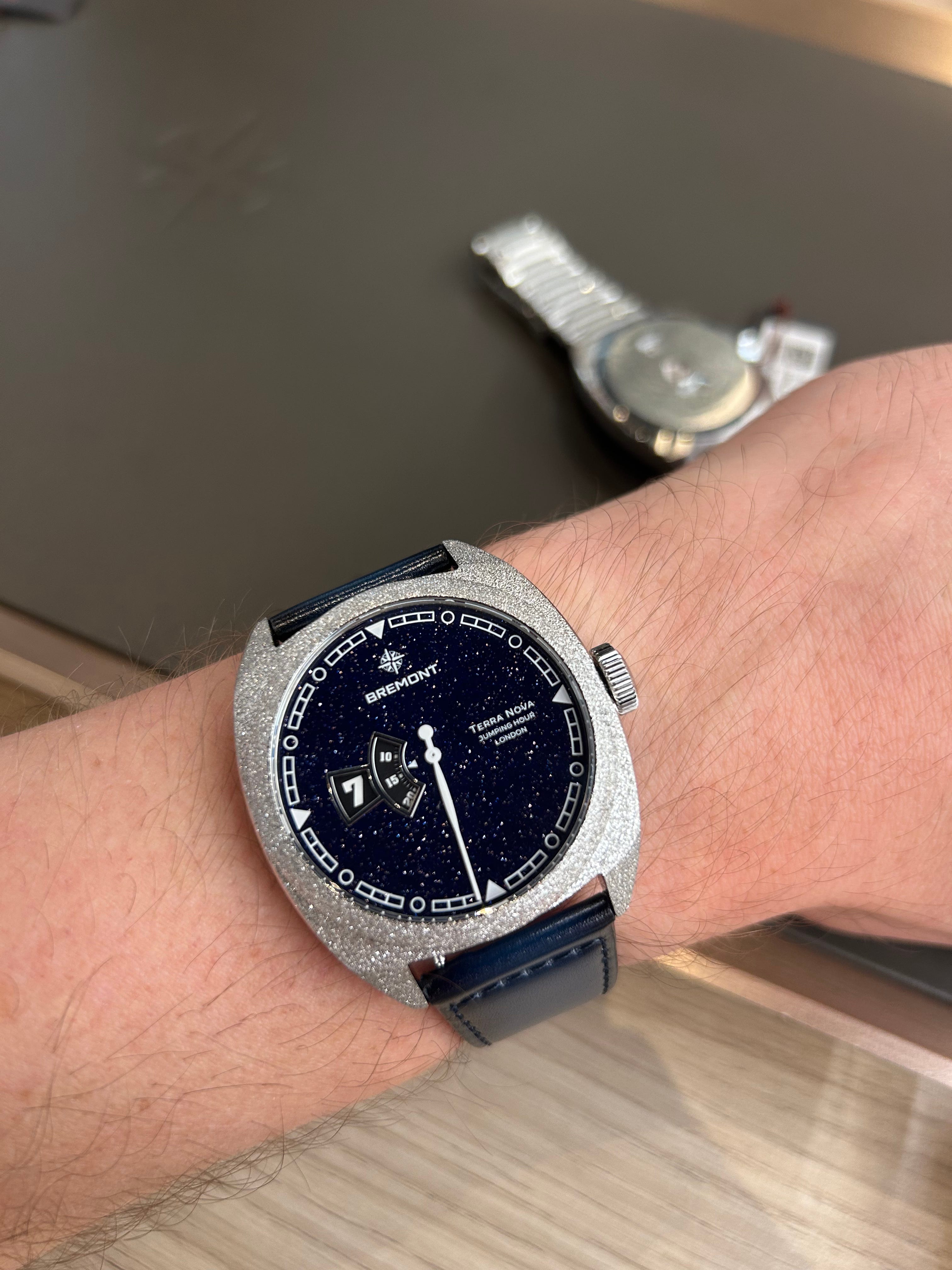
Some themes were dominant. Stone dials (and meteorite) were everywhere: Bremont, Louis Vuitton, Norqain, H. Moser, Frederique Constant, Biver… and those are just the ones I can remember. The creative variety is still interesting but the imperative to dig out - literally - new minerals is starting to look a bit forced. Inevitably, and this happened with meteorite a long time ago, the message will sink in that the actual stones themselves aren’t that intrinsically valuable (yes, machining them is tricky, but even when you factor that in, the mark-up isn’t so substantial) and whether or not you can command a high price for a stone dial watch will come back to the age-old question of how strong your brand is to begin with.
Collaborations still seem to be productive too. I had thought a little while ago that we had seen ‘peak collab’ - we even made a podcast episode about it - but maybe not. Bamford x Frederique Constant. Louis Erard x Konstantin Chaykin. Urwerk x Ulysse Nardin. Those are just the cross-brand partnerships I can call to mind; nearly everyone has an artist partnership, a cartoon character or a regional edition to promote, and that’s not even counting the 28 Seddiqi partnerships.
