

Issue 202: The Most Under-Appreciated Launches From Watches & Wonders 2026
From simple things done well to novel chronographs and ultra-thin minute repeaters, what might have missed the limelight (and why). Trigger warning: Rolex Yacht-Master II praise.

Hello and welcome back to The Fourth Wheel, the weekly watch newsletter that this week returns - metaphorically, thank goodness - to the halls of Watches & Wonders to look beyond the hits. Plenty has been said about how overwhelming ‘Geneva Watch Week’ is becoming, and it is equally ridiculous that the pace of life’s ever-turning treadmill means that we move past it so quickly when in reality it is, as my university professors would have said, a dense text, worthy of close study and multiple analyses. I’m not sure my tutors in Chaucer, Milton and Shakespeare would have made much of the fact I now make a living discussing Cartier, Rolex and Patek Philippe in preposterous detail, but maybe in today’s climate they’d just be happy to see the written word providing an income at all. Anyway, on with the show: I have today decided to shine a spotlight on three watches that I think lost out in the undignified scrap for our fleeting attention.
The Fourth Wheel is a reader-supported publication with no advertising, sponsorship or commercial partnerships to influence its content. It is made possible by the generous support of its readers: if you think watch journalism could do with a voice that exists outside of the usual media dynamic, please consider taking out a paid subscription. You can start with a free trial!
Here’s a little taste of what you might have missed recently:


Close but no cigar
It is inevitable, after such a torrential downpour of new releases1, that just two weeks hence, as we are still wringing out our clothes, some of the best stuff has not received the credit it deserves. It is also totally understandable; it is a question of bandwidth, both on the part of media outlets and those trying to keep up in their spare time - but it is also a question of algorithimic filtering. The platforms that now make up the primary means of discovery for just about anything in our lives are designed to focus in on anything that looks popular; if you’ve seen and liked a few videos of the Parmigiani Chronograph Mysterieux, you’ll be served more, at the exclusion of other things.
Your experience may vary, therefore, but to me it felt like - as usual - a handful of watches and brands dominated the conversation at Watches & Wonders. Naturally, those were Rolex, Patek Philippe, Tudor and Cartier, with Parmigiani the year’s breakout star and honourable mentions for Vacheron Constantin and probably Zenith. Within that list, a few models dominated even further: the Nautilus, Daytona, Monarch, the aforementioned chronograph and the Overseas Cardinal Points.
Now, most journalists will have earmarked a number of watches as worthy of revisiting once they have time - so my yardstick of appreciation after just two weeks is not to say we, or they, are all lunkheads for overlooking such interesting creations.
It also dawns on me that there are two types of under-appreciated watch. One group, which is what I really want to look at today, is the watches that could very easily have been stars of the show, but for one reason or another were pipped to the post. The other group is those watches that represent solid value or do something commendable but aren’t necessarily headliners. Often they simply aren’t made by brands with enough marketing firepower to break through the noise.
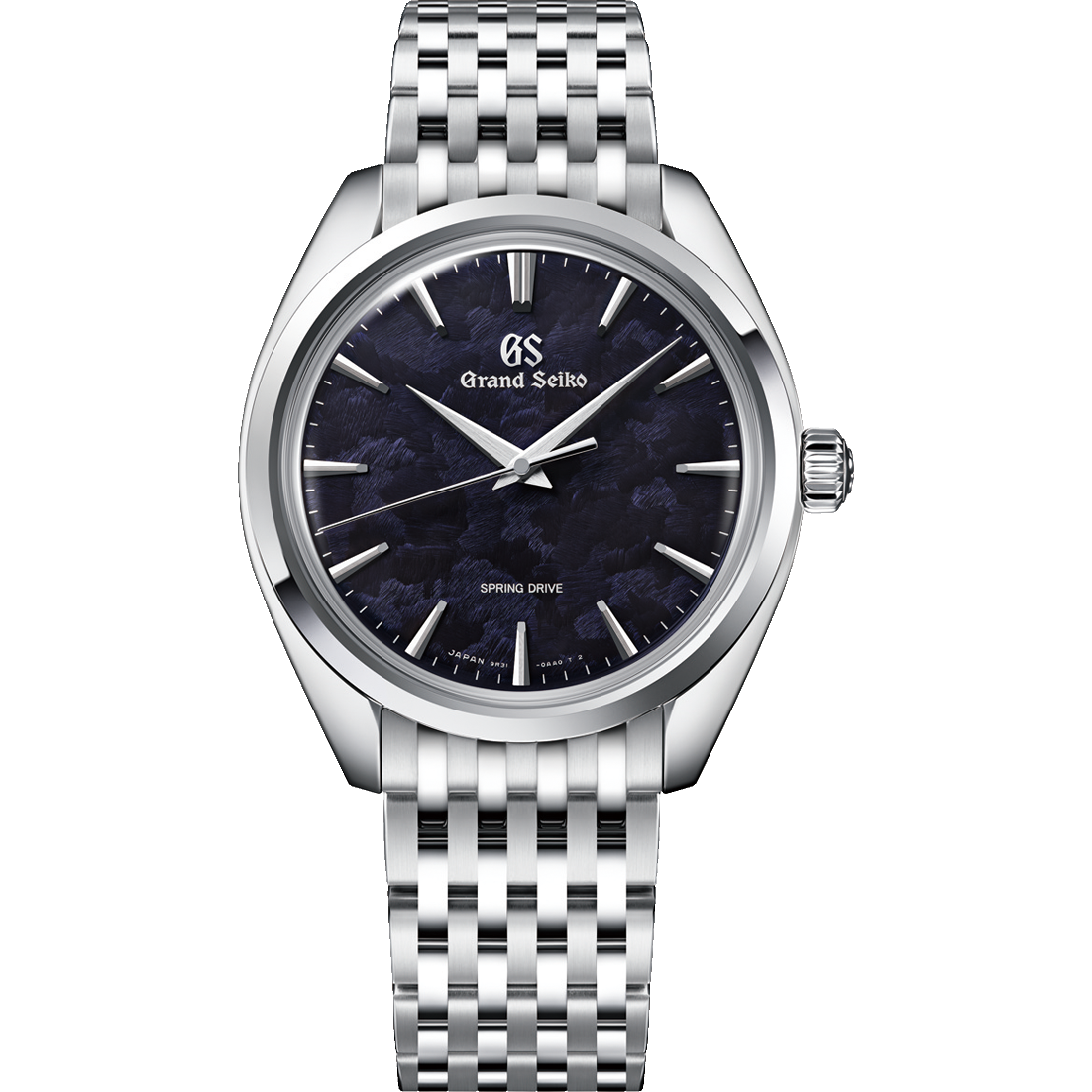
In that category I’d like to tip my hat to Grand Seiko, whose SBGY043 above is just lovely in a low-key way (as, perhaps, all the best GS watches are). And, in fairness to me, quite a few of my top picks fall in this bracket too: Frederique Constant’s world timer, Raymond Weil’s anniversary chronograph - basically anything affordable. I’d also like to mention Parmigiani’s anniversary-edition update to the Toric Perpetual Calendar, which isn’t really on the same wavelength as these others, but it fixed something that I singled out in my review last year as one of the only drawbacks to the Toric2: the finishing. With a new clous de Paris surface treatment, it is to my eye significantly improved. Given everything else going on at Parmigiani this year, it’s no wonder that has been largely unnoticed, but it registered with me.

Today, though, is all about the other group. Watches with a strong claim to be headliners that had to settle for a lower billing. I’ve got three candidates.
TAG Heuer Monaco “Evergraph”
This seems as good a place as any to start. The Evergraph arrived with no shortage of hyperbole, and while that alone hardly marks it out from the crowd in any given year, it seemed deserving of at least a reasonable amount of hype.
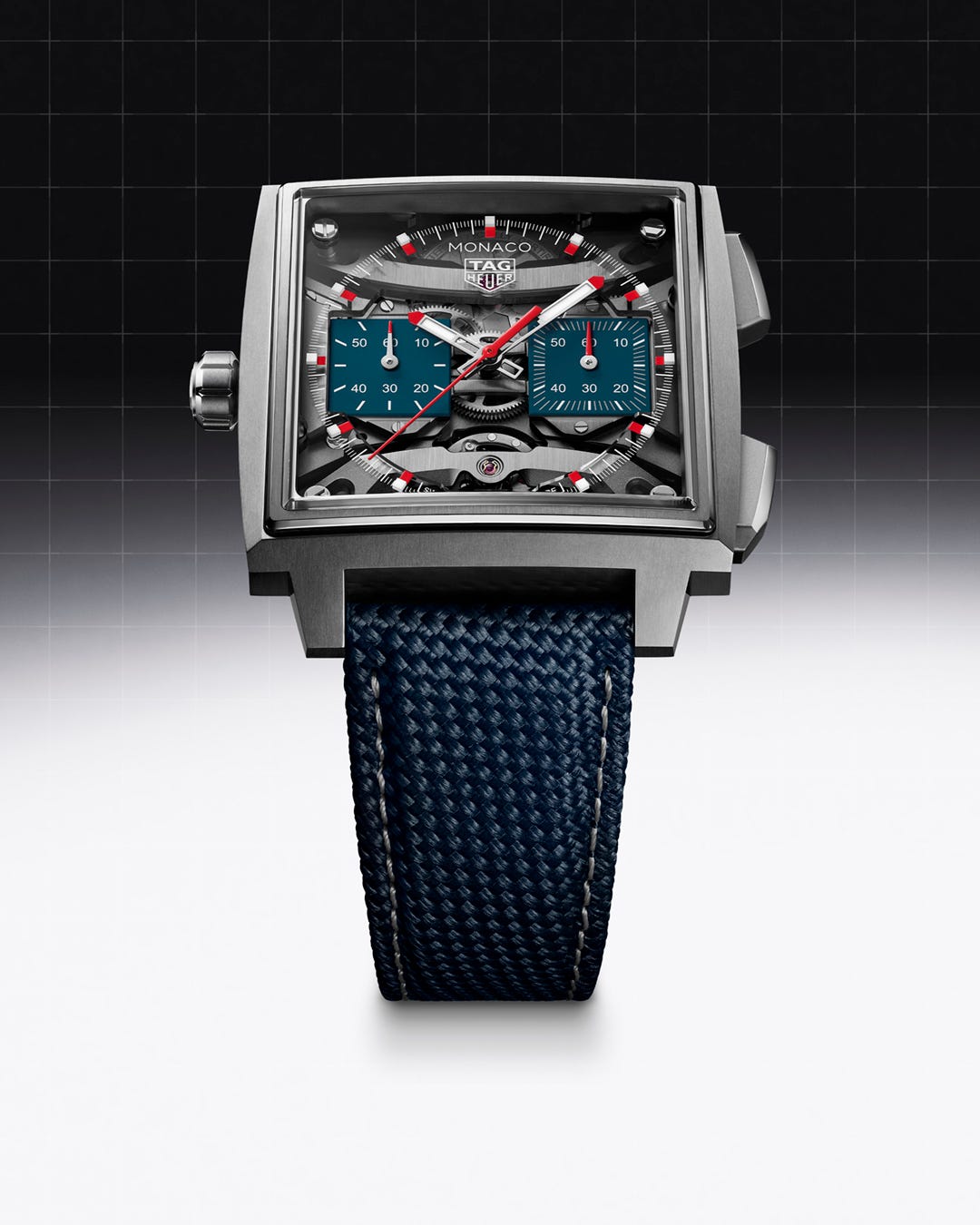
Most brands circulate press releases and launch details ahead of time, but some keep their biggest releases under wraps. Not so with TAG Heuer: we knew this was coming and I for one was excited. I’m a chronograph geek, I’d like to think I have a reasonable understanding of the mechanics involved, and the work TAG Heuer has been doing recently on a technical front - regardless of your opinions of their designs or pricing strategy - has been solid. Rolling out a new family of calibres for the 60th anniversary of the Carrera in 2023 - the TH20 base - was the beginning, and since then it has got the carbon hairspring into a production watch, added some fun sidelines like the Porsche Chronosprint, and launched its first split-seconds wristwatches. That some of these accolades came about with the help of outsiders like Vaucher is not, in this context, a problem: my point is that it has been great to see TAG Heuer making interesting and ambitious watches that do actually work. I have fond memories of the Mikrogirder era, but I don’t think anyone who had to try and produce the thing would say the same. The brand has also been totally upfront about Vaucher’s role, which to my mind lends greater credibility when it talks about the work it has done in-house.
The Evergraph comes billed as a chronograph revolution. It debuts a pair of ‘bistable’ components that replace most of the lever and hammer elements, as well as the column wheel control system, from a comparable conventional chronograph. I’m not going to give you a thousand words on how it does what it does: I’ll give you a very brief version and recommend Mark Kauzlarich’s and David Ichim’s write ups respectively.
